Human beings are hardwired for connection. From the moment we enter the world, we seek out bonds that make us feel safe, seen, and valued. Yet, despite our deep biological imperative to love and be loved, many of us navigate our romantic and platonic lives relying entirely on instinct, trial and error, or the flawed relationship blueprints we inherited from our families. We wonder why arguments always follow the same cyclical pattern, why vulnerability feels terrifying, or why the spark eventually fades into silent resentment.
Fortunately, you do not have to figure out the complex puzzle of human intimacy alone. Over the past few decades, psychologists, neuroscientists, and relationship researchers have decoded the mechanics of human connection. Reading the right literature can act as a mirror, helping you recognize your blind spots, heal deep-seated wounds, and approach partnership with profound empathy and clarity.
Whether you are currently single, navigating the exciting waters of a new romance, or trying to breathe life back into a decades-long marriage, the right literature can act as a catalyst. Here are 10 books that will radically change how you see relationships, offering actionable insights to help you build healthier, more resilient bonds.
1. The Foundation of Secure Attachment: "Attached" by Amir Levine and Rachel Heller
If you have ever found yourself anxiously checking your phone for a text reply or panicking when a partner asks for space, you need to read 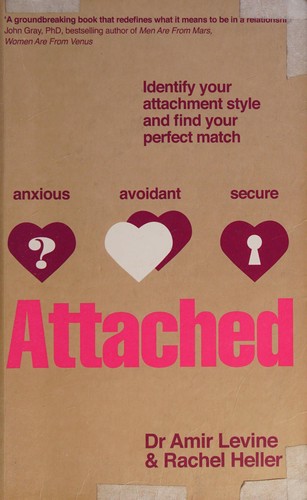 Attached. Amir Levine and Rachel Heller apply adult attachment theory to modern dating and relationships, arguing that humans fall into one of three primary attachment styles: anxious, avoidant, or secure.
This book completely shifts your perspective by reframing what society often labels as "needy" or "distant." Instead of judging your emotional reactions, Attached teaches you to view them through a biological lens. Anxious types learn how to soothe their nervous systems and communicate needs without protesting, while avoidant types understand why intimacy triggers their urge to flee.
Actionable Takeaway
Identify your attachment style and the style of your partner. Recognize that compatibility is not just about shared hobbies, but about nervous system synchronization. When an argument flares up, pause and ask yourself: Am I reacting to the present situation, or is my attachment system triggered?
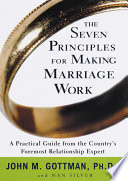
2. Mastering the Art of Connection: "The Seven Principles for Making Marriage Work" by John Gottman and Nan Silver
Dr. John Gottman is legendary in the field of relationship psychology. From his famous "Love Lab" at the University of Washington, Gottman can predict with over 90% accuracy whether a newlywed couple will stay together or divorce simply by watching them converse for a few minutes. His secret? Tracking specific destructive behaviors he calls the "Four Horsemen of the Apocalypse": criticism, contempt, defensiveness, and stonewalling.
This book shatters the myth that successful couples never fight. Instead, Gottman demonstrates that thriving relationships are built on small, everyday interactions. He introduces the concept of the "Emotional Bank Account," showing how micro-moments of turning toward your partner's bids for connection accumulate over time to create an unbreakable reservoir of goodwill.
Actionable Takeaway
Implement the "Six-Second Kiss" and practice the "State of the Union" meeting weekly. Swap out sweeping criticisms ("You never help around the house") with gentle startup complaints ("I feel overwhelmed and need help with the dishes tonight").
3. Healing Childhood Wounds: "Hold Me Tight" by Dr. Sue Johnson
Dr. Sue Johnson revolutionized couples therapy with Emotionally Focused Therapy (EFT). In Hold Me Tight, she argues that adult romantic squabbles are rarely about who forgot to take out the trash or whose turn it is to plan date night. Instead, they are primal cries for emotional safety and responsiveness.
Johnson maps out the toxic dance steps couples frequently fall into, such as "Find the Bad Guy" or "Protest and Withdraw." When you read this book, you stop viewing your partner as your adversary and begin viewing the negative cycle itself as the true enemy. This simple shift in perspective transforms conflict from a battlefield into an opportunity for deeper bonding.
"Emotion is the music of our inner dance. When we learn to listen to the fear and longing beneath our anger, we can finally reach for each other and heal." — Dr. Sue Johnson
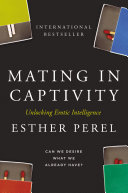
4. Redefining Intimacy and Desire: "Mating in Captivity" by Esther Perel
Can you love someone deeply and still desire them passionately? Esther Perel tackles the seemingly paradoxical relationship between domestic stability and erotic excitement. In long-term relationships, we often crave safety, predictability, and comfort. Yet, these exact qualities can unintentionally suffocate erotic desire, which thrives on mystery, distance, and the unknown.
Perel challenges conventional relationship advice by arguing that good sex does not just happen when partners achieve total transparency and emotional fusion. Instead, she asserts that keeping desire alive requires maintaining a healthy boundary of "otherness"—recognizing that your partner is an autonomous individual who does not belong to you.
Actionable Takeaway
Stop sacrificing mystery for comfort. Cultivate your own independent hobbies, friendships, and inner world. When you return home at the end of the day, look at your partner not as an extension of yourself, but as a fascinating person you are lucky to discover all over again.
5. Navigating Codependency: "Codependent No More" by Melody Beattie
Originally written for people struggling with an alcoholic loved one, Melody Beattie’s classic book has become the gold standard for anyone who tends to lose themselves in their relationships. Codependency happens when your emotional well-being is entirely dictated by the moods, behaviors, and problems of the people around you.
Reading Codependent No More acts as a psychological wake-up call. It teaches you how to stop trying to fix, rescue, or manage your partner and instead redirect that exhaustive energy back toward yourself. You learn the transformative power of setting firm, loving boundaries.
- Recognize the difference between helping and enabling.
- Understand that "No" is a complete sentence that requires no justification.
- Realize that you are not responsible for another adult's emotional regulation.
6. Embracing Vulnerability: "Daring Greatly" by Brené Brown
Vulnerability is the core of all meaningful connection, yet it is often mistaken for weakness. Dr. Brené Brown spent decades researching shame, courage, and empathy, concluding that we cannot experience true love and belonging without daring to show up as our true, unmasked selves.
In Daring Greatly, Brown explores how the fear of vulnerability leads us to armor up. We perfection-proof our lives, keep our partners at arm's length, and practice emotional preemptive strikes to avoid getting hurt. This book changes how you view relationships by proving that courage is contagious, and that true intimacy requires dropping your armor and risking heartbreak.
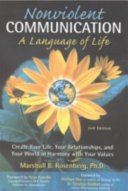
7. Transforming Conflict into Growth: "Nonviolent Communication" by Marshall B. Rosenberg
How we speak to one another dictates the entire trajectory of a relationship. Marshall B. Rosenberg introduces a powerful framework for communication that strips away judgment, blame, and demands, replacing them with radical honesty and deep compassion.
NVC teaches you to break down your communication into four distinct steps: observing the factual situation without judgment, identifying the underlying feeling, recognizing the universal human need that is unmet, and making a clear, positive request. When applied to romantic partnerships, this method defuses defensiveness and opens the door to genuine mutual understanding.
- Observation: State the facts without evaluation ("When you leave your clothes on the floor...").
- Feeling: Share your internal emotional state ("...I feel overwhelmed...").
- Need: Identify the unmet desire ("...because I value an orderly, peaceful home.").
- Request: Ask for a concrete action ("Would you be willing to put them in the hamper right now?").
8. Untangling the Past: "The Body Keeps the Score" by Bessel van der Kolk
Often, our current relationship struggles have very little to do with our current partner and everything to do with unresolved trauma from our past. Dr. Bessel van der Kolk explores how trauma physically rewires the brain and nervous system, manifesting as hypervigilance, emotional numbness, and explosive reactivity.
While not strictly a relationship advice book,  The Body Keeps the Score is essential reading for anyone who wants to understand why they self-sabotage safe relationships or attract chaotic partners. Healing your internal trauma is the greatest gift you can give to your partner.
9. Loving Wisely and Well: "The Mastery of Love" by Don Miguel Ruiz
Drawing on ancient Toltec wisdom, Don Miguel Ruiz strips away the cultural illusions, romantic fairy tales, and toxic myths we project onto love. He argues that most of our relationship suffering stems from the false belief that someone else can make us happy, complete us, or save us from our own emotional pain.
Ruiz introduces the concept of the "Dream of the Planet"—the collective conditioning that teaches us to treat love like a marketplace of conditions and expectations. By breaking free from these illusions, you learn to approach relationships not as a desperate rescue mission, but as a celebration of shared joy.
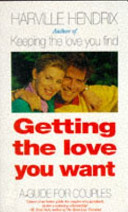
10. The Ultimate Relationship Reality Check: "Getting the Love You Want" by Harville Hendrix and Helen LaKelly Hunt
Have you ever noticed how you tend to attract partners who possess the exact same emotional traits as the parents or caregivers who wounded you in childhood? This is not an accident. Harville Hendrix explains that our unconscious mind chooses partners who mirror our early developmental wounds in a drive to finally heal the past.
Imago Relationship Therapy reframes frustrating conflicts as unconscious attempts to get past hurts healed. When you understand this dynamic, your irritation toward your partner transforms into profound compassion. You realize that your partnership is actually an incubator for mutual psychological healing and spiritual growth.
Conclusion: Your Relationship Revolution Begins Now
Relationships are not static destinations where you simply arrive and unpack your bags. They are living, breathing ecosystems that require continuous care, self-reflection, and courage. Reading these books will not magically erase every disagreement or prevent you from ever feeling hurt, but they will give you a new lens through which to view human connection.
Pick just one book from this list that resonates with your current life season. Commit to reading it slowly, journaling your insights, and putting the actionable advice into practice. By changing how you show up in your relationships, you don't just transform your love life—you transform your entire world.