
Introduction: Why Antoine de Saint-Exupéry’s Masterpiece Endures
Few literary works manage to bridge the gap between childhood innocence and adult disillusionment quite as seamlessly as Antoine de Saint-Exupéry’s 1943 novella. At first glance, a superficial glance might dismiss it as a charming children’s fairy tale complete with whimsical watercolor illustrations. Yet, any serious 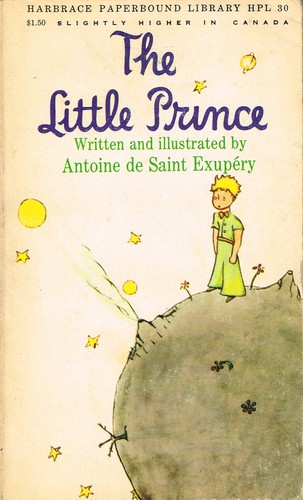 The Little Prince review must immediately dismantle that misconception. Saint-Exupéry’s classic is, in reality, a piercing philosophical critique of the modern adult world, wrapped in the delicate parchment of an allegory.
Written while the author was exiled in New York during the darkest days of the Second World War, the book reflects a profound yearning for human connection, authenticity, and spiritual clarity amidst global chaos. Today, it remains one of the best-selling and most translated books in publishing history. But why does a story about a golden-haired boy who lives on an asteroid the size of a house still resonate so deeply across generations? Let’s embark on a deep dive into the desert sands alongside the stranded aviator to find out.
The Premise: A Crash Landing in the Desert of the Mind
The narrative framework of The Little Prince begins with immediate vulnerability. The narrator is an aviator whose engine fails over the Sahara Desert, forcing him into a perilous, isolated situation with only a meager supply of water. It is here, under the blistering sun and among the vast, indifferent dunes, that he encounters the titular character.
This setting is far from accidental. The desert serves as a powerful metaphor for the spiritual and emotional aridity of modern human existence. Just as the narrator is physically parched, humanity is depicted as suffering from a deeper, invisible thirst—a longing for meaning that no amount of material accumulation can quench. The little prince drops into this wasteland not as a savior with a sword, but as a gentle catalyst for introspection. He does not ask for directions; instead, he asks for a sheep to be drawn.
Through their subsequent conversations, Saint-Exupéry sets up a brilliant literary contrast:
- The Aviator: Represents the pragmatism, exhaustion, and rigid logic of adulthood. He understands numbers, engines, and survival.
- The Little Prince: Represents uncorrupted curiosity, emotional intelligence, and an insistence on looking beyond the surface of things.
Deconstructing the Asteroids: A Critique of Adult Absurdity
Before arriving on Earth, the little prince journeys through a series of tiny asteroids, each inhabited by a single caricature of adult behavior. These interstellar stops form the most satirical portion of the book, offering sharp social commentary that every adult reader must confront.
1. The King Who Ruled Nothing
The first asteroid is inhabited by a king who claims absolute authority over the entire universe. Yet, his power is entirely performative. He commands the sun to set, but only according to the laws of astronomy, waiting patiently for the exact moment when solar physics aligns with his decree. This character exposes our human obsession with control, status, and the desperate need to feel important, even when we rule over empty space.
2. The Conceited Man Who Craved Applause
On the second planet lives a vain man who hears nothing except praise. He wears a strange hat specifically for tipping it to admirers, though he is entirely alone. This vignette serves as a prescient critique of modern validation culture. Long before the era of social media algorithms and follower counts, Saint-Exupéry pinpointed the hollow trap of living entirely for the applause of others.
3. The Businessman Who Counted Stars
Perhaps the most poignant critique is the businessman, perpetually hunched over a ledger, counting the stars. He believes he owns them because no one else thought of claiming them. When the little prince points out that owning a flower or a star entails responsibility—watering it, cleaning it, protecting it—the businessman has no answer. He reduces the infinite beauty of the cosmos into a balance sheet, a trap that countless professionals fall into daily.
"It is only with the heart that one can see rightly; what is essential is invisible to the eye." — The Fox, *The Little Prince*
The Fox and the Rose: The Anatomy of True Relationships
The emotional core of any thorough The Little Prince review lies in the encounter between the protagonist, the vain rose he left behind on his home planet, and the wise desert fox. These relationships teach us the true mechanics of love, commitment, and grief.
On his asteroid, the prince loved a unique rose, but her vanity, moodiness, and dramatic coughing fits exhausted him, driving him to run away. It is only when he discovers an entire Earth garden filled with thousands of identical roses that his heart breaks. He realizes his flower told him she was the only one of her kind in the universe. Facing five thousand ordinary roses, he feels deceived and sorrowful.
Enter the fox, who teaches the prince the secret of taming:
- Establishing Ties: To tame means to create bonds. Before taming, you are merely two strangers passing in the universe. Afterward, you become utterly irreplaceable to one another.
- Investment of Time: "It is the time you have wasted for your rose that makes your rose so important." In a world obsessed with efficiency and ROI, Saint-Exupéry argues that true value is created through the deliberate expenditure of our most precious resource: time.
- The Responsibility of Care: "You become responsible, forever, for what you have tamed." Love is not a passive emotion; it is an active, ongoing commitment to nurture and protect.
- Audit Your "Asteroid": Examine your daily pursuits. Are you like the businessman, hoarding metrics and tasks that lack soul? Identify one area of your life where you are chasing quantity over meaningful connection, and prune it.
- Practice "Slow Taming": In relationships—whether romantic, familial, or platonic—stop treating people like interchangeable options. Invest intentional, uninterrupted time into listening and being present for those you claim to love.
- Nurture Your Inner Child: Adults spend an inordinate amount of time calculating, worrying, and wearing masks. Schedule time each week to engage in pure, uncalculated wonder—whether that means reading poetry, drawing, or simply stargazing without checking your phone.
When the prince returns to the garden of roses after his conversation with the fox, he looks at them with new eyes. He tells them, "You are not at all like my rose. You are nothing yet... No one has tamed you, and you have tamed no one." His rose is special precisely because of the water, the shelter, the caterpillars he killed for her, and the complaints he listened to. She is unique because of the life they shared.
Actionable Takeaways: How to Apply the Book's Wisdom Today
A great book review should not merely analyze text; it should challenge the reader to change their life. Here are three actionable ways to integrate the philosophy of The Little Prince into your modern routine:
Conclusion: The Undying Legacy of a Golden-Haired Boy
To write a concluding The Little Prince review is to admit that words often fail to capture the ethereal beauty of Saint-Exupéry’s creation. The ending of the novella—where the prince allows himself to be bitten by a yellow snake to shed his heavy earthly mortal shell and return to his star—is both devastating and transcendent. It reminds us that physical death is not the end of love, and that whenever we look up at the night sky, we can take comfort in knowing that a familiar laugh is ringing out from somewhere among the constellations.
Ultimately, this book is a mirror. It asks us to look past our spreadsheets, our exhaustion, and our societal armor, demanding that we remember what it felt like to look at the universe with wide, unjaundiced eyes. It teaches us that the most important things in life cannot be measured, weighed, or monetized—they can only be felt with the heart.


