
There is a unique kind of literary magic that happens when you pick up a book, get completely absorbed in the high-stakes plot, white-knuckle tension, and unpredictable twists, only to remember a startling truth: this actually happened. For many readers, fiction has a way of feeling predictable. No matter how tense the climax, a subconscious voice reminds us that an author engineered every single twist. But when you dive into incredible nonfiction books that read like a thriller, that safety net disappears.
True stories carry a visceral weight. The danger is real, the ticking clocks are relentless, and the human psychology on display—both heroic and depraved—is entirely authentic. Whether you are a dedicated fan of true crime, historical espionage, or edge-of-your-seat survival narratives, the right book can deliver a dopamine rush that rivals any Hollywood blockbuster. If you are looking to expand your reading list with page-turning narratives that will keep you awake way past your bedtime, you are in the right place. Let’s dive into 10 nonfiction books that read like a thriller.
The Anatomy of a True-Life Page-Turner
Before we jump into the reading list, it is worth exploring what makes certain narrative nonfiction books feel so cinematic. Great narrative nonfiction—sometimes called literary journalism or creative nonfiction—relies on the same structural elements as a gripping fiction thriller: pacing, character development, rising tension, and high stakes. Authors spend years conducting interviews, pouring over declassified documents, analyzing court transcripts, and walking the very streets where history unfolded.
When looking for nonfiction books that read like a thriller, keep an eye out for titles that utilize:
- A Ticking Clock: A narrative constraint where characters have a limited amount of time to solve a crime, escape a disaster, or make a historic discovery.
- Immersive Scene-Setting: Writers who use sensory details to drop you directly into a blizzard, a courtroom, or a covert spy meeting.
- Complex, Flawed Protagonists: Real people making split-second decisions under unimaginable pressure.
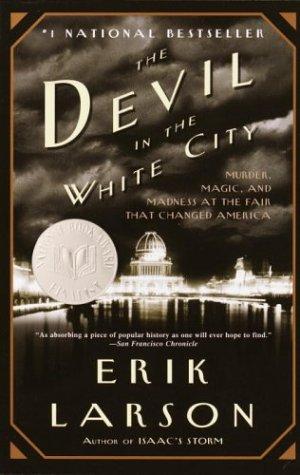
1. The Devil in the White City by Erik Larson
 The Devil in the White CityAbout the book →
Set against the backdrop of the 1893 Chicago World's Fair, Erik Larson’s masterpiece weaves together two wildly contrasting true stories. On one side is Daniel Burnham, the visionary architect tasked with designing the breathtaking "White City" against impossible deadlines, bureaucratic nightmares, and brutal labor strikes. On the other side is Dr. H.H. Holmes, a charming, sociopathic pharmacist who built a terrifying "Murder Castle" near the fairgrounds, complete with gas chambers, dissecting tables, and a crematorium.
Larson’s genius lies in how he paces the book. He contrasts the luminous, optimistic engineering triumph of the World’s Fair with the dark, chilling methodology of America's first serial killer. It reads with the relentless momentum of a psychological horror-thriller, making it an absolute essential for anyone seeking thrilling nonfiction.
2. Killers of the Flower Moon by David Grann
 Killers of the Flower MoonAbout the book →
Long before it became a major motion picture, David Grann’s investigative tour de force captivated readers with a harrowing look at American greed and corruption. In the 1920s, the Osage Nation in Oklahoma became the wealthiest people per capita in the world after oil was discovered beneath their land. Shortly thereafter, Osage members began to die under mysterious circumstances—some poisoned, others shot.
As the death toll climbed to dozens, the newly formed FBI—led by a young J. Edgar Hoover—stepped in to crack the case. Grann structures the book like a classic detective procedural, exposing a web of conspiracy, complicity, and terror that goes far deeper than anyone originally imagined. It is a masterclass in investigative journalism disguised as a pulp mystery.
3. Into Thin Air by Jon Krakauer
 Into Thin AirAbout the book →
If you want a survival narrative that triggers a visceral fight-or-flight response, Jon Krakauer’s Into Thin Air is unmatched. Krakauer was on assignment for Outside magazine to write about the commercialization of Mount Everest when a freak storm struck the mountain in May 1996, trapping climbers in the lethal "Death Zone."
What starts as a fascinating look at high-altitude mountaineering quickly spirals into a desperate, tragic fight for survival. Krakauer captures the disorientation of hypoxia, the agonizing choices forced upon exhausted climbers, and the sheer brutality of nature. It is a claustrophobic, deeply haunting read that proves reality is far more terrifying than any fictional mountain disaster.
4. Bad Blood by John Carreyrou
Silicon Valley culture is built on the mantra "fake it 'til you make it," but Elizabeth Holmes and her blood-testing startup Theranos took that philosophy into criminal territory. Investigative reporter John Carreyrou was the man who blew the lid off the multi-billion-dollar fraud, and his book Bad Blood reads like a high-tech corporate espionage thriller.
You will find yourself alternating between sheer disbelief and white-knuckle tension as Carreyrou details how Holmes and her partner Sunny Balwani intimidated whistleblowers, faked medical test results, and dodged regulators while rubbing shoulders with global political elites. It proves that the most terrifying villains do not wear ski masks—sometimes they wear black turtlenecks.
5. The Wager by David Grann
David Grann earns a second spot on this list with The Wager, a maritime epic that plays out like a high-stakes legal and psychological thriller on the high seas. In 1740, a British warship named the HMS Wager wrecked on a desolate island off the coast of Patagonia while pursuing a Spanish galleon. Months later, starving survivors washed up on the coast of Brazil, hailed as heroes who had survived unimaginable hardships.
However, six months after that, another ragged group of castaways landed in Chile, telling a completely different story: the first group were actually mutineers, and their captain was a tyrant. Grann sets up a gripping courtroom drama on water, exploring human morality, mutiny, and the thin veneer of civilization when pushed to the absolute brink.
"True stories do not need to invent drama to captivate us; human history is a masterclass in extraordinary tension, narrow escapes, and profound moral ambiguity."
6. Educated by Tara Westover
 EducatedAbout the book →
While memoirs are inherently personal, Tara Westover’s Educated delivers the psychological tension of a thriller born from isolation and survival. Raised in rural Idaho by radical survivalist parents who distrusted the government, hospitals, and formal education, Westover never stepped foot in a classroom until she was seventeen years old.
The thriller elements of this memoir manifest in the domestic tension, the volatile outbursts of an abusive brother, and the harrowing realization that her family’s lifestyle was deeply dangerous. Her desperate, self-taught race to break free from her upbringing and enter the academic world reads like a psychological escape story where the monster is not a stranger in the dark, but the very family that raised you.
7. American Kingpin by Nick Bilton
If you enjoyed shows like Breaking Bad or gritty cyber-thrillers, Nick Bilton’s American Kingpin needs to be at the top of your reading list. It tells the true story of Ross Ulbricht, a twenty-something idealistic libertarian who created "The Silk Road"—an anonymous dark web marketplace where users could buy anything from fake passports to illicit narcotics with Bitcoin.
The book details the cat-and-mouse game between Ulbricht, operating under the pseudonym "Dread Pirate Roberts," and a task force of federal agents from the DEA, IRS, and FBI. Bilton paces the digital investigation like an action movie, tracking the bizarre twists, international manhunts, and federal sting operations that ultimately brought down the multi-million-dollar empire.
8. Midnight in Chernobyl by Adam Higginbotham
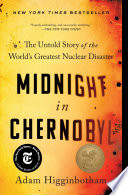 Midnight in ChernobylAbout the book →
The 1986 nuclear disaster at the Chernobyl Nuclear Power Plant is one of the darkest chapters of the 20th century. In Midnight in Chernobyl, journalist Adam Higginbotham treats the nuclear meltdown not just as a historical tragedy, but as a slow-burn, apocalyptic thriller.
Drawing on newly declassified documents and interviews with survivors, Higginbotham traces the hubris, systemic failures, and catastrophic decisions that led to the explosion of Reactor No. 4. The chapters detailing the heroic firefighters and plant workers who rushed into an invisible, radioactive hellscape with no protective gear to prevent a second, even more devastating explosion will leave your heart pounding.
9. The Feather Thief by Kirk Wallace Johnson
For something entirely unexpected, Kirk Wallace Johnson’s The Feather Thief explores a bizarre, high-stakes heist that feels like a cross between Ocean’s Eleven and a quirky true-crime documentary. In 2009, a twenty-year-old American music student and gifted flutist broke into the prestigious British Museum of Natural History in Tring.
His target wasn't gold or diamonds. He stole hundreds of irreplaceable, centuries-old bird skins collected by Victorian naturalist Alfred Russel Wallace. The loot was destined to be sold on the underground black market to eccentric Victorian fly-tying enthusiasts. Johnson investigates the bizarre subculture of salmon-fly tying, tracking the stolen feathers across the globe in a quirky, obsessive, and endlessly fascinating narrative.
10. Endurance: Shackleton's Incredible Voyage by Alfred Lansing
 EnduranceAbout the book →
No list of nonfiction thrillers would be complete without Alfred Lansing’s ultimate survival classic, Endurance. In 1914, Sir Ernest Shackleton set sail for Antarctica with a crew of 27 men, aiming to achieve the first land crossing of the Antarctic continent. Before they even reached land, their ship, the Endurance, became trapped and eventually crushed by pack ice in the Weddell Sea.
What follows is arguably the greatest survival story in human history. Stranded on floating blocks of ice for months with dwindling supplies, facing sub-zero temperatures, darkness, and psychological strain, Shackleton and his men embarked on an unimaginable journey in open lifeboats across the stormiest oceans on Earth. Lansing’s prose is so immersive that you will feel the freezing spray and hear the groaning ice right alongside the crew.
Actionable Tips for Reading More Nonfiction Thrillers
If you want to transition into reading more narrative nonfiction, keep these quick strategies in mind to enhance your experience:
- Research the Author’s Methodology: Check the source notes or author's note at the back of the book. Knowing how the writer gathered dialogue and recreated scenes adds a layer of appreciation to the storytelling.
- Don’t Rush the Pacing: Nonfiction often includes historical context or technical details that fiction skips. Lean into these details—they build the world and make the eventual climax feel earned.
- Listen to Audiobooks: Many narrative nonfiction books feature exceptional voice actors who bring journalistic prose to life with cinematic tension and authentic accents.
The next time you are browsing for a new book, skip the fiction aisle. Pick up one of these gripping nonfiction books that read like a thriller, and discover just how extraordinary, terrifying, and awe-inspiring the real world truly is.


![Awakening, The [EasyRead Large Edition] by Kate Chopin - American literature book cover](/_next/image?url=%2Fbooks%2Fcovers%2Fcmrlw76oa02zf5hkf5uj9zggd.jpg&w=1920&q=75)





