
Human beings are cognitive creatures of habit. We build mental models of the world during childhood, refine them through our teenage years, and spend the rest of our adult lives defending them against any data that threatens to tear them down. We prefer the comfort of our preconceived notions over the jarring reality of a universe that is far stranger, more complex, and more paradoxical than our everyday routines suggest.
Yet, every so often, a piece of literature comes along that acts like a cognitive crowbar, prying open our tightly locked assumptions and letting in a flood of fresh perspective. These are the rare works of non-fiction, philosophy, and mind-bending science that do not just add to your knowledge base—they completely dismantle and rebuild it. If you are feeling intellectually stagnant or crave a paradigm shift, you need to read books that will make you rethink everything you know.
In this comprehensive guide, we have curated a list of 10 transformative reads that challenge conventional wisdom regarding reality, time, human behavior, technology, and success. Buckle up; your worldview is about to get an upgrade.
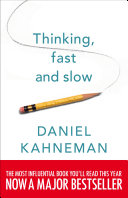
1. "Thinking, Fast and Slow" by Daniel Kahneman
 Thinking, Fast and SlowAbout the book →
For centuries, Western philosophy operated on the core assumption that humans are rational actors who carefully weigh evidence before making decisions. Nobel laureate Daniel Kahneman obliterated this comforting illusion. In Thinking, Fast and Slow, Kahneman introduces readers to the dual-process model of the human brain: System 1 (fast, instinctive, and emotional) and System 2 (slower, more deliberative, and logical).
What makes this book essential reading is how it demonstrates that System 1 is in control far more often than we realize, leading us into systemic cognitive biases. We fall prey to the anchoring effect, confirmation bias, and the availability heuristic without ever realizing our minds are playing tricks on us.
Practical Takeaway for Your Daily Life
The next time you make a snap financial decision or form an instant judgment about a colleague, pause. Acknowledge that your System 1 is driving. Force yourself to engage System 2 by asking, "What evidence am I ignoring right now?"
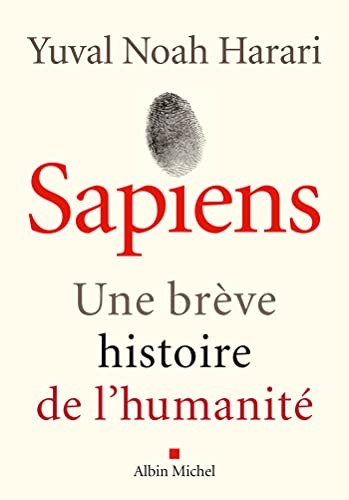
2. "Sapiens: A Brief History of Humankind" by Yuval Noah Harari
 SapiensAbout the book →
How did a fragile, insignificant ape species living on the fringes of the African savannah manage to conquer the globe? Most people would answer: through superior intelligence, tool-making, or language. Yuval Noah Harari argues that the secret weapon of Homo sapiens is our unique ability to believe in shared fictions.
Harari explains that humans can cooperate flexibly in numbers exceeding millions because we alone can invent and believe in abstract concepts like money, human rights, nations, and corporations. None of these things exist in physical reality; they are collective myths. Understanding this alters how you view modern societal structures forever.
"You could never convince a monkey to give you a banana by promising him limitless bananas after death in monkey heaven." — Yuval Noah Harari
3. "The Structure of Scientific Revolutions" by Thomas S. Kuhn
 The Structure of Scientific RevolutionsAbout the book →
We like to think that science marches forward in a straight, cumulative line of steady progress—each generation adding another brick to the towering edifice of human knowledge. Thomas Kuhn radically upended this view by introducing the concept of the "paradigm shift."
Kuhn demonstrated that science actually operates in long periods of "normal science" governed by an accepted framework (a paradigm). When anomalies pile up that the current paradigm cannot explain, a crisis occurs, eventually leading to a violent overthrow of the old model in favor of a new one. This book proves that even our most rigorous objective institutions are shaped by human psychology and cultural consensus.
4. "Antifragile: Things That Gain from Disorder" by Nassim Nicholas Taleb
 AntifragileAbout the book →
Most people strive for robustness—the ability to withstand shocks and remain the same. Nassim Nicholas Taleb argues that robustness is not enough. We need to be antifragile. While fragile things break under stress and robust things resist it, antifragile things actually benefit from volatility, chaos, disorder, and stressors.
Taleb applies this concept across economics, medicine, life, and urban planning. By realizing that complete stability is the enemy of growth, you stop running away from failure and uncertainty, transforming setbacks into fuel for evolution.
How to Apply Antifragility
- Stop seeking absolute security in your career; instead, build diversified skill sets that thrive in changing market conditions.
- Expose yourself to controlled amounts of physical stress (exercise, fasting) to trigger biological strengthening.
- Embrace small failures as necessary evolutionary data rather than personal defeats.
5. "The Denial of Death" by Ernest Becker
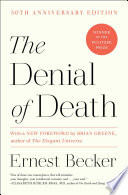 The Denial of DeathAbout the book →
Winner of the Pulitzer Prize, Ernest Becker’s masterpiece argues that human civilization is ultimately a heroic, symbolic defense mechanism against our deep-seated, repressed terror of our own mortality. Becker posits that everything humans do—from building empires and writing poetry to accumulating wealth and fighting wars—is driven by an underlying quest for immortality.
Reading this book will make you look at human ambition, ego, and cultural rituals through an entirely different lens. You begin to see that behind every act of pride or insecurity lies a mortal creature trying to transcend its own biological expiration date.
6. "The Order of Time" by Carlo Rovelli
What is time? To most of us, it is a relentless river flowing from the past, through the present, into the future. Theoretical physicist Carlo Rovelli shatters this intuition in The Order of Time. Drawing on quantum gravity, Rovelli explains that at the fundamental level of the universe, time does not exist.
There is no universal "now." Time passes at different speeds depending on gravity and velocity, and the past and future are human constructs born from thermodynamic entropy. It is a dizzying, poetic read that leaves you staring at the ceiling, questioning the very fabric of your existence.
7. "Man’s Search for Meaning" by Viktor E. Frankl
 Man's Search for MeaningAbout the book →
Part memoir, part psychological treatise, Viktor Frankl’s account of surviving Nazi concentration camps is one of the most profound documents of the 20th century. Frankl observed that the prisoners who survived were not necessarily the strongest physically, but those who maintained a deep sense of meaning in their lives.
Frankl’s core thesis is revolutionary: humans are not driven primarily by pleasure (Freud) or power (Adler), but by the " will to meaning." Circumstances can strip away your possessions, your freedom, and your loved ones, but they can never strip away your freedom to choose your attitude toward those circumstances.
8. "The Beginning of Infinity" by David Deutsch
Physicist David Deutsch takes readers on a breathtaking journey across epistemology, quantum physics, evolutionary biology, and artificial intelligence. His central premise is relentlessly optimistic: problems are inevitable, but problems are soluble, and human knowledge has the potential for infinite growth.
Deutsch challenges the static, zero-sum worldview that dominates modern environmental and political discourse. He shows that progress is not a fluke, but a fundamental feature of a rational universe. After reading this, your pessimism about the future of humanity will be systematically dismantled.
9. "Fooled by Randomness" by Nassim Nicholas Taleb
Making a second appearance on our list, Taleb’s earlier work dives deep into our innate blindness to the role of luck in success. We live in a culture that loves narrative: when someone becomes wealthy or successful, we immediately invent a causal story about their brilliance, discipline, or vision.
In reality, as Taleb demonstrates with sharp statistical insights, survivorship bias and sheer randomness play a massive role in who succeeds and who fails. Recognizing this does not make you cynical; it makes you humble, grateful, and far better at managing risk.
10. "Behave: The Biology of Humans at Our Best and Worst" by Robert Sapolsky
Why do humans do what we do? When trying to explain a violent act or an act of extraordinary altruism, neuroscientist Robert Sapolsky insists that you cannot look at just one factor. You have to zoom out across multiple time horizons.
Sapolsky takes the reader on an intellectual tour de force:
- What happened in the brain one second before the behavior?
- What hormonal spikes occurred hours or days prior?
- How did childhood experiences and embryonic development shape the biology?
- What cultural, ecological, and evolutionary pressures shaped the behavior over centuries?
By the time you finish the book, simplistic moral labels of "good" and "bad" people dissolve into a rich, compassionate understanding of biological complexity.
Conclusion: The Journey of Unlearning
Expanding your mind is not about collecting more facts to reinforce what you already believe. True intellectual growth is an act of subtraction—it requires the courage to unlearn outdated mental models, embrace uncertainty, and sit comfortably with paradox.
The books on this list are not beach reads; they are intellectual catalysts. They will challenge your politics, your science, your psychology, and your perception of time itself. Pick up just one of these titles this month, let it dismantle your assumptions, and watch how your entire world opens up.





