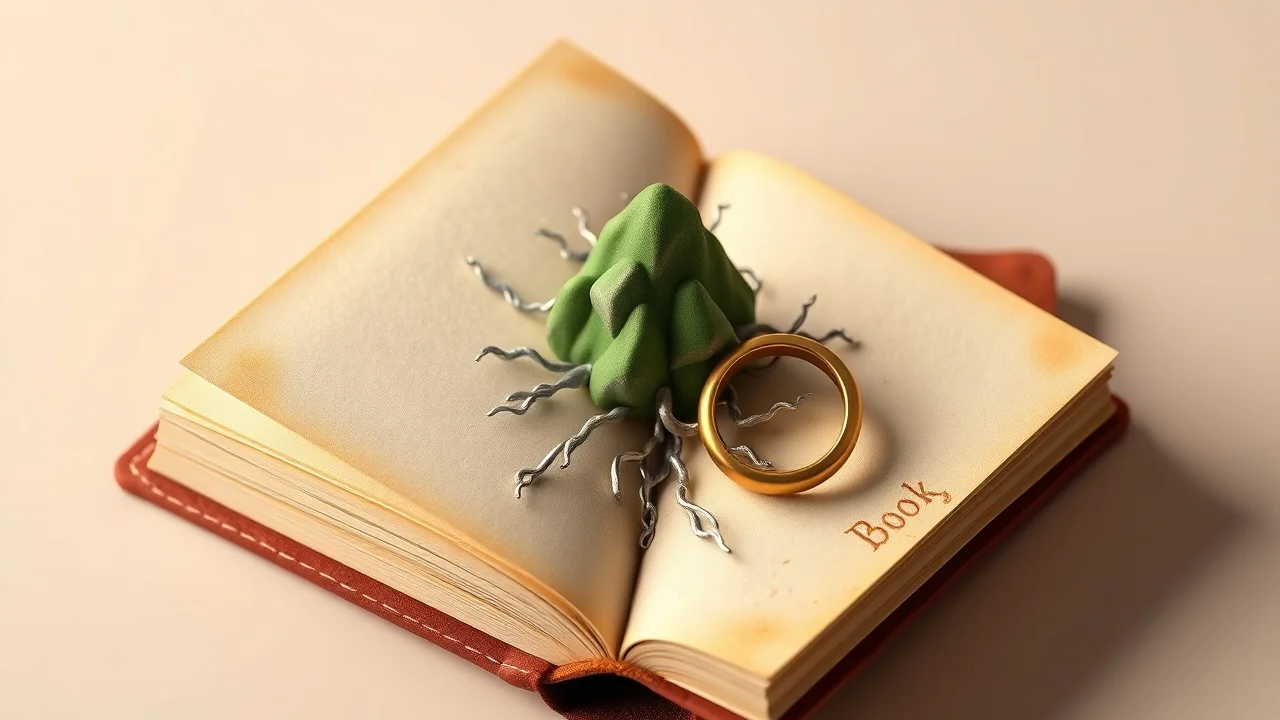
The Return of the King
Being the Third Part of The Lord of the Rings

📘 About This Book
In this epic conclusion to Tolkien's legendary masterwork, the fate of Middle-earth hangs in the balance as fractured armies unite for a final, desperate stand against the shadow. While mighty heroes wage war on the battlefields of Gondor to reclaim a lost crown, two small hobbits bear an unbearable burden toward the fires of Mount Doom. Triumph and tragedy collide in a timeless tale where the greatest victories are won not by overwhelming strength, but by the smallest of hands.
📖 Summary
The Return of the King serves as the monumental conclusion to J.R.R. Tolkien’s The Lord of the Rings trilogy. As Sauron’s forces launch an all-out assault on Gondor, the narrative splits between the defense of Minas Tirith and Frodo and Sam’s perilous final trek toward Mount Doom. The Siege of Gondor is characterized by desperate hope and the strategic military leadership of Gandalf and Aragorn, who accepts his destiny as the rightful heir to the throne of Gondor. Aragorn’s decision to lead an army to the Black Gate serves as a diversion, drawing out Sauron’s forces and granting the exhausted Hobbits the narrowest of chances to reach the Cracks of Doom. Inside the volcano, the physical and psychological toll of the One Ring reaches its breaking point, culminating in a dramatic struggle that sees the destruction of the artifact and the subsequent collapse of Sauron’s power. Following the victory, the story transitions into the aftermath of the war, detailing the coronation of King Elessar and his marriage to Arwen. However, the journey home reveals that evil has touched the Shire in their absence, forcing the Hobbits to utilize their newfound courage and strength to liberate their homeland. The narrative concludes with the poignant departure of the Elves and Frodo from the Grey Havens, signaling the end of the Third Age and the beginning of the Age of Men. The book is a profound meditation on the nature of heroism, the corruption of power, and the bittersweet reality that even after great victories, life and the world itself must inevitably change and move forward. Through themes of sacrifice, friendship, and the quiet dignity of the humble, Tolkien creates a mythic structure that defines the modern fantasy genre, emphasizing that the smallest hands can change the course of history while highlighting the cost of peace.
🎯 Key Lessons
💬 Notable Quotes
"I will not say: do not weep; for not all tears are an evil."
"I can't carry it for you, but I can carry you!"
"How do you pick up the threads of an old life? How do you go on, when in your heart you begin to understand there is no going back?"
"I am no man!"
"The rule of no realm is mine, but all worthy things that are in peril as the world now stands, those are my care."
"Well, I'm back."
⚖️ Pros & Cons
✅ Pros
Unparalleled world-building and linguistic depth.
Profound emotional resonance and epic scale.
Masterful exploration of moral complexity and growth.
⚠️ Cons
The pacing slows significantly in the final chapters.
The dense, archaic prose style can be challenging for some readers.
✍️ About the Author
J.R.R. Tolkien (1892-1973) was an English author and philologist who created 'The Lord of the Rings' and 'The Hobbit', foundational works that shaped the modern fantasy genre.
View all books →❓ FAQ
Is this book worth reading? +
Yes, it is considered a foundational masterpiece of Western literature that offers a deeply rewarding emotional and intellectual experience.
How long does it take to read? +
For an average reader, it takes approximately 12 to 18 hours, though this varies based on your reading speed and familiarity with Tolkien’s dense prose.
What is the main message? +
The main message is that hope and perseverance, even in the face of certain doom, are the forces that ultimately overcome darkness.