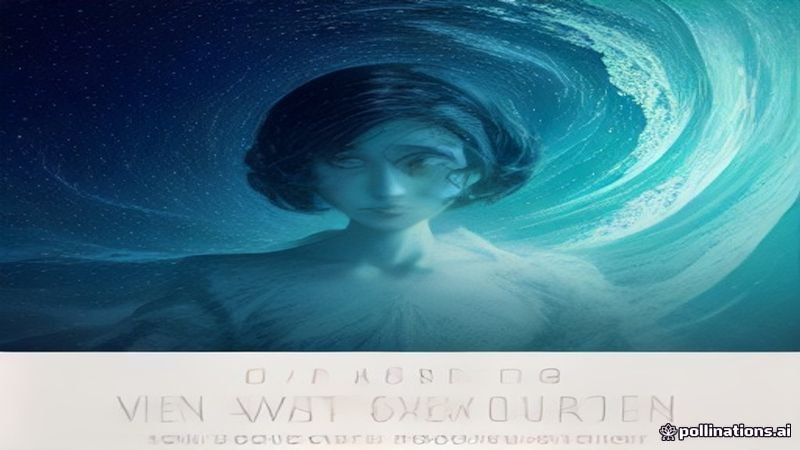
Solaris

📘 About This Book
Arriving at a remote research station suspended above a mysterious ocean-covered planet, psychologist Kris Kelvin expects a routine scientific assignment. Instead, he and his fellow researchers are confronted by physical manifestations of their most agonizing personal memories, forced upon them by the planet's colossal and unfathomable sentient sea. Stanisław Lem's masterpiece is a haunting psychological journey into the limits of human understanding and the terrifying vastness of the truly alien.
📖 Summary
Stanisław Lem’s masterwork, Solaris, stands as a towering achievement in both Polish science fiction and international literature. Clocking in at a concise 218 pages, the novel plunges the reader into a cerebral and deeply unsettling exploration of humanity’s limitations when confronting the truly alien. The story follows Dr. Kris Kelvin, a psychologist who arrives at the floating research station hovering above the mysterious planet Solaris. The planet is almost entirely covered by a colossal, sentient ocean, an enigmatic entity that has baffled scientists for generations. Decades of academic research have yielded little progress, resulting in a stagnant field known as Solaristics, where scholars debate theories without ever truly understanding the subject of their study. Shortly after Kelvin's arrival, the station falls into a state of psychological decay and eerie isolation, populated by haunted, exhausted researchers. The true depth of the planet's power soon reveals itself not through hostile attacks or grand communications, but through the manifestation of physical apparitions drawn directly from the deepest, most repressed memories and guilts of the human crew. Kelvin himself is soon confronted by a physical replication of someone from his past whom he thought he had left behind forever, forcing him to confront painful truths about love, grief, and his own conscience. Through this haunting premise, the novel questions whether humanity is truly equipped to comprehend alien intelligence, or if we are merely trapped within the confines of our own psychological mirrors. Lem brilliantly contrasts the vast, silent majesty of the sentient ocean with the petty, flawed nature of human intellect and emotion. Rather than delivering a traditional space adventure filled with technological marvels and laser battles, Solaris offers a philosophical meditation on loneliness, guilt, and the inescapable nature of human consciousness. The book challenges the reader to look beyond human-centric definitions of life, communication, and intelligence, making it an enduring classic of speculative fiction that continues to resonate across languages and cultures.
🎯 Key Lessons
⚖️ Pros & Cons
✅ Pros
Deeply philosophical narrative that challenges traditional science fiction tropes.
Atmospheric and claustrophobic setting on the research station.
Fascinating concept of a truly alien, sentient ocean.
Explores complex themes of human guilt, memory, and limitations.
⚠️ Cons
Pacing slows significantly during extensive summaries of fictional academic literature.
Dense philosophical passages may not appeal to readers seeking fast-paced action.
✍️ About the Author
❓ FAQ
Who wrote Solaris? +
Solaris was written by the renowned Polish science fiction author Stanisław Lem.
How many pages is the book? +
The book spans 218 pages.
What genres does the book belong to? +
It falls into categories including Polish science fiction, English fiction, translated fiction, and Polish literature.
What is the main setting of the story? +
The story is primarily set on a floating research station hovering above the mysterious, ocean-covered planet Solaris.
What is the central conflict of the novel? +
The central conflict revolves around human scientists being confronted by physical manifestations of their own repressed memories, generated by the sentient planetary ocean.