
The Great Literary Lottery: Myth vs. Reality
Every year, hundreds of thousands of books are published globally. From polished traditionally published titles to scrappy self-published indie hits, the marketplace is more saturated than ever. Yet, a tiny fraction of these books ascend to the coveted status of a bestseller. For aspiring authors and avid readers alike, the question remains a perpetual puzzle: Why do some books become bestsellers and others don't?
The casual observer often chalks it up to sheer luck. We love the narrative of the overnight success—an unknown author writing a manuscript in a coffee shop, only to be discovered by a visionary agent and propelled onto the New York Times bestseller list. But behind almost every runaway hit lies a sophisticated machinery of psychological triggers, strategic timing, relentless marketing, and, yes, a dash of undeniable literary magic. Understanding why some books become bestsellers requires looking past the romanticized myth and examining the predictable, repeatable patterns of cultural resonance.
1. The Psychology of Cultural Resonance
At the heart of every bestseller is a profound connection with the zeitgeist. Books that capture the cultural mood do not just entertain readers; they give voice to anxieties, desires, and questions that people are already grappling with subconsciously. When a book addresses a collective itch, readers cannot help themselves—they must share it.
Consider how Gillian Flynn's 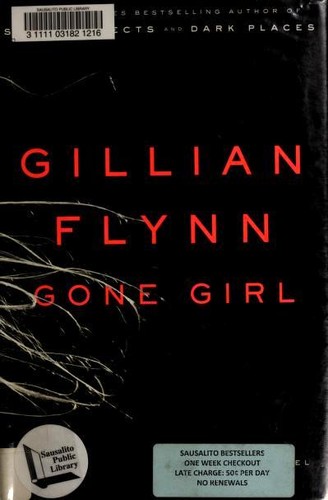 Gone Girl tapped into dark cynicism about modern marriage, or how Margaret Atwood's
 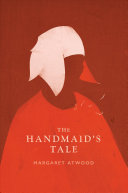 The Handmaid's Tale experienced a massive resurgence in bestseller lists because its themes mirrored contemporary political anxieties. Bestselling books act as mirrors for society. They make the reader feel seen, validated, or jolted into a new perspective.
Furthermore, emotional velocity plays a critical role. A bestseller makes the reader feel intensely. Whether it is the tear-jerking tragedy of Colleen Hoover's  It Ends With Us or the heart-pounding suspense of a Stephen King thriller, emotional extremes drive word-of-mouth recommendations. When a book devastates or electrifies a reader, their immediate instinct is to pass it to a friend and say, "You have to read this so we can talk about it."
2. The Architecture of Readability and Pacing
It is a common misconception that literary complexity drives commercial success. While literary masterpieces certainly win awards, commercial bestsellers are masters of accessibility and pacing. They understand human cognitive limits and the way modern readers consume media.
Several structural elements separate page-turners from books that gather dust on nightstands:
- The Hook-Driven Chapter Structure: Bestsellers almost universally employ micro-cliffhangers at the end of chapters, compelling the reader to turn just one more page, even if it is 2:00 AM.
- Frictionless Prose: The writing style is rarely overly dense or florid. It is clean, evocative, and designed to let the reader's imagination paint the scene without stumbling over convoluted syntax.
- High Stakes From Page One: Whether in fiction or non-fiction, the central conflict or promise is established immediately. The reader instantly knows what is at stake if the protagonist fails—or what transformation awaits them if they adopt the book's advice.
In non-fiction, this translates to actionable clarity. Bestsellers like James Clear's 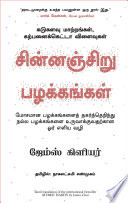 Atomic Habits succeed because they take complex psychological concepts and distill them into memorable frameworks, catchy acronyms, and practical systems that anyone can implement.
"A bestseller is rarely just a good book; it is an experience meticulously engineered to be irresistible, shared, and discussed by thousands of readers simultaneously."
3. The Invisible Engine: Discoverability and Distribution
You can write the greatest book of the century, but if nobody knows it exists, it will not become a bestseller. In the modern publishing landscape, discoverability is everything. This is where the division between traditional publishing houses and independent authors often blurs, as both must master the art of distribution.
Traditional publishers bring immense muscle to this arena:
- Shelf Space Dominance: Securing physical placement in Barnes & Noble, airport bookstores, and independent shops puts books directly in front of impulse buyers.
- Early Review Machine: Securing starred reviews from critical industry gatekeepers like Publishers Weekly, Kirkus Reviews, and Library Journal months before publication builds essential early momentum.
- Cooperative Marketing Dollars: Publishers pay for prominent placement in retailer newsletters, promotional slots on Amazon, and cooperative displays that scream "blockbuster."
However, indie authors have proven that strategic digital marketing can level the playing field. Through targeted Amazon Ads, BookBub promotions, and building direct-to-consumer email lists, self-published authors frequently crack bestseller lists by treating their book launch not as an artistic event, but as a sophisticated product launch.
4. The Power of Word-of-Mouth and Social Proof
No amount of advertising budget can manufacture organic word-of-mouth enthusiasm. Advertising can buy visibility, but it cannot buy passion. When books become true cultural phenomena, it is almost always driven by peer-to-peer recommendation.
In the digital age, this word-of-mouth engine has evolved dramatically. Platforms like BookTok (the book-focused community on TikTok) have completely disrupted traditional bestseller metrics. A single emotional video review from an enthusiastic reader can catapult a backlist book—one that was previously considered commercially dead—to the top of the charts overnight. Publishers now actively court book influencers, recognizing that authentic community recommendations carry vastly more weight with younger demographics than traditional newspaper reviews.
Social proof also compounds rapidly. When a book hits a bestseller list (whether via the New York Times, USA Today, or Amazon charts), it triggers a psychological bias in consumers. People assume that if hundreds of thousands of others are buying a book, it must be worth reading. This creates a self-fulfilling prophecy: visibility drives sales, and sales drive higher visibility.
5. Timing and Market Positioning
Sometimes, the deciding factor between a bestseller and a forgotten manuscript is pure, unadulterated timing. A book about remote work strategies published in 2018 might have struggled to find an audience; published in June 2020, it would likely be a runaway bestseller. Market readiness is critical.
Positioning also involves finding a distinct gap in the market. Successful authors do not try to write a book that is "like everything else on the shelf"; they find a unique intersection of genres or ideas. They look at what readers are craving that publishers are currently under-delivering. This might mean blending historical fiction with magical realism, or bringing a fresh, marginalized perspective to a traditionally homogeneous genre.
Furthermore, packaging plays a massive role in market positioning. A book's cover, typography, and subtitle are the first line of marketing communication. A well-designed cover instantly signals genre expectations, production quality, and emotional tone. Readers *do* judge books by their covers, and a sub-par cover is often the silent killer of an otherwise brilliant book's commercial potential.
Conclusion: Crafting Your Path to Success
So, why do some books become bestsellers and others don't? The answer is a complex intersection of emotional resonance, frictionless readability, strategic distribution, organic community-driven word-of-mouth, and impeccable timing. While there is no absolute blueprint or guaranteed formula for writing a bestseller, understanding these underlying mechanics demystifies the publishing industry.
For authors, the lesson is clear: focus on craft and emotional connection first, but never treat marketing and positioning as an afterthought. For readers, recognizing these mechanisms offers a fascinating glimpse behind the curtain of the books we love, helping us appreciate how a humble collection of words on paper can transform into a global cultural phenomenon.





