
Ever wonder what separates the world's most successful leaders from the rest of the pack? While there is no single blueprint for building a multi-billion-dollar empire, if you peek into the home offices, reading lists, and nightstands of global titans like Elon Musk, Bill Gates, Jeff Bezos, and Warren Buffett, you will find a common denominator: an insatiable appetite for reading.
The elite do not read merely for entertainment. They read to master mental models, understand complex historical patterns, scale businesses, and refine their leadership philosophies. If you want to think like a titan, you have to read like one. In this comprehensive guide, we have curated the top 15 books recommended by billionaires and CEOs that will completely transform how you approach business, strategy, and personal growth.
1. The Ultimate Entrepreneurial Playbooks (Tech & Innovation)
When you are building disruptive technologies that change the world, traditional business textbooks simply do not cut it. The leaders driving Silicon Valley and global tech infrastructure rely on specific texts to understand engineering, hard work, and exponential scaling.
Zero to One: Notes on Startups, or How to Build the Future by Peter Thiel
Recommended widely by tech founders and venture capitalists, PayPal co-founder Peter Thiel argues that future progress comes from monopoly, not competition. Thiel challenges readers to build something entirely new rather than iterating on existing ideas. It is a masterclass in contrarian thinking.
Elon Musk: Tesla, SpaceX, and the Quest for a Fantastic Future by Ashlee Vance
While technically a biography rather than a self-help book, this chronicle of Elon Musk’s life is treated as gospel by aspiring entrepreneurs. Musk’s relentless work ethic, mastery of first-principles thinking, and refusal to accept "impossible" are laid bare. It is frequently cited as a must-read for anyone looking to scale hardware and software startups.
The Innovator's Dilemma by Clayton M. Christensen
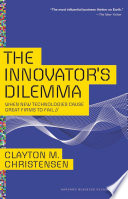 The Innovator's DilemmaAbout the book →
Famously handed out by Steve Jobs to his inner circle, this book explains why great companies fail even when they do everything right. Christensen proves that listening to your best customers and focusing on incremental improvements can blind you to disruptive technologies bubbling up from below.
2. Mastering Investment and Long-Term Wealth Creation
Building wealth is not about getting lucky on a single trade; it is about cultivating a compounding mindset. The world's most successful investors look at markets through lenses forged by history, patience, and rigorous analytical frameworks.
The Intelligent Investor by Benjamin Graham
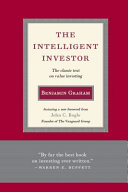 The Intelligent InvestorAbout the book →
If you ask Warren Buffett for the single most important book on investing, his answer never changes: The Intelligent Investor. Graham’s philosophy of "value investing"—focusing on the intrinsic value of a business rather than market volatility—is the bedrock upon which Berkshire Hathaway was built.
Principles: Life and Work by Ray Dalio
Billionaire hedge fund manager Ray Dalio shares the radical transparency and algorithmic decision-making frameworks that built Bridgewater Associates. Dalio treats life and business like a machine, urging leaders to remove ego from the equation and treat mistakes as learning data.
"I could tell you books that have influenced me a lot, but I don't want you to go out and read them. I want you to read what you are genuinely curious about." — Bill Gates
3. Strategic Thinking, War, and Geopolitics
CEOs managing global supply chains, regulatory battles, and fierce market competition often find themselves studying ancient philosophy and military strategy. Market share is, after all, territory won through calculated moves.
The Art of War by Sun Tzu
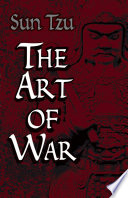 The Art of WarAbout the book →
Frequently cited by corporate executives and Wall Street moguls, Sun Tzu's ancient treatise teaches that the supreme art of war is to subdue the enemy without fighting. In a business context, this translates to outsmarting competitors through positioning, efficiency, and market timing rather than brutal price wars.
The Prince by Niccolò Machiavelli
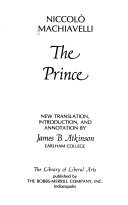 The PrinceAbout the book →
Though controversial, this classic on power dynamics is quietly devoured by leaders who need to understand realpolitik. It teaches the unvarnished realities of influence, negotiation, and maintaining control in volatile environments.
Good to Great: Why Some Companies Make the Leap... and Others Don't by Jim Collins
Based on a massive empirical study of companies that transitioned from mediocre performers to sustained market leaders, Collins identifies concepts like the "Hedgehog Concept" and the "Flywheel Effect." It is an essential playbook for organizational design and leadership discipline.
4. Cognitive Biographies and Mindset Mastery
You cannot effectively lead others if you cannot master your own psychology. Billionaires frequently turn to deep biographies and psychological studies to understand the human condition and avoid cognitive pitfalls.
Benjamin Franklin: An American Life by Walter Isaacson
Bill Gates and Charlie Munger both hold Benjamin Franklin in high regard. This biography showcases Franklin’s polymathic curiosity, his relentless drive for self-improvement, and his ability to bridge science, business, and statecraft.
Thinking, Fast and Slow by Daniel Kahneman
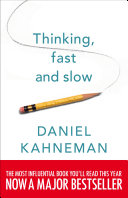 Thinking, Fast and SlowAbout the book →
While not written as a business book, Nobel laureate Daniel Kahneman’s work on cognitive biases is essential reading for CEOs. Understanding System 1 (fast, intuitive thinking) and System 2 (slow, logical thinking) helps leaders avoid costly strategic blunders driven by emotional decision-making.
The Autobiography of Benjamin Franklin
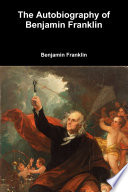 The Autobiography of Benjamin FranklinAbout the book →
A perennial classic, this text outlines Franklin’s famous thirteen virtues and his systematic approach to tracking personal habits. It is one of the earliest and most effective productivity frameworks ever written.
5. Philosophy, Stoicism, and Resilience
When multi-billion-dollar deals fall through, public scrutiny peaks, and crises hit, mental fortitude is a CEO's most valuable asset. That is why ancient Stoic philosophy has experienced a massive resurgence in the modern boardroom.
Meditations by Marcus Aurelius
 MeditationsAbout the book →
Written by the Roman Emperor as a personal journal of guidance and self-improvement, Meditations is a favorite of tech founders, hedge fund managers, and elite athletes. It teaches emotional detachment, duty, and how to find tranquility amidst chaos.
Man's Search for Meaning by Viktor E. Frankl
 Man's Search for MeaningAbout the book →
Recommended by numerous leaders navigating high-stress environments, Frankl’s harrowing account of surviving Nazi concentration camps while formulating logotherapy reminds readers that while we cannot always control what happens to us, we can entirely control how we respond.
Sapiens: A Brief History of Humankind by Yuval Noah Harari
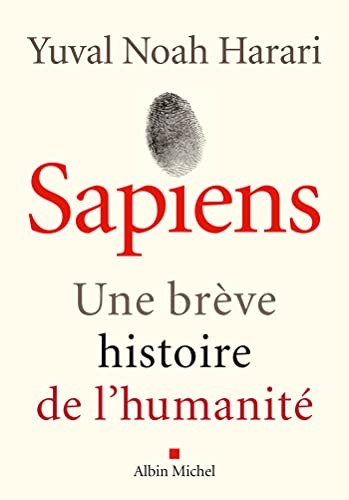 SapiensAbout the book →
Endorsed by Bill Gates and Mark Zuckerberg, Sapiens traces how a minor ape species became the rulers of planet Earth through the power of shared myths and cooperation. For any leader building a company culture, understanding the anthropology of human collaboration is pure gold.
Thinking in Bets: Making Smarter Decisions When You Don't Have All the Facts by Annie Duke
Former professional poker player and cognitive psychologist Annie Duke explains how to view decisions as probabilities rather than black-and-white outcomes. This book helps leaders embrace uncertainty and upgrade their long-term strategic planning.
Actionable Strategies: How to Read Like a Billionaire
Knowing the top 15 books recommended by billionaires and CEOs is only half the battle. Elite readers do not just consume books—they extract and execute. Here is how you can apply their reading habits to your daily life:
- Read with a Purpose: Before cracking open a book, identify a specific problem you are trying to solve in your business or life. Let your curiosity drive your reading list.
- Take Active Notes: Do not just passively highlight text. Summarize key concepts in your own words, and immediately jot down one actionable takeaway you can implement within 24 hours.
- Prioritize Depth Over Speed: It is better to deeply master three foundational business books a year than to skim fifty popular titles that offer no lasting retention.
- Build a Compounding Library: Treat your bookshelf as an active toolkit. Revisit core texts like The Intelligent Investor or Good to Great every few years as your experience level evolves.
Conclusion
The books on this list are not magic pills that will instantly deposit millions into your bank account. Instead, they are condensed mental models gifted by history's greatest thinkers, strategists, and builders. By investing just thirty minutes a day into reading these top 15 books recommended by billionaires and CEOs, you are actively rewiring your brain for elite strategic execution, resilience, and long-term wealth creation. Pick your first title today, open the cover, and begin building your future.





