Literature has always served as a mirror to society, but occasionally, speculative fiction acts more like a crystal ball. When authors of the past sat down to pen tales of ruined futures, oppressive regimes, and technological overreach, they were often accused of being overly pessimistic. Yet, as we navigate the complexities of the 21st century, reading through the lens of these literary warnings reveals an unsettling truth: many of these nightmares have quietly transitioned from science fiction to our daily reality.
From algorithmic surveillance and relentless screen addiction to environmental collapse and the erosion of truth, the best speculative fiction does not just entertain us—it sounds an alarm. If you are looking to understand the psychological and societal shifts of the modern era, revisiting these prophetic books is essential. Here is a curated, deep-dive list of the top 10 dystopian novels that feel entirely too real today.
The Evolution of Dystopia: From Nuclear Paranoia to Algorithmic Control
Historically, dystopian literature was born out of the anxieties of its time. In the mid-20th century, the genre was heavily shaped by the looming shadow of totalitarianism, atomic warfare, and the Cold War. Authors like George Orwell and Aldous Huxley focused on massive state apparatuses that controlled populations through direct violence, ideological indoctrination, or pharmacological pacification.
However, the modern dystopian landscape has shifted dramatically. Today, we are rarely forced into subjugation at gunpoint. Instead, we willingly download the tools of our own containment. We invite surveillance systems into our living rooms under the guise of smart home convenience, and we trade our privacy for personalized algorithmic feeds. The dystopian novels that resonate most deeply today are those that explore how humanity surrendered its autonomy not with a bang, but with a tap, a swipe, and a click.
Top 10 Dystopian Novels Mirroring Our Modern World
-
1984 by George Orwell
No list of dystopian warnings is complete without George Orwell’s masterpiece. Written in 1948, 1984 introduced us to Big Brother, the Thought Police, and the Ministry of Truth. Today, Orwell’s world feels less like a warning and more like an operational manual for modern authoritarianism and corporate data harvesting.
Consider the "telescreens" that simultaneously broadcast state propaganda and monitor every movement of the citizens. While we do not have government-mandated screens barking orders in our bedrooms, we do carry smartphones in our pockets that track our locations, listen to our conversations through voice assistants, and feed our behavioral data to unseen entities. The concept of "Doublethink"—holding two contradictory beliefs simultaneously and accepting both—feels strikingly familiar in an era of rampant misinformation, "fake news," and deepfakes.
-
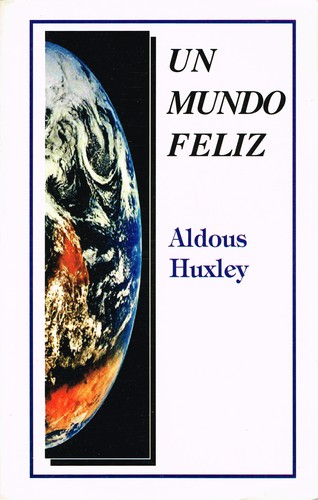
Brave New World by Aldous Huxley
 Brave New WorldAbout the book →
If Orwell feared that information would be concealed from us, Huxley feared that truth would be drowned in a sea of irrelevance. In Brave New World, citizens are not controlled by pain and torture, but by pleasure, consumerism, and a state-sanctioned drug called soma.
Huxley’s vision of a society addicted to instant gratification, endless entertainment, and superficial distractions is arguably more accurate to modern Western society than Orwell's vision. We live in an age of doomscrolling, binge-watching, and pharmaceutical management of everyday anxiety. When we look at how social media platforms engineer dopamine loops to keep users hooked for hours, it is clear that we are living in a society willingly wrapped in Huxley’s comforting blanket of distraction.
-
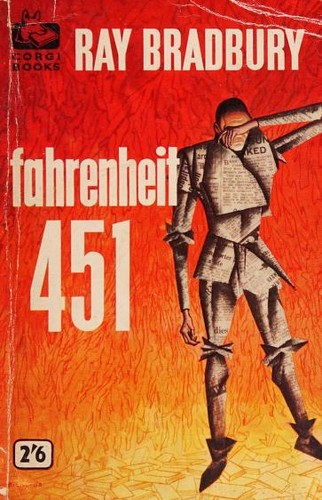
Fahrenheit 451 by Ray Bradbury
 Fahrenheit 451About the book →
Ray Bradbury’s Fahrenheit 451 centers on Guy Montag, a "fireman" whose job is not to put out fires, but to burn books. In Bradbury’s world, books are banned because they spark uncomfortable questions, provoke independent thought, and cause emotional distress. Alongside book-burning, citizens sit in front of massive wall-to-wall interactive television screens ("parlor walls") that broadcast mindless, fast-paced sensationalism.
Today, the threat to literature is rarely direct state book-burning; rather, it manifests as intellectual sanitization, trigger-warning culture gone awry, and the shrinking attention span of a populace trained on 15-second video clips. Furthermore, Bradbury predicted the rise of earbuds ("seashell radios") that isolate individuals from the real world, creating a society of people physically present yet mentally absent.
-
The Handmaid's Tale by Margaret Atwood
 The Handmaid's TaleAbout the book →
Margaret Atwood’s chilling novel depicts the Republic of Gilead, a totalitarian regime that overthrows the United States government and strips women of all bodily autonomy, rights, and property, reducing them to subjugated roles in the wake of an environmental infertility crisis.
Atwood famously stated that she did not include any practices in her novel that had not already happened somewhere in human history. Yet, in the wake of shifting legal landscapes surrounding reproductive rights globally, The Handmaid’s Tale has transitioned from a speculative feminist critique into an immediate, visceral political touchstone. The novel serves as a stark reminder of how fragile democratic institutions and civil liberties truly are, and how quickly rights can be rolled back under the banner of moral renewal.
-
The Children of Men by P.D. James
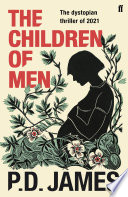 The Children of MenAbout the book →
P.D. James presents a world facing sudden, inexplicable global human infertility, leading to an aging population, economic stagnation, and a pervasive sense of hopeless despair as humanity realizes it has no future generation to inherit the earth.
While global infertility may not be our primary crisis, the underlying themes of demographic decline, eco-pessimism, and generational despair are overwhelmingly prevalent today. As birth rates plummet in industrialized nations and younger generations grapple with housing crises and climate anxiety, the existential dread of building a future in a dying world feels deeply authentic to modern readers.
-
The Parable of the Sower by Octavia E. Butler
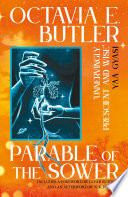 Parable of the SowerAbout the book →
Published in 1993 and set in the terrifyingly near future of the 2020s, Octavia E. Butler’s masterpiece depicts a society collapsing under the weight of climate change, widening wealth inequality, corporate greed, and the collapse of civil infrastructure.
Butler’s predictive accuracy is nothing short of haunting. She set her fictional societal collapse precisely in our current decade. The novel features water scarcity, rampant corporate exploitation where employees are paid in company scrip, runaway wildfires, and a political slogan ("Make America Great Again"—used by a demagogic candidate in the book) that mirrors real-world populist movements. Parable of the Sower is perhaps the ultimate literary artifact of modern eco-anxiety.
-
Never Let Me Go by Kazuo Ishiguro
 Never Let Me GoAbout the book →
Kazuo Ishiguro’s melancholic novel follows students at a seemingly idyllic English boarding school who gradually discover the horrifying truth of their existence: they are clones raised solely to provide organ donations for "normal" humans, destined to "complete" (die) by early adulthood.
Beyond the bioethical nightmares of cloning and medical commodification, Ishiguro’s novel explores how easily human beings accept systemic exploitation when it is normalized from childhood. In our own world, consumers routinely ignore the human and environmental costs of fast fashion, electronics manufacturing, and gig-economy labor. We know the system is built on exploitation, yet we look away because confronting it requires too much moral weight.
-
The Circle by Dave Eggers
Dave Eggers took direct aim at Silicon Valley hubris in The Circle, a novel about a massive tech monopoly that merges social media, user tracking, government data, and financial transactions into a single, seamless online identity. Their corporate motto: "Sharing is caring," "Privacy is theft," and "Secrets are lies."
Eggers anticipated the era of hyper-sharing, influencer culture, cancel culture, and the belief that every aspect of our private lives must be broadcast to validate our existence. As tech conglomerates continue to acquire our healthcare data, communication tools, and logistical infrastructure, The Circle reads less like fiction and more like a documentary on corporate overreach.
-
Station Eleven by Emily St. John Mandel
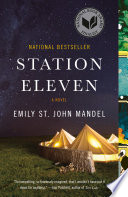 Station ElevenAbout the book →
Set before and after a devastating global flu pandemic wipes out the vast majority of human civilization, Emily St. John Mandel’s poetic novel follows a troupe of actors and musicians keeping art alive in the ruins of the old world.
Read in the aftermath of global pandemic disruptions, Station Eleven captures the fragility of global supply chains, international travel, and modern connectivity. Yet, its most profound takeaway is its exploration of what humanity actually values when the digital infrastructure vanishes. The novel asks a vital question for today's hyper-connected society: what survives when the servers go dark?
-
Scythe by Neal Shusterman
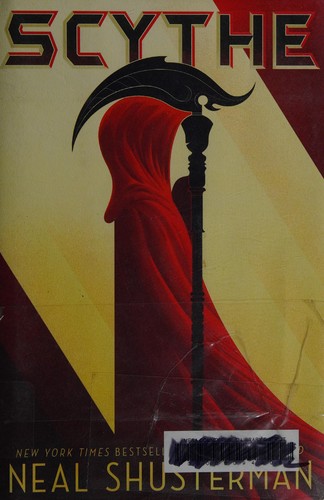 Scythe (Arc of a Scythe)About the book →
In Neal Shusterman’s world, humanity has conquered disease, aging, and death, managed entirely by an omniscient, benevolent artificial intelligence called the Thunderhead. To control population growth, a specialized order of executioners called Scythes must randomly "glean" (kill) citizens.
While set further in the future, Scythe touches on our deepest modern anxieties regarding artificial intelligence, algorithmic governance, and the ethics of technological utopianism. As AI models become capable of making complex decisions in healthcare, finance, and criminal justice, Shusterman forces us to question what happens when we hand the steering wheel of human survival over to machines.
- Audit Your Digital Footprint: Take control of your attention and privacy. Regularly review app permissions on your smartphone, turn off unnecessary location tracking, and use privacy-focused browsers.
- Diversify Your Information Diet: Break out of algorithmic echo chambers. Read physical books, seek out long-form journalism, and engage in face-to-face debates with people holding opposing viewpoints.
- Support Real-World Community: Dystopias thrive on isolation. Build robust local connections with your neighbors, support local independent bookstores, and participate in community mutual aid projects.
- Practice Digital Sabbaticals: Set aside specific hours—or an entire day each week—where you disconnect entirely from screens, social media, and news alerts to reconnect with the physical world.
"Dystopian literature does not exist to predict a fixed future; it exists to expose the cracks in the present so we can build a different path before the ink dries."
How to Apply the Lessons of Dystopian Fiction to Your Life
Recognizing the dystopian threads woven into our modern society can easily lead to fatalism or despair. However, the true purpose of these books is not to scare us into submission, but to empower us through awareness. Here is some actionable advice on how to reclaim your autonomy in an increasingly automated world:
Conclusion: Writing Our Own Future
The enduring popularity of these top dystopian novels proves that humanity has an innate desire to stare into the abyss and assess the dangers ahead. While Orwell, Huxley, Butler, and Atwood painted terrifying pictures of what could go wrong, their stories also highlight the resilience, curiosity, and moral courage of the human spirit.
We are not passive characters trapped in a predetermined script. By recognizing the warning signs of modern surveillance, algorithm-driven polarization, and corporate overreach, we still have the power to edit the narrative. The future is unwritten—and unlike the protagonists of these great novels, we still have the time to change the ending.





