
We are what we repeatedly do. Excellence, then, is not an act, but a habit. Yet, despite our best intentions, making lasting lifestyle changes often feels like an uphill battle. You buy a gym membership in January, only to abandon it by February. You resolve to read every night, but end up scrolling on your phone instead. Why is self-discipline so painfully difficult to sustain?
The secret lies not in a lack of willpower, but in a lack of system. To truly transform your life, you need to understand the psychology of human behavior. Fortunately, some of the world's finest researchers, psychologists, and writers have spent decades decoding how our brains form routines. If you are ready to stop relying on fleeting motivation and start engineering sustainable personal growth, you need to dive into the literature.
In this comprehensive guide, we explore the top 10 books about building better habits. These aren't just motivational fluff; they are scientifically backed blueprints designed to help you redesign your environment, break bad loops, and build a version of yourself you can be proud of.
Why Reading About Habit Formation Matters
Before diving into the list, it is worth asking: why read books about building better habits when you could just "try harder"? The answer is simple. Hard work without strategy leads to burnout. When you understand the neurological loop of a habit—the cue, the craving, the response, and the reward—you stop fighting your brain and start working with it.
Furthermore, these books provide frameworks that can be applied to every area of your life, whether you want to write a novel, build a million-dollar business, or simply drink more water. Let’s dive into the ultimate reading list for self-improvement.
The Top 10 Books About Building Better Habits
Our curated list features contemporary masterpieces as well as timeless classics that have shaped the personal development landscape.
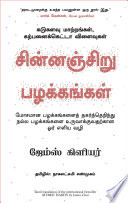
1. "Atomic Habits" by James Clear
 Atomic HabitsAbout the book →
It is impossible to discuss this genre without mentioning James Clear’s runaway bestseller. "Atomic Habits" is widely considered the definitive manual on habit formation. Clear introduces the concept of getting 1% better every day through tiny, incremental adjustments that compound into massive results over time.
Key Takeaway: Focus on systems rather than goals. Instead of worrying about the outcome (e.g., losing 20 pounds), focus on the identity and system (e.g., becoming the type of person who never misses a workout).
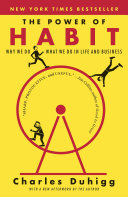
2. "The Power of Habit" by Charles Duhigg
 The Power of HabitAbout the book →
As a Pulitzer Prize-winning investigative reporter, Charles Duhigg approaches habit formation through compelling storytelling and rigorous scientific research. He introduces the "Habit Loop"—Cue, Routine, Reward—and explains how understanding this neurological loop can help you rewrite any pattern in your personal or professional life.
Key Takeaway: You cannot truly extinguish a bad habit; you can only replace the routine while keeping the same cue and reward.
3. "Tiny Habits" by B.F. Fogg
Written by a Stanford behavioral scientist who has spent decades studying how humans change, "Tiny Habits" argues that most advice on change is fundamentally flawed because it relies on high motivation. Dr. B.F. Fogg introduces the Fogg Behavior Model ($B = MAP$), showing that Behavior happens when Motivation, Ability, and a Prompt converge.
Key Takeaway: Make your new habits so small that you don't even need motivation to do them (e.g., flossing just one tooth).
4. "Good Habits, Bad Habits" by Wendy Wood
University of Southern California psychology professor Wendy Wood spent decades researching why humans do what they do. In "Good Habits, Bad Habits," she debunks the myth that successful people rely purely on self-control. Instead, she reveals that those who seem to have endless discipline have simply designed environments that make good choices automatic.
Key Takeaway: Friction is your greatest enemy. If you want a habit, remove friction. If you want to stop a bad habit, add friction.
5. "Indistractable" by Nir Eyal
Distraction is the silent killer of our daily goals. While many books focus on what to do, Nir Eyal’s "Indistractable" focuses on why we get distracted in the first place—arguing that time management is actually pain management. Eyal provides a masterclass in reclaiming your focus from the digital age.
Key Takeaway: All human behavior is driven by a desire to escape discomfort. Understanding your internal triggers is the first step to overcoming distraction.
6. "High Performance Habits" by Brendon Burchard
Based on one of the largest global studies ever conducted on high achievers, Brendon Burchard identifies the six specific habits that differentiate ordinary people from high performers. This book bridges the gap between everyday habit building and elite-level success.
Key Takeaway: High performance is not about exhaustion; it is about clarity, energy, courage, productivity, influence, and necessity.
7. "The Compound Effect" by Darren Hardy
Darren Hardy, the former publisher of Success magazine, distills the fundamental principles that drive extraordinary success. "The Compound Effect" is based on the principle that decisions shape your destiny. Little, everyday choices will take you either to life success or to disaster.
Key Takeaway: Consistency is the magic bullet. Small, seemingly insignificant choices made consistently over time compound into monumental differences.
8. "Mini Habits" by Stephen Guise
If you have ever felt overwhelmed by massive self-improvement goals, Stephen Guise’s "Mini Habits" offers a liberating alternative. Guise explains how his brain tricked him into consistency by setting ridiculously small bars—like doing just one push-up a day—which inevitably led to doing much more.
Key Takeaway: The "do one push-up" rule bypasses psychological resistance and creates a sustainable bridge to momentum.
9. "Make It Stick" by Peter C. Brown, Henry L. Roediger III, and Mark A. McDaniel
While most habit books focus on lifestyle or productivity, "Make It Stick" focuses on cognitive habits. Based on recent breakthroughs in cognitive psychology, this book outlines the best practices for learning and retaining information effectively.
Key Takeaway: Rereading and highlighting are largely ineffective illusions of competence. True learning habits involve active recall, spaced repetition, and interleaving.
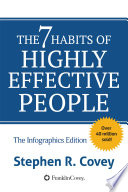
10. "The 7 Habits of Highly Effective People" by Stephen R. Covey
 The 7 Habits of Highly Effective PeopleAbout the book →
No list of books about building better habits is complete without this absolute titan of literature. Stephen R. Covey’s masterpiece focuses on character ethic and principled living. Rather than quick fixes, Covey presents a holistic approach to solving personal and professional problems.
Key Takeaway: Begin with the end in mind, and put first things first to align your daily actions with your core values.
How to Choose the Right Habit Book for You
With so many incredible options, where should you start? The right choice depends on your current psychological bottleneck:
- If you struggle with consistency: Start with Atomic Habits or The Compound Effect.
- If you struggle with lack of motivation: Read Tiny Habits or Mini Habits.
- If you struggle with digital distractions: Pick up Indistractable.
- If you want to understand the science: Dive into Good Habits, Bad Habits or The Power of Habit.
"You do not rise to the level of your goals. You fall to the level of your systems." — James Clear, Atomic Habits
Actionable Steps to Apply What You Read
Reading about habits is easy; actually changing your behavior is where the real work begins. To ensure you don't fall into the trap of "active procrastination" (reading about self-improvement without executing), follow this simple implementation plan:
- Pick just one book: Do not try to read all ten at once. Choose the one that addresses your most pressing current pain point.
- Highlight and action-map: As you read, don't just consume. Write down one immediate action step for every chapter.
- Start ridiculously small: Apply the wisdom of B.F. Fogg and James Clear by shrinking your first new habit down to a 2-minute version.
- Track your progress: Use a physical habit tracker or a journal to maintain visibility over your new routine.
Conclusion
Transforming your life does not require a complete personality overhaul or superhuman stores of willpower. As the books on this list prove, lasting change is the quiet byproduct of small, intentional adjustments made consistently over time. By exploring these top 10 books about building better habits, you are equipping yourself with the ultimate tools for personal evolution. Pick your first book today, turn the first page, and take that crucial 1% step toward the person you want to become.





