
Introduction: The Magic of Bridging Languages
Literature has the extraordinary power to transcend borders, transport readers to distant worlds, and foster profound empathy for lives vastly different from our own. Yet, this magic relies entirely on a quiet, monumental act: translation. Without translators, great stories would remain trapped behind the impenetrable walls of native tongues. When we look at the global literary landscape, a fascinating question emerges: Which titles hold the crown for being the most translated books in the world?
The journey of a book crossing linguistic lines is rarely simple. It requires cultural adaptation, linguistic acrobatics, and an innate understanding of human emotion. While millions of books are published globally each year, only a select few achieve the universal resonance required to be translated into hundreds of languages. In this comprehensive guide, we will explore the undisputed giants of global literature, examine what makes them universally appealing, and look at the fascinating mechanics behind literary translation.
What Defines the Most Translated Books in the World?
Before diving into the list, it is crucial to understand how we measure translation success. Unlike standard bestseller lists—which track physical copies sold during specific commercial windows—tracking the most translated books in the world involves scouring global library catalogs, database archives like Index Translationum, and publisher records spanning centuries.
Generally, these masterpieces share a few defining characteristics:
- Universal Themes: They touch upon fundamental human experiences such as love, loss, existential dread, spirituality, and morality.
- Archetypal Characters: Their protagonists often embody universal traits, making them relatable across radically different cultures.
- Religious or Philosophical Significance: Many top contenders serve as sacred texts or foundational philosophical blueprints for human societies.
- Timelessness: These works remain relevant decades or even centuries after their original publication.
The Heavyweights: Top Contenders on the Global Stage
While exact rankings can occasionally shift due to newly discovered translations or disputed regional dialects, several titles consistently dominate the conversation regarding the most translated books in the world.
1. The Bible
It comes as no surprise that religious texts occupy the absolute pinnacle of translation history. The Christian Bible is, by an astronomical margin, the single most translated book in the world. According to United Bible Societies data, the full Bible has been translated into over 700 languages, with portions of it available in more than 3,500 languages.
The drive to translate the Bible stems from a theological imperative: to make the word of God accessible to every soul in their native tongue. This massive undertaking has historically driven linguistic innovation, with many remote languages receiving their first written alphabets solely through the process of Bible translation.
2. The Quran and Other Sacred Texts
Following closely behind are other sacred texts. The Quran, foundational to Islam, has been translated into over 100 languages. Traditionally, orthodox Islamic scholarship held that the Quran's true essence exists only in its original Arabic, meaning translations were historically viewed as mere interpretations. However, to serve a rapidly growing global Muslim population, authorized translations exist today in nearly every major world language.
Similarly, texts like the Bhagavad Gita, the Tao Te Ching, and the Book of Mormon boast extensive translation histories, bridging ancient spiritual wisdom with modern global audiences.
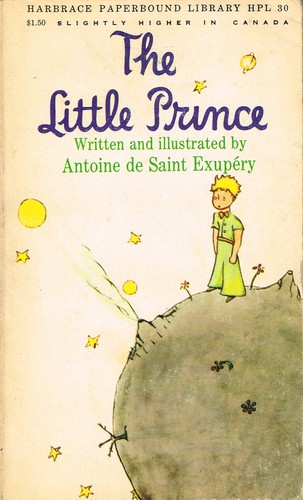
3. The Little Prince (Le Petit Prince) by Antoine de Saint-Exupéry
 The little princeAbout the book →
When moving away from religious texts into secular literature, Antoine de Saint-Exupéry’s poetic novella The Little Prince reigns supreme as the secular most translated book in the world. Published in 1943, this enchanting tale of a young prince visiting various planets has been translated into over 500 languages and dialects.
Why does this deceptively simple children's book resonate so deeply across the globe? Because its core message—"One sees clearly only with the heart. What is essential is invisible to the eye"—speaks directly to the human condition, bypassing cultural cynicism and appealing directly to our shared vulnerability.
4. Pinocchio by Carlo Collodi
Another classic Italian export, Carlo Collodi’s The Adventures of Pinocchio (1883), holds a staggering translation record. It has been translated into more than 300 languages. While many modern readers associate the title with the sanitized Disney adaptation, Collodi’s original serialized story is a dark, morally complex fable about temptation, poverty, redemption, and what it truly means to be human.
5. Alice’s Adventures in Wonderland by Lewis Carroll
 Alice's Adventures in WonderlandAbout the book →
Lewis Carroll’s masterwork of literary nonsense has captivated readers since 1865. Translated into at least 174 languages, Alice’s Adventures in Wonderland presents a unique nightmare for translators. How do you translate English puns, conceptual wordplay, and Victorian cultural jokes into Japanese, Swahili, or Icelandic?
The answer lies in creative adaptation. Skilled translators do not merely translate word-for-word; they invent equivalent local puns and linguistic games, demonstrating that translation is as much an art form as original writing.
"Translation is that which transforms everything so that nothing changes." — Günter Grass
The Modern Contenders: 20th and 21st-Century Global Hits
While classic fairy tales and sacred texts dominate historical tallies, modern literature has also produced massive global phenomena. While they may not yet match the centuries-old reach of the Bible, several contemporary works are rapidly climbing the ranks of the most translated books in the world.
The Power of Modern Publishing and Franchises
Today, multinational publishing conglomerates can coordinate simultaneous global book launches in dozens of languages. Consider the following modern giants:
- Harry Potter Series by J.K. Rowling: Translated into 85+ languages, J.K. Rowling’s magical saga created a synchronized global reading culture unlike anything seen before.
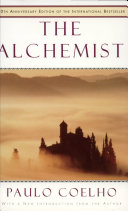 The Alchemist by Paulo Coelho: Translated into over 80 languages, this Brazilian philosophical novel has sold over 65 million copies, making it one of the best-selling and most widely translated modern books in history.
 The Diary of a Young Girl by Anne Frank: Translated into roughly 70 languages, Anne Frank’s diary serves as an enduring historical document and a universal testament to human resilience in the face of unimaginable hatred.
The Art and Challenge of Literary Translation
Translating a book is far more than swapping vocabulary using a digital dictionary. It requires a profound balancing act between fidelity to the original text and fluency in the target language. Translators must navigate cultural nuances, idiomatic expressions, historical context, and rhythm.
For example, a joke that works in American English might fall completely flat in Korean or Spanish. A skilled translator acts as a cultural bridge, ensuring that the emotional resonance remains intact even when the literal words must change.
Actionable Insights for Aspiring Writers and Translators
If you are an author hoping to see your work join the ranks of globally read literature, or an aspiring translator looking to break into the industry, consider these practical takeaways:
Focus on Universal Truths: Write stories that explore deep emotional truths. Local flavor is wonderful, but universal human motivations—fear, ambition, love, grief—travel best.
Collaborate with Native Speakers: If you are self-publishing, never rely on automated translation tools for creative writing. Always work with professional literary translators who write natively in the target language.
Understand Cultural Adaptation: Be open to your translator making structural or idiomatic adjustments. A great translation feels like it was originally written in the target language.
Conclusion: The Future of Global Literature
The pursuit of the most translated books in the world is ultimately a celebration of human connection. Every translation is an act of hope—a belief that despite our different languages, histories, and geographies, we share a common emotional core.
As technology evolves and the global literary community grows increasingly interconnected, we will undoubtedly see new masterpieces emerge, cross borders, and touch millions of lives. Whether it is an ancient sacred text or a modern fantasy epic, these translated books remind us that while language may divide us, great stories have the power to unite the world.





