
Every great entrepreneur, executive, and innovator stands on the shoulders of giants. While real-world experience is irreplaceable, the distilled wisdom of decades—and sometimes centuries—of economic triumph and failure can be found within the pages of the most influential business books of all time. These literary works do more than just offer tactical advice; they fundamentally alter how we view human psychology, organizational structures, market dynamics, and personal productivity.
In a hyper-fast digital economy where business trends shift by the quarter, timeless principles remain remarkably constant. Whether you are bootstrapping a tech startup in your garage, managing a Fortune 500 team, or looking to sharpen your personal efficiency, studying foundational business literature is the ultimate unfair advantage. In this comprehensive guide, we will unpack the most influential business books of all time, exploring why they matter, the core lessons they teach, and how you can apply their wisdom in the real world today.
The Evolution of Business Literature: Why These Books Matter
For decades, business literature was viewed as dry academic text or sterile corporate manuals. That changed when visionary practitioners began sharing their actual playbooks, failures, and psychological insights. The most influential business books of all time transcend their original publication dates because they speak to fundamental human truths: our desire for meaning, our fear of loss, our drive to create, and our need for structured cooperation.
When you read these transformative texts, you aren't just memorizing formulas; you are rewiring your mental models. You begin to see systems where others see chaos, leverage where others see dead ends, and opportunities where others see risks. Let us dive into the pillars of modern commercial wisdom that every ambitious professional must read.
1. The Foundation of Wealth and Market Dynamics
No conversation about foundational economic texts is complete without acknowledging the work that started it all, alongside the modern manuals that translated macroeconomics into micro-habits.
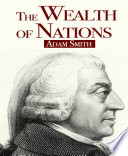
The Wealth of Nations by Adam Smith (1776)
 The Wealth of NationsAbout the book →
While not a traditional corporate guide, Adam Smith’s magnum opus laid the intellectual groundwork for all modern commerce. By introducing concepts like the division of labor and the "invisible hand" of the free market, Smith explained how individual self-interest can collectively benefit society.
Core Takeaway: Specialization dramatically increases productivity and economic output.
Actionable Advice: Audit your daily operations or personal workflow. Are you trying to do everything yourself, or can you delegate and hyper-specialize to drive efficiency?
Think and Grow Rich by Napoleon Hill (1937)
 Think And Grow RichAbout the book →
Born out of interviews with over 500 self-made millionaires—including Andrew Carnegie and Henry Ford—Hill’s classic shifted the business paradigm from raw physical labor to psychological mastery and definitive purpose.
- Define a clear, burning desire or "definite major purpose."
- Cultivate an unshakeable belief in your ability to achieve it.
- Build a "Mastermind" alliance of trusted advisors to accelerate your goals.
2. Strategy, Competition, and Execution
Once you understand markets and mindset, you must master the art of competitive strategy. How do you win when everyone else is playing the same game?
Good to Great: Why Some Companies Make the Leap... and Others Don't
Jim Collins and his research team spent five years analyzing companies that made the transition from mediocre performers to sustained market dominators. The findings shattered conventional executive wisdom.
One of the most profound concepts in the book is the Hedgehog Concept, which encourages businesses to focus entirely on the intersection of three circles:
- What you are deeply passionate about.
- What you can be the best in the world at.
- What drives your economic engine.
"Good is the enemy of great. And that is one of the key reasons why we have so little that becomes great." — Jim Collins
Competitive Strategy: Techniques for Analyzing Industries and Competitors by Michael E. Porter (1980)
If Jim Collins tells you what great companies do, Michael Porter tells you how to outmaneuver your rivals. Porter’s "Five Forces" framework remains the gold standard for analyzing industry attractiveness and positioning your enterprise for sustainable competitive advantage.
Practical Application: Before entering a new market or launching a new product line, run a Porter’s Five Forces analysis to assess supplier power, buyer power, competitive rivalry, threat of substitution, and threat of new entry.
3. Innovation, Startups, and Disruption
The modern business landscape belongs to the disruptors. Traditional planning often fails in volatile markets, making adaptive frameworks essential for survival.
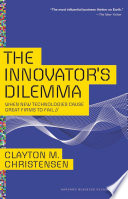
The Innovator’s Dilemma by Clayton M. Christensen (1997)
 The Innovator's DilemmaAbout the book →
Christensen answered a baffling question: Why do great companies fail even when they do everything right? His answer introduced the concept of "disruptive innovation"—how well-managed incumbent firms often lose market dominance because they listen too closely to their best customers and ignore low-end or fringe technologies that eventually capture the entire market.
Actionable Advice: Always allocate a small percentage of your budget and team to exploratory, high-risk projects that might initially seem unprofitable or unappealing to your core demographic.
The Lean Startup by Eric Ries (2011)
 The Lean StartupAbout the book →
For tech startups and modern enterprises alike, Eric Ries revolutionized product development by introducing the "Build-Measure-Learn" feedback loop. Instead of spending years building a product in secret, businesses must release a Minimum Viable Product (MVP), gather data from real users, and pivot or persevere.
Stop guessing what your customers want; test your assumptions with rapid, low-cost experiments.
Measure validated learning rather than vanity metrics like raw page views or unengaged sign-ups.
Embrace the pivot when data indicates your current path is a dead end.
4. Leadership, Culture, and Human Management
At the heart of every enterprise are human beings. The most influential business books of all time recognize that leadership is not about wielding authority, but about empowering others.
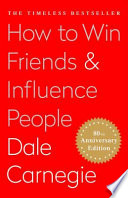
How to Win Friends and Influence People by Dale Carnegie (1936)
 How To Win Friends and Influence PeopleAbout the book →
Decades before social media, Dale Carnegie understood that human relations dictate commercial success. Technical skills are only half the battle; your ability to communicate, empathize, and inspire trust determines your ceiling as a leader.
Key Principles to Live By:
- Acknowledge other people's interests and make them feel genuinely important.
- Smile, remember names, and be a good listener rather than an aggressive talker.
- Never criticize, condemn, or complain directly; instead, guide people to see alternative perspectives.
High Output Management by Andrew S. Grove (1983)
Written by the legendary former CEO of Intel, this book treats a manager's output as the output of the organizational units under their supervision. Grove’s tactical insights on meetings, performance reviews, and leverage have become the blueprint for Silicon Valley management.
Pro Tip: Treat one-on-one meetings with your direct reports as sacred. They are the subordinate's meetings—use them to unblock obstacles, offer mentorship, and course-correct early.
How to Apply the Wisdom of Business Classics
Reading the most influential business books of all time is only the first step. True transformation occurs when passive reading turns into active implementation. Here is a simple framework to extract maximum value from your business library:
Read with Intent: Before cracking open a book, write down one specific business problem you are trying to solve. Look for chapters and frameworks that directly address that challenge.
Take Marginalia and Summaries: Highlight key passages, write notes in the margins, and summarize each chapter in your own words. Teaching or explaining the concept solidifies your retention.
Implement One Habit at a Time: Do not try to overhaul your entire company or life overnight. Pick a single actionable takeaway—such as running weekly retrospectives or restructuring your pricing strategy—and execute it this week.
Conclusion: Building Your Personal Business Curriculum
The marketplace is an ever-evolving arena of trial, error, and triumph. While no single book holds all the answers, studying the most influential business books of all time equips you with timeless mental models, strategic frameworks, and emotional resilience. By understanding market dynamics from Adam Smith, mastering competitive strategy from Michael Porter, embracing disruption from Clayton Christensen, and refining your leadership style through Dale Carnegie and Andy Grove, you build an unshakeable foundation for enduring success.
Your journey doesn't end here. Pick one book from this list that challenges your current worldview, commit to reading it this month, and take the first step toward transforming your professional trajectory. The next great business breakthrough might just be one page away.





