The Modern Reading Dilemma: Why Your Book Goals Fail
Every January, millions of people set ambitious goals to read more books in a year. They proudly add 50, 75, or even 100 books to their reading challenges, buy a stack of bestsellers, and vow to change their lives. Yet, by February, that stack remains untouched, gathering dust while Netflix, social media, and endless work emails reclaim those precious evening hours.
If this sounds familiar, take a deep breath: you are not lazy, and you are not a failure. The problem isn’t your willpower; the problem is your system. Most people approach reading like a sprint rather than a marathon. They try to force massive blocks of uninterrupted time into chaotic schedules, inevitably crashing when life inevitably gets busy.
Learning how to read more books in a year isn’t about speed-reading techniques or skimming pages. It is about environmental design, habit stacking, and redefining what it means to be a "reader." This comprehensive, realistic plan will guide you through building a sustainable reading habit that fits seamlessly into your actual life—no drastic lifestyle overhauls required.
Step 1: Shift Your Metric from Books to Pages
When you set out to read more books in a year, your first instinct is likely to count the final tally: 12 books, 24 books, 52 books. While tracking targets can be motivating, focusing exclusively on the final book count often backfires. It triggers subconscious anxiety, leading you to abandon complex, deeply rewarding books in favor of short, breezy novellas just to inflate your numbers.
Instead of obsessing over the book count, shift your metric to pages—or better yet, daily minutes. Mathematics reveals a liberating truth about reading:
- Reading just 10 pages a day equates to 3,650 pages a year.
- At an average of 300 pages per book, that is roughly 12 books annually—a full dozen more than someone who reads zero.
- Upping that target to 20 pages a day yields nearly 25 books a year.
- An investment of 30 minutes of daily reading easily translates into 30 to 40 books per year.
By breaking your annual goal down into bite-sized daily micro-habits, the mountain suddenly turns into a series of manageable anthill steps. You stop thinking about the daunting 400-page weight of a novel and start focusing on the next ten pages.
Step 2: Redesign Your Environment for Frictionless Reading
James Clear, author of the bestselling book 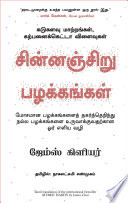 Atomic Habits, famously notes that we do not rise to the level of our goals; we fall to the level of our systems. If your goal is to read more books in a year, you must make reading the path of least resistance while making distractions painfully difficult to access.
Right now, evaluate your physical and digital environments. Where do you spend most of your downtime? If your smartphone rests next to you on the couch, or if your television remote is permanently positioned front and center, you will naturally gravitate toward those instant dopamine hits.
Try these environment-hacking strategies starting today:
- The Phone Ban in the Bedroom: Charge your phone in the kitchen overnight. Put a physical book on your nightstand. When you wake up or try to wind down at night, your physical book will be the very first thing your hands touch.
- Digital Minimalism on Screens: Delete time-wasting social media apps from your phone, or at least bury them inside deep folders. In their place, download your e-reader app (like Kindle or Libby) right on the home screen.
- Strategic Book Placement: Keep a book everywhere you might find yourself waiting—in your bag, on your desk, on the kitchen counter, and yes, in the bathroom. Eliminate the dead air in your day by filling it with pages.
"You do not need more time to read; you need to reclaim the fragments of time you already waste."
Step 3: Embrace the Art of Strategic Quitting
One of the silent killers of reading momentum is the "obligation trap." Many readers feel a deep moral duty to finish every book they start, even if they find the prose dry, the characters unengaging, or the subject matter tedious. They treat reading like a school assignment rather than a chosen leisure activity.
When you force yourself through a boring book, your reading speed plummets. You begin dreading your reading time, and eventually, you stop picking up the book altogether. Weeks pass, and your reading habit stalls out entirely.
To read more books in a year, you must give yourself permission to quit books ruthlessly. Apply the famous "50-minus-age rule" coined by philosopher Matthew Hutson: subtract your age from 100, and that is the number of pages you should give a book to hook you. If you are 35 years old, give a book 65 pages. If it hasn't grabbed you by then, close it, return it to the shelf, and move on to something that excites your curiosity.
Life is far too short, and there are far too many brilliant books in the world, to spend precious weeks slogging through a literary chore.
Step 4: Leverage Audiobooks and E-Readers to Multiply Your Format Options
Purists sometimes argue that listening to an audiobook or reading on a glowing tablet screen doesn't "count" as true reading. Let’s clear this up immediately: cognitive science shows that listening to a narrator processes through the exact same linguistic comprehension centers in the brain as reading ink on paper. Information is information, and stories are stories.
Diversifying your formats is one of the most powerful catalysts for learning how to read more books in a year. Here is how to use multiple formats to your advantage:
- Audiobooks for the Spaces In-Between: Listen to books during tasks that require your eyes and hands but leave your mind free. Think commuting, folding laundry, washing dishes, grocery shopping, and going for walks or runs. Listening at 1.2x to 1.5x speed can also help match your natural cognitive processing pace.
- E-Readers for Portability and Customization: Devices like the Kindle allow you to carry an entire library in your pocket. Furthermore, adjusting font sizes, using dark mode for night reading, and instantly looking up definitions of unfamiliar words keeps friction exceptionally low.
- Physical Books for Deep Focus: Keep traditional paper books for weekend mornings, cozy armchair sessions, or deep-dive non-fiction titles where you want to scribble notes in the margins and highlight key passages.
By blending formats, you stop waiting for the "perfect" conditions to read. You can seamlessly transition from reading a physical book at breakfast to listening to its audiobook continuation while driving to work.
Step 5: Track Your Progress and Build a Social Loop
Humans are inherently social and gamification-driven creatures. We love seeing progress bars fill up, earning badges, and sharing our milestones with others. When you are trying to read more books in a year, turning your reading journey into a visible, interactive game can provide the exact psychological boost you need on lazy days.
Consider setting up a profile on Goodreads or The StoryGraph. These platforms allow you to track your annual reading challenge visually, see what your friends are reading, and discover hidden literary gems based on your unique tastes.
Additionally, consider joining or starting a low-pressure book club. Knowing that you have a gathering coming up to discuss a specific title creates a gentle, supportive deadline. It keeps you accountable without feeling punitive or stressful.
Conclusion: Redefining Your Identity as a Reader
Ultimately, learning how to read more books in a year is not about checking items off a spreadsheet or bragging about your Goodreads numbers to colleagues. It is about expanding your worldview, experiencing empathy for lives you will never live, acquiring deep knowledge, and carving out quiet, contemplative moments in a frantic, noisy world.
Do not wait for the "right time" to start. Put down your phone, pick up a book—any book that genuinely interests you—and commit to reading just ten pages today. Before you know it, those pages will turn into chapters, those chapters will turn into finished books, and you will look up at the end of the year amazed at how far your reading journey has taken you.


![Awakening, The [EasyRead Large Edition] by Kate Chopin - American literature book cover](/_next/image?url=%2Fbooks%2Fcovers%2Fcmrlw76oa02zf5hkf5uj9zggd.jpg&w=1920&q=75)





