
Introduction: The Journey Beyond Tiny Changes
If you are anything like millions of readers around the globe, James Clear’s 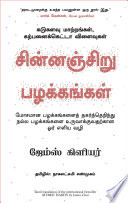 Atomic Habits likely revolutionized the way you look at your daily routine. By shifting our focus away from massive, unrealistic goals and toward microscopic, 1% improvements, Clear provided a masterclass in behavioral psychology. You learned about the Four Laws of Behavior Change—make it obvious, make it attractive, make it easy, and make it satisfying—and perhaps you even redesigned your environment to curb bad habits and build better ones.
But what happens when you finish the final chapter, clear your desk, and realize you are hungry for more? Once you understand the mechanics of identity-based habits, where do you turn next? Whether you want to dive deeper into the neuroscience of decision-making, explore the subtle art of mental toughness, or learn how to design systems that run on autopilot, the world of self-improvement has plenty more to offer.
To help you continue your self-mastery journey, we have curated a definitive list of 10 exceptional books to read if you loved Atomic Habits. These selections build upon Clear’s foundational concepts, offering fresh perspectives, advanced strategies, and unique insights to help you unlock your full potential.
1. Tiny Habits: The Small Changes That Change Everything by BJ Fogg
It is impossible to talk about behavior change without acknowledging BJ Fogg, the founder of the Behavior Design Lab at Stanford University and James Clear’s primary academic inspiration. While Atomic Habits gives you a brilliant framework for everyday execution, Tiny Habits provides the underlying scientific machinery of how human behavior actually works.
Fogg introduces the Fogg Behavior Model, which posits that behavior is a function of three elements: Motivation, Ability, and Prompt (B = MAP). Instead of relying on fickle motivation, Fogg teaches you how to make desired behaviors impossibly easy to execute and how to anchor new habits onto existing routines (a concept Clear refers to as habit stacking).
Why You Should Read It:
If you want to understand the clinical psychology behind why we do what we do—and how to hack those biological pathways without relying on willpower—this is an essential addition to your bookshelf.
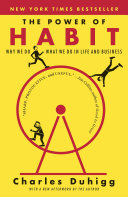
2. The Power of Habit: Why We Do What We Do in Life and Business by Charles Duhigg
 The Power of HabitAbout the book →
Before Atomic Habits dominated bestseller lists, Charles Duhigg’s The Power of Habit was the definitive text that introduced the mainstream public to the neurological loop of habit formation. Duhigg breaks down the habit loop into three distinct components: the Cue, the Routine, and the Reward.
Through compelling journalism and fascinating case studies—ranging from how a corporation like Alcoa transformed its safety record to how Target predicts pregnancies before the parents even know—Duhigg illustrates how identifying the core cue and reward behind a habit allows you to rewrite the routine permanently.
Why You Should Read It:
It offers incredible narrative-driven depth. If you enjoy learning through storytelling rather than straight-line instruction, Duhigg's exploration of corporate and societal habits will blow your mind.
3. Think Again: The Power of Knowing What You Don't Know by Adam Grant
James Clear emphasizes the importance of identity-based habits—shifting who you believe you are to change what you do. However, clinging too tightly to a rigid identity can become a trap. This is where Adam Grant’s Think Again comes into play, making it one of the most intellectually stimulating books to read if you loved Atomic Habits.
Grant argues that our mental quickness is often outweighed by our mental flexibility. In a rapidly changing world, the ability to rethink, unlearn, and update our core assumptions is a superpower. Grant explores how to cultivate the "scientist" mindset—constantly testing hypotheses, embracing being wrong, and separating our opinions from our self-worth.
Why You Should Read It:
It complements habit formation by teaching you how to ensure you are building habits for the right goals, preventing you from efficiently climbing a ladder that is leaning against the wrong wall.
4. Make It Stick: The Science of Successful Learning by Peter C. Brown, Henry L. Roediger III, and Mark A. McDaniel
At first glance, a book about cognitive psychology and learning might seem distinct from habit formation. Yet, Make It Stick shares the exact same DNA as Atomic Habits: both reject popular cultural myths in favor of evidence-based, counterintuitive systems.
The authors demonstrate that traditional study habits—like rereading texts and highlighting—are largely ineffective illusions of competence. Instead, they champion retrieval practice, spaced repetition, and interleaving. These are tactical, systematic behaviors that forge permanent neural pathways, much like the physical routines Clear advocates for.
Why You Should Read It:
If your habits involve skill acquisition, professional development, or continuous learning, Make It Stick provides the operational manual for how your brain actually absorbs and retains information.
5. The Compound Effect by Darren Hardy
If you loved the fundamental premise of Atomic Habits—that small, seemingly insignificant choices compound into monumental results over time—then Darren Hardy’s The Compound Effect will serve as an aggressive, highly motivating reinforcement of that philosophy.
Hardy strips away the hype of overnight success and lays bare the unglamorous reality: success is the product of daily, disciplined momentum. The book provides a practical framework for tracking your daily behaviors, eliminating "the drift" (the subtle psychological sliding away from your goals), and leveraging positive momentum.
Why You Should Read It:
It acts as a wake-up call. It forces you to look at your daily choices through a magnifying glass, proving that you are either compounding success or compounding failure every single day.
"You do not rise to the level of your goals. You fall to the level of your systems." — James Clear
6. The War of Art by Steven Pressfield
Building good habits and breaking bad ones is rarely a logistical problem; it is an emotional and psychological war. Every time you sit down to write, build a business, exercise, or practice an instrument, you experience what Steven Pressfield terms "Resistance."
The War of Art is a fierce, philosophical manifesto against the internal forces of procrastination, self-doubt, and fear. While James Clear gives you the structural blueprint to build habits, Pressfield gives you the spiritual armor required to fight the daily battle against your inner saboteur.
Why You Should Read It:
It is short, punchy, and deeply inspiring. When your habit systems break down because of sheer inertia or self-sabotage, Pressfield’s tough-love approach will get you back in the arena.
7. Good Habits, Bad Habits: The Science of Making Positive Changes That Stick by Wendy Wood
Written by a pioneering researcher in the field of human habits, Wendy Wood’s Good Habits, Bad Habits offers a rigorous, data-backed perspective on how habits operate beneath our conscious awareness. Wood argues that willpower is vastly overrated and that sustainable change is almost entirely about environmental design and friction management.
Wood's research reveals that people who appear to have extraordinary self-control actually aren't fighting daily battles of willpower; rather, they have simply structured their lives in ways that make good behavior automatic and bad behavior inconvenient.
Why You Should Read It:
It provides deep academic validation for the environment-first philosophy found in Atomic Habits, packed with fascinating experiments that prove context beats willpower every time.
8. Essentialism: The Disciplined Pursuit of Less by Greg McKeown
You cannot successfully build new habits if your plate is overflowing with commitments that drain your energy. Before you can optimize your routines, you must ruthlessly eliminate the non-essentials. This is the core thesis of Greg McKeown’s Essentialism.
McKeown teaches you how to stop trying to do it all and instead focus on making the highest possible contribution. By learning to say no, setting firm boundaries, and designing space for deep, focused work, you clear the cognitive and temporal runway required to sustain life-changing habits.
Why You Should Read It:
It is the ultimate antidote to modern burnout. If your biggest obstacle to habit formation is lack of time, Essentialism will show you how to reclaim your schedule.
9. Mini Habits: Smaller Habits, Bigger Results by Stephen Guise
If you tried James Clear’s advice to start small, but you still found yourself procrastinating, Stephen Guise’s Mini Habits takes the "start small" concept to its absolute, foolproof extreme.
Guise was a chronic procrastinator until he forced himself to do just one push-up a day. That single, ridiculously low threshold bypassed his brain’s resistance mechanisms and frequently led to doing dozens more. Guise breaks down the neuroscience of why our brains panic at the sight of large tasks and how setting microscopic bars can permanently rewire your output.
Why You Should Read It:
It is the ultimate tactical guide for chronic procrastinators or anyone who suffers from severe perfectionism paralysis.
10. Mindset: The New Psychology of Success by Carol S. Dweck
Your habits are ultimately a reflection of your underlying beliefs about yourself. In Mindset, world-renowned Stanford psychologist Carol Dweck explores the profound difference between a "fixed mindset" (the belief that your abilities and intelligence are static traits) and a "growth mindset" (the belief that talents can be developed through dedication and hard work).
Without a growth mindset, the friction of building a new habit can feel devastatingly personal. If you fail a workout or skip a writing session, a fixed mindset tells you, "I'm just not disciplined." A growth mindset tells you, "My system needs tweaking; I am learning."
Why You Should Read It:
It addresses the psychological foundation upon which all habits are built. Shifting your mindset is the ultimate catalyst for making your atomic changes stick for a lifetime.
Conclusion: Curating Your Personal Growth Library
Reading about self-improvement can easily become a form of procrastination in disguise—a phenomenon known as the "productivity trap." The secret to transforming your life isn't reading every book ever written on human behavior; it is taking a single actionable insight from one exceptional book and applying it relentlessly until it becomes second nature.
If Atomic Habits opened your eyes to the power of tiny systems, the books on this list will serve as your advanced toolkit. Pick the one title from this list that addresses your current bottleneck—whether it is breaking through procrastination, managing your environment, or eliminating distractions—and start turning pages. Your future self will thank you.





