Navigating the Defining Decade: Why Your Twenties Require a Special Reading List
Your twenties are often romanticized as a continuous highlight reel of freedom, self-discovery, and spontaneous road trips. In reality, they are usually a chaotic whirlwind of existential dread, career pivots, budget-conscious meal planning, and figuring out who you are when nobody is watching. It is the definitive "messy middle" of modern adulthood. You are expected to choose a career path, build meaningful relationships, manage personal finances, and somehow still get eight hours of sleep. It is overwhelming, to say the least.
Fortunately, you do not have to navigate this labyrinth alone. Throughout history, brilliant minds have felt these exact growing pains and left behind literary blueprints to help us through. Finding the best books to read before you turn 30 can feel like discovering a cheat code for life. These are not merely self-help manuals filled with empty platitudes; they are profound explorations of psychology, wealth, identity, and resilience that will fundamentally alter how you view the world and your place in it.
Whether you are staring down your 29th birthday with a sense of urgency or you just stepped out of your graduation ceremony wondering what comes next, curating a thoughtful reading list is one of the most productive investments you can make in your future. Let’s dive into the essential literary companions designed to help you survive and thrive through your twenties.
1. Mastering the Mind: Psychology and Self-Perception
Before you can conquer the external world, you have to decode the internal one. Your twenties are prime time for unpacking mental baggage, questioning inherited beliefs, and building emotional resilience. If you want to understand why you sabotage your own success or how to reframe your failures, you need books that tackle human psychology head-on.
Take, for instance, the timeless wisdom found in works that examine our cognitive biases and emotional triggers. We often spend our early adulthood reacting to external pressures rather than examining our own internal motivations. Reading psychological frameworks helps bridge that gap.
Top Recommendations for Mindset Shifts:
- "The Defining Decade" by Dr. Meg Jay: Arguing against the notion that your twenties are a time to simply "figure it out," this book provides a wakeup call on work, relationships, and identity.
- "
 Man's Search for Meaning" by Viktor E. Frankl: A harrowing yet deeply inspiring look at finding purpose amidst unimaginable suffering. It teaches that while we cannot always control our circumstances, we control our response to them.
Actionable advice: As you read these psychological texts, keep a dedicated journal. Do not just consume the information passively; write down specific instances where you exhibit the behavioral patterns described in the chapters. Self-awareness is the first step toward lasting behavioral change.
2. Building Wealth and Financial Literacy
Let’s address the elephant in the room: money management is rarely taught effectively in formal education. Most of us enter the workforce with a vague understanding of checking accounts and a terrifying introduction to student loans. Learning how money actually works is arguably the most critical skill to acquire before the clock strikes thirty.
Understanding compound interest, inflation, asset allocation, and the psychology of spending can literally save you decades of financial stress. Wealth is not just about making a high salary; it is about keeping what you earn and letting it work for you.
Essential Financial Reads:
- "
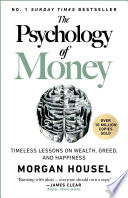 The Psychology of Money" by Morgan Housel: This book brilliantly demonstrates that doing well with money has a little to do with smarts and a lot to do with behavior. It teaches humility, patience, and the value of financial independence.
 - "I Will Teach You to Be Rich" by Ramit Sethi: A no-nonsense, highly actionable guide for young adults looking to automate their finances, crush debt, and guiltlessly spend on the things they actually love.
"Doing well with money has a little to do with how smart you are and a lot to do with how you behave. And behavior is hard to teach, even to really smart people." — Morgan Housel, The Psychology of Money
Practical application: Pick one financial strategy from these books—such as setting up an automated transfer to a high-yield savings account or calculating your net worth—and execute it within 24 hours of finishing the chapter. Theory without execution is just entertainment.
3. Navigating Career Uncertainty and Ambition
The days of getting a degree, joining a single company for forty years, and retiring with a gold watch are long gone. Today’s young professionals face gig economies, remote work dynamics, rapid technological disruptions, and the constant pressure of "side hustles." It is completely normal to feel paralyzed by career choices in your twenties.
The best books to read before you turn 30 regarding career development focus less on climbing a specific corporate ladder and more on cultivating rare and valuable skills, learning how to pivot gracefully, and redefining what success means to you on a personal level.
Books to Transform Your Professional Life:
- "So Good They Can't Ignore You" by Cal Newport: This book dismantles the toxic "follow your passion" advice and replaces it with the "craftsman mindset," emphasizing skill acquisition over career daydreaming.
- "The Almanack of Naval Ravikant" by Eric Jorgenson: A masterclass in wealth creation, leverage, judgment, and happiness, distilling the wisdom of a legendary entrepreneur into bite-sized philosophies.
When you focus on becoming undeniably good at what you do rather than chasing fleeting titles, leverage naturally follows. Use your twenties to experiment, take calculated professional risks, and build a portfolio of transferable skills that make you recession-proof.
4. Cultivating Deep Connections and Emotional Intelligence
Humans are fundamentally wired for connection, yet modern life often leaves us feeling intensely isolated. Your twenties are a crucible for relationships: friendships drift apart, romantic partnerships face high-stakes milestones, and family dynamics shift as you transition from child to peer with your parents.
Reading literature that explores empathy, communication, boundaries, and love is vital during this decade. You learn that high emotional intelligence (EQ) is often a greater predictor of long-term fulfillment and success than raw intellectual horsepower (IQ).
Must-Reads for Relationships:
- "
 Nonviolent Communication" by Marshall B. Rosenberg: A transformative guide on how to express your needs clearly and listen to others without judgment or defensiveness.
 - "Adult Children of Emotionally Immature Parents" by Lindsay C. Gibson: Essential reading for understanding your family of origin, setting healthy boundaries, and healing generational wounds before starting your own family or committing to long-term partnerships.
Actionable advice: Practice the communication frameworks you learn in these books during low-stakes conflicts first. When you master expressing vulnerability and setting clear boundaries, your social circle will naturally shift to include people who respect and elevate your growth.
5. Crafting a Personal Philosophy and Finding Meaning
Beyond career and finances lies the ultimate question: What is the point of all this? As the structure provided by school and university falls away in your early twenties, you are suddenly handed complete creative control over your life’s narrative. That blank canvas can be terrifying.
Philosophy is not just an academic discipline reserved for dusty university halls; it is a practical toolkit for living. Stoicism, existentialism, and Eastern philosophies offer timeless perspectives on how to find peace amidst chaos, embrace uncertainty, and live with intentionality.
Philosophical Staples for Young Adults:
- "
 Meditations" by Marcus Aurelius: The private journal of a Roman emperor reflecting on duty, mortality, and emotional control. It is astonishingly relatable and grounding.
 - "
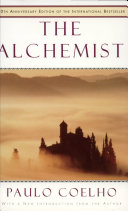 The Alchemist" by Paulo Coelho: A magical fable about following your personal legend, recognizing signs along the way, and understanding that the journey itself is the treasure.
By engaging with these philosophical texts, you begin to anchor your self-worth in internal values rather than external achievements like social media validation, salary brackets, or societal milestones. You realize that your twenties are not a rehearsal for real life—they *are* real life.
Conclusion: Turn the Page and Take Action
Curating a reading list of the best books to read before you turn 30 is an empowering exercise, but the real magic happens when you turn the page and apply what you learn. Books are simply mirrors reflecting back what we already sense deep down, combined with the hard-earned wisdom of those who walked the path before us.
Do not feel pressured to read every single title on this list by next week. Growth is a marathon, not a sprint. Pick one book that speaks directly to your current pain point—whether that is financial anxiety, career confusion, or a desire for deeper self-awareness—and start there. Highlight passages, take messy notes, discuss the ideas with friends, and most importantly, experiment with the advice.
Your twenties are messy, beautiful, fleeting, and deeply transformative. Equip yourself with the right stories and ideas, and you won't just survive your defining decade—you will master it. Happy reading!