
We live in an era obsessed with doing more. From hustle culture glorifying the 80-hour work week to the counter-movement of slow living, our bookshelves groan under the weight of titles promising to fix our attention spans, double our output, and turn us into hyper-efficient machines. Yet, despite buying millions of volumes on time management, most of us still find ourselves staring blankly at an overflowing inbox, wondering where the day went.
The secret isn't reading more books; it's reading the right books. True productivity is not about cramming more tasks into an already bursting schedule. Instead, it is the art of aligning your daily actions with your deepest values, eliminating friction, and mastering the subtle science of behavioral design. To help you cut through the noise, we have evaluated, tested, and ranked the absolute best books on habits and productivity ever written.
What Makes a Great Productivity and Habit Book?
Before diving into the rankings, it helps to understand our criteria. Not all self-help books are created equal. Many rely on sensationalized anecdotes and recycled advice, offering little in the way of practical implementation. The best books on habits and productivity share three distinct traits:
- Scientific Grounding: They are backed by cognitive science, psychology, or neuroscience, rather than mere opinion.
- Actionable Frameworks: They offer clear, step-by-step systems that you can apply immediately, not just abstract theories.
- Durability: Their lessons stand the test of time, remaining relevant long after the initial read.
With those standards in mind, let's count down the definitive ranking of literature designed to upgrade your mind and your calendar.
1. Atomic Habits by James Clear
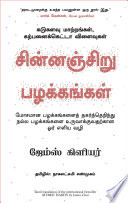 Atomic HabitsAbout the book →
It comes as no surprise that James Clear's masterpiece sits at the top of our list. Atomic Habits has sold over 15 million copies worldwide, and for good reason: it is arguably the most practical, comprehensive guide to behavioral change ever published. Clear moves away from goal-oriented thinking—arguing that winners and losers have the same goals—and focuses entirely on systems.
The core premise is deceptively simple: tiny changes lead to remarkable results. By focusing on making habits obvious, attractive, easy, and satisfying (and reversing those laws for bad habits), Clear provides a foolproof blueprint for transformation.
Key Takeaway
You do not rise to the level of your goals. You fall to the level of your systems. Focus your energy on designing an environment where the right behavior is the easiest behavior.
Best for: Anyone looking to break bad routines, build lasting positive behaviors, and understand the mechanics of human psychology.
2. Deep Work by Cal Newport
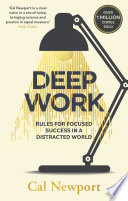 Deep WorkAbout the book →
If Atomic Habits teaches you how to behave, Cal Newport's Deep Work teaches you how to think and focus. Newport defines deep work as the ability to focus without distraction on a cognitively demanding task. It’s a skill that allows you to quickly produce better results and master complicated information in less time.
In a hyper-connected world dominated by Slack notifications, social media feeds, and endless meetings, Newport argues that the ability to concentrate deeply is becoming increasingly rare—and therefore increasingly valuable. He systematically dismantles the myth of multitasking and offers a rigorous philosophy for reclaiming your attention.
Practical Application
Adopt one of Newport’s scheduling philosophies—such as the Monastic approach (eliminating shallow obligations entirely) or the Bimodal approach (dedicating specific, extended blocks of time strictly to deep work while leaving the rest for shallow tasks).
Best for: Knowledge workers, writers, programmers, and creators who feel constantly busy but produce very little of actual value.
3. The Power of Habit by Charles Duhigg
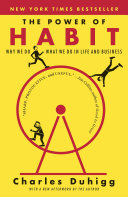 The Power of HabitAbout the book →
Before James Clear popularized the modern habit movement, investigative journalist Charles Duhigg laid the scientific groundwork with The Power of Habit. Duhigg explores why habits exist and how they can be changed by examining the neurological loop that governs all human routines: the Cue, the Routine, and the Reward.
What sets Duhigg's book apart is its fascinating case studies. He demonstrates how habit loops operate not just in individuals, but within organizations and societies. From how corporations track consumer shopping habits to how social movements are sparked, this book reads like a gripping thriller while offering profound insights into self-mastery.
"Change might not be fast and it isn't always easy. But with time and effort, almost any habit can be reshaped." — Charles Duhigg
Best for: Readers who love storytelling-driven non-fiction and want to understand the neurological "why" behind their actions.
4. Essentialism: The Disciplined Pursuit of Less by Greg McKeown
Productivity is often framed as a volume problem: how do we do more things? Greg McKeown turns this notion on its head in Essentialism, arguing that the pursuit of "more" often leads to burnout and diminishing returns. Essentialism is about making the wisest possible investment of your time and energy.
McKeown introduces the concept of the "vital few" versus the "trivial many." By learning to ruthlessly say "no" to good opportunities, you free up the mental bandwidth to say "yes" to the things that truly matter. It is less of a time-management guide and more of a spiritual awakening for the chronically overcommitted.
Actionable Advice
Adopt the "Hell Yeah or No" rule popularized in the book. If an opportunity or request doesn't make you say "Hell yeah!" when you evaluate it, treat it as a definitive "No."
Best for: Leaders, entrepreneurs, and busy professionals suffering from chronic burnout and decision fatigue.
5. Getting Things Done (GTD) by David Allen
Often considered the bible of personal productivity, David Allen’s Getting Things Done has spawned an entire productivity subculture since its initial publication in 2001. Allen's central thesis is that your mind is for having ideas, not holding them. When your head is cluttered with pending tasks, your brain experiences cognitive drag.
GTD is a comprehensive workflow management system designed to empty your mental RAM. Allen outlines a five-stage method—Capture, Clarify, Organize, Reflect, and Engage—that ensures nothing slips through the cracks.
- Capture: Collect every loose thread, idea, and task into an inbox.
- Clarify: Decide what each item means and whether it requires action.
- Organize: Put actionable items into context-specific lists.
- Review: Frequently look over your lists to ensure alignment.
- Engage: Execute the work with total confidence.
Best for: Detail-oriented individuals who manage complex, multi-layered projects and need an airtight operational system.
How to Choose the Right Book for Your Current Struggle
With so many stellar options, where should you start? The key is diagnosing your specific bottleneck:
- If you can't seem to stick to a morning routine or quit eating sugar, start with Atomic Habits.
- If you get easily distracted by email and social media while trying to work, read Deep Work.
- If you are working 60 hours a week and feeling unfulfilled, read Essentialism.
- If your projects are disorganized and you feel constantly overwhelmed, implement Getting Things Done.
Conclusion
The best books on habits and productivity are not magical talismans. Reading them will not automatically transform your life unless you cross the chasm from consumption to execution. Pick a single volume from this list that speaks directly to your current pain point, read it with a pen in hand, and commit to applying just one framework before moving on to the next title. True productivity is a marathon of small, deliberate adjustments—start running yours today.





