
Introduction: Why You Need the Best Books on Critical Thinking and Logic
In an age defined by infinite information, algorithmic echo chambers, and polarizing debates, the ability to think clearly has never been more scarce—or more valuable. We are constantly bombarded by headlines designed to provoke outrage, advertisements manipulating our desires, and social media feeds engineered to confirm our biases. Amidst this modern cognitive chaos, mastering the art of clear reasoning is not merely an academic exercise; it is an essential survival skill.
When you explore the best books on critical thinking and logic, you are doing more than just expanding your reading list. You are installing a mental firewall. These books teach you how to dismantle complex arguments, identify hidden premises, recognize logical fallacies, and arrive at well-reasoned conclusions. Whether you are a student, a professional looking to sharpen your problem-solving abilities, or simply a curious mind wanting to navigate the world with greater clarity, diving into the literature of logic will profoundly alter how you perceive reality.
In this comprehensive guide, we will explore the finest literature available to help you build your mental toolkit. From foundational logic textbooks to engaging popular psychology reads, these titles will transform you from a passive consumer of information into an active, analytical thinker.
What Makes a Great Book on Critical Thinking?
Before diving into specific titles, it is important to understand what separates a transformative book on logic from a superficial self-help guide. The best texts share a few common traits:
- Rigor meets accessibility: They bridge the gap between dry academic philosophy and engaging real-world application.
- Focus on fallacies: They don't just teach you how to build a good argument; they teach you how to spot bad ones.
- Practical exercises: They provide puzzles, scenarios, or reflective questions that force your brain to do the heavy lifting.
- Cognitive awareness: They acknowledge human psychology, teaching you how your own biases and emotions interfere with objective reasoning.
Armed with these criteria, let us examine the definitive reading list for anyone serious about upgrading their cognitive software.
Foundational Logic and Argumentation
To think critically, you must first understand the structural mechanics of an argument. These books lay the bedrock of formal and informal logic, teaching you how thoughts connect to form valid conclusions.
1. "Asking the Right Questions: A Guide to Critical Thinking" by M. Neil Browne and Stuart M. Keeley
If you only read one textbook on this subject, make it this one. Now in its twelfth edition, "Asking the Right Questions" is the gold standard for undergraduate critical thinking courses, yet it remains remarkably accessible to the general reader. The authors operate on a simple premise: critical thinking is a matter of asking the right questions, at the right time, in the right way.
The book teaches you how to identify the issue and conclusion, spot unsupported assumptions, evaluate evidence, and detect alternative interpretations. It avoids heavy philosophical jargon, opting instead for practical examples drawn from everyday media, advertising, and public policy.
2. "A Rulebook for Arguments" by Anthony Weston
At just over one hundred pages, Weston’s classic book is a masterclass in brevity and utility. It is designed to be pocket-sized and practical. Weston categorizes arguments into short types—such as generalizations, arguments by analogy, authority, and causes—and gives brief, explicit rules for constructing and assessing each type.
This is the ultimate quick-reference guide for writers, debaters, and professionals who need to construct persuasive arguments without wading through dense academic prose.
Navigating Cognitive Biases and Irrationality
Logic is useless if the thinker is unaware of their own psychological blind spots. The human brain is an evolved organ optimized for survival, not strict logical calculus. These books explore the quirks, heuristics, and biases that make us naturally irrational.
3. "Thinking, Fast and Slow" by Daniel Kahneman
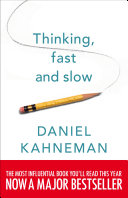 Thinking, Fast and SlowAbout the book →
No list of the best books on critical thinking and logic would be complete without Nobel laureate Daniel Kahneman’s masterwork. Kahneman introduces readers to the two systems that drive the way we think: System 1 is fast, instinctive, and emotional; System 2 is slower, more deliberative, and more logical.
Through decades of groundbreaking behavioral economics research, Kahneman demonstrates how System 1 dominates our lives, leading us into cognitive traps like anchoring, availability bias, and loss aversion. Understanding these mental shortcuts is vital; you cannot correct for errors you do not know you are making.
4. "The Art of Thinking Clearly" by Rolf Dobelli
If Kahneman provides the scientific deep dive, Dobelli provides the user-friendly catalog. "The Art of Thinking Clearly" is structured into short, punchy chapters, each dedicated to a specific cognitive bias or logical error (such as survivorship bias, confirmation bias, and the sunk cost fallacy).
Dobelli writes with dry wit and clarity, making it easy to digest one or two chapters a day. It acts as an encyclopedic reference guide for everyday irrationality, helping you catch yourself when your brain tries to take lazy shortcuts.
Spotting Fallacies and Rhetorical Manipulation
We live in a world saturated with persuasion, spin, and outright deception. To protect your mind from manipulation, you must become intimately familiar with the dark arts of bad reasoning.
5. "Thinking Well: The Importance of Critical Thinking" (and similar informal logic guides)
Understanding informal fallacies—such as the straw man, ad hominem, slippery slope, and false dilemma—is essential for anyone engaging in public discourse. When you read books focused specifically on rhetoric and fallacies, you begin to notice how politicians, advertisers, and internet commenters routinely bypass logic to appeal to fear, pride, and tribalism.
Actionable advice: Keep a "fallacy journal" while reading these texts. Whenever you watch a news segment or read a heated social media debate, write down the specific fallacies used by both sides. You will quickly realize how rare genuine, evidence-based reasoning has become.
"It is the mark of an educated mind to be able to entertain a thought without accepting it." — Aristotle
How to Apply Critical Thinking in Daily Life
Reading books on logic is a passive activity unless you deliberately translate theory into daily practice. Here is an actionable framework to integrate what you learn from these books into your everyday routine:
- Pause before reacting: When presented with a shocking statistic or emotional headline, deliberately engage System 2. Ask yourself: What is the source? What is being assumed here?
- Seek out disconfirming evidence: When you form a strong opinion on a topic, make it a challenge to find the strongest possible argument against your view. If you cannot steelman the opposing side, you don't fully understand your own position.
- Audit your environment: Curate your information diet. Reduce your exposure to sensationalized media and increase your intake of long-form, deeply researched, and logically sound material.
Conclusion
Investing time in the best books on critical thinking and logic is the highest-leverage self-improvement project you can undertake. It changes the way you read, the way you work, the way you converse, and the way you make life-altering decisions.
Start small. Pick one title from this list—perhaps Anthony Weston's "A Rulebook for Arguments" for a quick structural win, or Daniel Kahneman's "Thinking, Fast and Slow" for a psychological deep dive—and commit to reading just ten pages a day. As you train your mind to demand evidence, question assumptions, and reject fallacious reasoning, you will find yourself navigating the complexities of the modern world with unprecedented confidence and clarity.





