
Let's face it: human history is overwhelmingly vast. Spanning hundreds of thousands of years across continents, cultures, wars, revolutions, and technological breakthroughs, the timeline of our species is simply too massive to absorb through standard academic textbooks. If you have ever felt intimidated by the sheer volume of historical literature out there, you are not alone. Most people want to grasp the overarching narrative of humanity—how we got here, why societies rose and fell, and what connects our modern world to ancient empires—without spending a decade reading dense monographs.
That is precisely why finding the best books for understanding world history quickly is such a game-changer. The right macro-histories cut through the noise, strip away trivial dates, and focus on the sweeping patterns of human development. Whether you are a busy professional, a curious student, or someone trying to build a solid foundational knowledge base on weekends, this guide will introduce you to the ultimate literary shortcuts for mastering global history in record time.
Why Macro-History is the Secret to Fast Learning
Before diving into specific titles, it helps to understand *how* to read history efficiently. Traditional education often teaches history chronologically and locally, focusing on the memorization of specific battles, treaties, and political dynasties. While this approach has its place, it rarely answers the "so what?" question.
Macro-history, on the other hand, looks at the big picture. It explores geography, climate, disease, economics, and ideology to explain why history unfolded the way it did. When you read books that prioritize overarching themes over micro-details, your brain builds a mental scaffolding. Once that framework is in place, reading about any specific historical event becomes infinitely easier because you already know where it fits on the grand map of human progress.
The Best Books for Understanding World History Quickly
We have curated a selection of masterworks that balance narrative page-turning appeal with profound historical insight. These volumes treat history not as a list of dates, but as a thrilling, interconnected story of survival, innovation, and adaptation.
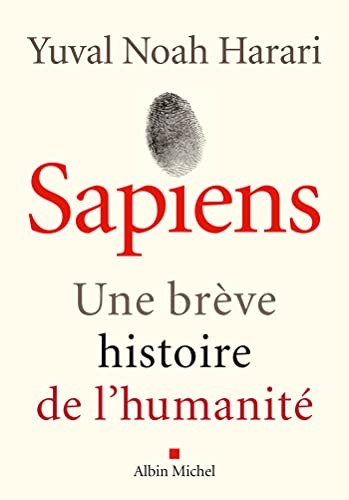
1. *Sapiens: A Brief History of Humankind* by Yuval Noah Harari
 SapiensAbout the book →
No list of rapid historical guides is complete without Yuval Noah Harari’s international sensation, Sapiens. Harari tackles the entire span of human existence—from an insignificant ape in East Africa to the masters of planet Earth—in a single, breathtaking narrative.
What makes Sapiens one of the best books for understanding world history quickly is its unique structural approach. Harari divides human history into four monumental revolutions:
- The Cognitive Revolution: How abstract thinking and gossip allowed humans to cooperate in massive numbers.
- The Agricultural Revolution: How farming radically changed our diet, social structures, and workload (often for the worse, as Harari provocatively argues).
- The Unification of Humankind: The gradual integration of disparate human cultures through money, empires, and universal religions.
- The Scientific Revolution: The acknowledgment of our ignorance that unlocked unprecedented power and technological dominance.
Harari’s writing is punchy, philosophical, and deeply provocative. It forces you to question your assumptions about progress, happiness, and what it truly means to be human.
2. *Guns, Germs, and Steel* by Jared Diamond
 Guns, Germs and SteelAbout the book →
Have you ever wondered why European societies ended up colonizing the Americas and large parts of Asia and Africa, rather than the other way around? In this Pulitzer Prize-winning masterpiece, Jared Diamond answers the ultimate geographical question of world history.
Diamond rejects racist or Eurocentric theories of history, arguing instead that environmental and geographical luck determined the fate of continents. Eurasia had a distinct advantage because of its east-west axis, which allowed crops, livestock, and ideas to spread rapidly across similar climates. Furthermore, close proximity to domesticated animals exposed Eurasians to infectious diseases, building up long-term immunities that later devastated indigenous populations elsewhere.
While the book is dense in places, reading it completely shifts your perspective on why the modern world looks the way it does. It teaches you to look past political actors and see the deep ecological currents that steer human destiny.
3. *A Short History of the World* by J.B. Roberts
If you want a traditional, beautifully written narrative history that doesn't sacrifice intellectual rigor, J.B. Roberts’ classic work is a masterclass in concise historical storytelling. Roberts manages to distill thousands of years of civilization into a volume that reads like a sweeping novel.
Unlike books that focus heavily on modern times, Roberts gives balanced attention to the ancient world, the classical eras of Greece, Rome, and China, the medieval landscape, and the turbulent modern century. It is an exceptional bridge book—one that takes you gently by the hand and walks you through the chronological progression of empires without ever bogging you down in academic jargon.
4. *The Silk Roads: A New History of the World* by Peter Frankopan
For centuries, Western historiography has suffered from tunnel vision, focusing primarily on Europe and North America while treating the rest of the world as a footnote. Peter Frankopan shatters this paradigm in The Silk Roads, placing Central Asia squarely at the center of global history.
"History is not merely a record of the past; it is a mirror reflecting the networks, trade routes, and exchanges that continually reshape our future." — Global Historian’s Insight
Frankopan shows how the ancient trading networks linking East and West have always been the heartbeat of global wealth, conflict, and cultural exchange. From the rise of Christianity and Islam to the Mongol conquests, the spice trade, and the modern geopolitics of oil, The Silk Roads proves that the center of the world has always been Asia. Reading this book is perhaps the fastest way to unlearn Eurocentric biases and gain a truly global perspective.
5. *A Little History of the World* by E.H. Gombrich
Originally written in 1935 for young readers, E.H. Gombrich’s A Little History of the World has become a cult favorite among adults looking for a fast, delightful, and accessible introduction to history. Gombrich writes with an infectious enthusiasm, treating historical epochs like chapters in an epic adventure story.
The book starts with cave paintings and takes you right through the twentieth century. Because it was written for a younger audience, there are no dry scholarly footnotes or complex theoretical frameworks—just pure, unadulterated storytelling. It is arguably the most effortless read on this list, making it a fantastic weekend project.
How to Read and Retain History Fast
Buying the best books for understanding world history quickly is only half the battle. To truly retain the information without feeling overwhelmed, you need an actionable reading strategy:
- Focus on Themes, Not Dates: Do not waste mental energy trying to memorize the exact year a battle took place. Instead, ask yourself: *What caused this conflict? How did society change as a result?*
- Use the "Top-Down" Method: Read a macro-history like Sapiens or The Silk Roads first. Once you have the broad strokes, you can dive into specific biographies or eras later.
- Connect Past to Present: As you read about ancient supply chain disruptions, religious schisms, or economic inflations, look for parallels in today’s news cycle. History comes alive when you realize humans have been dealing with the exact same problems for millennia.
- Embrace Audiobooks: Many of these fast-paced historical narratives are brilliantly narrated. Listening to them during commutes, workouts, or chores is a brilliant way to supercharge your historical education.
Conclusion: Start Your Historical Journey Today
Understanding world history does not require a university degree, a dusty library, or years of painstaking study. By diving into macro-histories that prioritize storytelling, geography, and human psychology, you can grasp the grand narrative of civilization in a fraction of the time.
Whether you choose the philosophical provocations of Yuval Noah Harari, the geographical insights of Jared Diamond, or the expansive global view of Peter Frankopan, these books will transform the way you see the world. Pick one title from this list, carve out thirty minutes a day, and begin your journey into the extraordinary story of human history today.
📚 Books in this article (2)
SapiensYuval Noah HarariYuval Noah Harari’s Sapiens tracks human history from Stone Age hunter-gatherers to modern technological powerhouses.About →2Guns, Germs and SteelJared DiamondJared Diamond explores how geography and environment, rather than race, shaped the contrasting fates of human societies.About →





