
The pursuit of financial independence and early retirement has transformed from a fringe movement into a global phenomenon. Millions of people are waking up to the realization that spending forty years in a cubicle, only to retire when their physical energy is waning, is not the only way to live. The path to breaking free from the traditional 9-to-5 grind, however, requires a complete rewiring of how you think about money, consumption, and time.
Fortunately, you do not have to invent the wheel. Countless pioneers have walked this path, documented their strategies, and poured their hard-won wisdom into literature. Whether you are drowning in debt, looking to optimize your savings rate, or trying to understand the mechanics of passive income, the right reading material can change your life.
In this comprehensive guide, we explore the best books about financial freedom and early retirement. These titles go beyond generic budgeting advice; they offer philosophical shifts, mathematical roadmaps, and psychological frameworks designed to help you reclaim your time and design the life of your dreams.
Why Read About Financial Independence?
Before diving into the reading list, it is worth asking: why do you need books when there is so much free content online? The answer lies in depth and paradigm shifts. Blog posts and social media threads offer tactical tips, but books provide comprehensive frameworks.
When you commit to reading deep dives on financial independence, you achieve three crucial outcomes:
- Mindset Transformation: You stop viewing money as a status symbol and start viewing it as stored life energy and freedom units.
- Strategic Clarity: You learn how the math of the "4% rule" and safe withdrawal rates actually works in practice.
- Resilience: You build the psychological armor needed to withstand market downturns and societal pressure to keep up with the Joneses.
Let’s dive into the seminal works that have shaped the modern FIRE (Financial Independence, Retire Early) movement and beyond.
1. The Blueprint: "Your Money or Your Life" by Vicki Robin and Joe Dominguez
No list of the best books about financial freedom and early retirement is complete without the book that started it all. Originally published in 1992 and updated for the modern era, Your Money or Your Life is the undisputed grandfather of the financial independence movement.
Core Concepts and Takeaways
The central premise of Robin and Dominguez’s work is revolutionary yet simple: money is something you trade your life energy for. Every time you buy something, you aren’t paying for it with dollars; you are paying for it with the hours of your life you had to spend working to earn those dollars.
The book guides readers through a 9-step transformation program that redefines the relationship between humans and currency. Key exercises include:
- Calculating your actual, true hourly wage (factoring in commute costs, work wardrobe, and stress-induced spending).
- Tracking every single cent that enters and leaves your life.
- Evaluating your expenses based on the fulfillment they actually bring you relative to the life energy expended.
- Achieving "Financial Independence," where your investment income covers your basic needs.
"Money is an ongoing stream of life energy that we choose to exchange or trade for other forms of life energy." — Vicki Robin and Joe Dominguez
Practical Application: Calculate your true hourly wage this week. If you make $30 an hour on paper, but spend 10 hours commuting, buying lunches out, and maintaining a work wardrobe for every 40 hours worked, your real wage is significantly lower. This realization alone can instantly curb impulse buying.
2. The Tactical Playbook: "The Simple Path to Wealth" by JL Collins
If Your Money or Your Life provides the philosophy, The Simple Path to Wealth provides the exact engine to get you across the finish line. JL Collins wrote this book as a series of letters to his daughter, distilling decades of market wisdom into a remarkably straightforward investment strategy.
Why It’s a Must-Read for Early Retirees
Many aspiring early retirees get paralyzed by the complexity of the stock market. Should they buy individual stocks? Real estate? Crypto? Options? Collins argues passionately and logically that complexity is the enemy of wealth.
His philosophy centers around achieving "F-You Money"—the absolute freedom to walk away from any job, boss, or toxic situation because your savings can sustain you. The core of his investment strategy relies on low-cost, broad-market index funds, specifically Vanguard’s Total Stock Market Index Fund (VTSAX).
- The Accumulation Phase: Save aggressively and invest in equities while ignoring market noise.
- The Preservation Phase: Transition smoothly into retirement without panicking during market crashes.
- The 4% Rule: Understand how safely withdrawing your money can sustain you indefinitely.
Practical Application: Open a low-cost brokerage account, automate your monthly investments into a total stock market index fund, and stop checking your portfolio balance daily. Consistency beats timing every single time.
3. The Mindset Shift: "Psychology of Money" by Morgan Housel
Doing well with money has little to do with how smart you are and a lot to do with how you behave. That is the foundational thesis of Morgan Housel’s modern masterpiece, 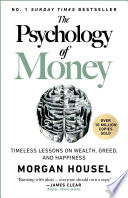 The Psychology of Money.
Bridging the Gap Between Math and Emotion
You can memorize every tax code and spreadsheet formula, but if you lack emotional control, you will never achieve financial freedom. Housel explores the strange ways people think about wealth through 19 short, gripping stories.
For those pursuing early retirement, this book is essential because retiring early requires accumulating a large war chest and then *watching it sit there*. You have to resist the urge to upgrade your lifestyle as your income grows.
- Wealth is what you don’t see: Spending money to show people you have money is the fastest way to have less money. Real wealth is the cars you didn't buy, the watches you didn't wear, and the freedom you secured.
- The power of compounding: Success is not about earning the highest returns, but about earning pretty good returns for a long uninterrupted period.
- Room for error: The most important part of every plan is planning for your plan not going according to plan. This is especially vital when building a multi-decade early retirement fund.
Practical Application: Identify one area of your lifestyle where you are practicing "wealth signaling" (buying expensive brands to impress others) and redirect those funds straight into your investment account.
4. The Real Estate Angle: "Financial Freedom" by Grant Sabatier
Grant Sabatier went from having $2.26 in his bank account to retiring with financial independence in just five years at age 30. His book, Financial Freedom: A Proven Path to All the Money You Will Ever Need, is an aggressive, comprehensive guide that treats money-making as a science.
A Multi-Faceted Approach to Accelerating Timeline
While some financial books focus purely on cutting expenses (which has a mathematical floor), Sabatier emphasizes that income has no ceiling. He provides a granular roadmap for accelerating your timeline to early retirement through multiple levers:
- Side Hustles: How to monetize your skills on the side to double your savings rate overnight.
- Career Maximization: Proven scripts and strategies for negotiating higher salaries and promotions.
- Real Estate Investing: Using smart property strategies, such as "house hacking," to eliminate your biggest monthly expense (housing).
- Arbitrage: Leveraging geographical arbitrage or remote work to earn high-cost-of-living wages while living in low-cost areas.
Practical Application: Audit your current skills and dedicate 5 hours a week to launching a side hustle. Even an extra $500 a month, when invested aggressively into index funds, can shave years off your working career.
5. The Lifestyle Architect: "The 4-Hour Workweek" by Tim Ferriss
While not a traditional personal finance book, Tim Ferriss's cultural phenomenon, 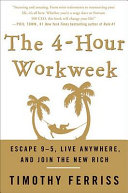 The 4-Hour Workweek, fundamentally re-engineered how modern professionals think about retirement. Ferriss challenges the traditional "deferred-life plan"—working hard for 40 years to enjoy retirement in your sixties.
Mini-Retirements and the New Rich
Ferriss introduces the concept of "New Rich"—people who abandon the traditional deferred-life plan and create luxury lifestyles in the present using currency defined by time and mobility, not just cash.
He advocates for "mini-retirements": taking months-long sabbaticals throughout your working life rather than clustering all your leisure time at the end. This philosophy has heavily influenced the modern FIRE movement, shifting the focus from "how much money do I need to never work again?" to "how can I design a lifestyle where I don't need to escape my work?"
- Elimination: Master the 80/20 rule to cut out time-wasters and unproductive tasks.
- Automation: Build systems, outsource tasks, and create cash-flowing assets that run without your daily presence.
- Liberation: Negotiate remote work arrangements or geographical independence.
Practical Application: Plan a "mini-retirement" or extended travel block of one month over the next year. Learn how to live out of a suitcase and realize that you need far less physical stuff to be happy than you think.
How to Choose the Right Book for Your Journey
With so many phenomenal titles available, where should you start? The right book depends entirely on your current financial season:
- If you are feeling stuck, overwhelmed, or questioning your life choices: Start with Your Money or Your Life. It will reset your baseline philosophy.
- If you are ready to start investing but feel intimidated by the stock market: Grab The Simple Path to Wealth. It will give you a concrete, bulletproof portfolio strategy.
- If you struggle with impulse spending or anxiety over money: Read The Psychology of Money to build emotional resilience.
- If you want to speed up your timeline through active income growth: Dive into Financial Freedom by Grant Sabatier.
Conclusion: Turn Pages Into Action
Reading the best books about financial freedom and early retirement is an incredible form of self-investment, but knowledge without execution is just entertainment. The true power of these texts lies in the daily decisions they inspire.
You don't need to implement every strategy overnight. Pick one book that resonates with your current situation, read it with a highlighter in hand, and commit to taking *one* concrete action item this week—whether that is opening an index fund account, cutting an unused subscription, or brainstorming a side hustle. Your future self, lounging in financial independence, will thank you.





