
Anxiety and stress have quietly become the defining chronic conditions of modern life. Whether it is the pressure of professional deadlines, the weight of global uncertainties, or the constant hum of digital notifications, our nervous systems are rarely given the chance to truly reset. While therapy, mindfulness apps, and lifestyle adjustments are vital tools, there is something uniquely transformative about finding the right literature. Reading the best books about overcoming anxiety and stress offers not just education, but deep validation, actionable frameworks, and the comforting realization that you are not alone in your struggle.
Navigating the vast sea of self-help and psychology literature can be overwhelming in its own right. With hundreds of titles claiming to offer a "quick fix," how do you know which ones are worth your precious time and mental energy? We have curated a definitive guide to the most impactful, science-backed, and empathetic books written on the subject. These are not just theoretical treatises; they are practical companions designed to help you understand your mind, regulate your nervous system, and build lasting resilience.
Why Reading About Anxiety Works: The Science of Bibliotherapy
Before diving into our top book recommendations, it is worth exploring why reading functions as a powerful therapeutic intervention. Psychologists often refer to this as "bibliotherapy." When you read a well-written book about mental health, several psychological mechanisms kick into gear:
- Normalization and Validation: Anxiety often makes people feel isolated, as though their internal panic is a personal failure. Reading about others experiencing the same physical symptoms and looping thoughts instantly lowers shame.
- Cognitive Reframing: Great mental health books teach you to look at your thoughts as events, rather than absolute facts. This creates a healthy psychological distance.
- Nervous System Regulation: Sitting down to read requires focus, slow breathing, and physical stillness—acts that actively signal safety to an overactive amygdala.
When you choose the right text, you are essentially borrowing the decades of clinical experience and wisdom of a seasoned therapist or neuroscientist. Let us explore the categories and titles that have changed millions of lives.
1. The Neuroscience and Habit-Breaking Approach
To conquer chronic stress, you first need to understand the machinery behind it. Our brains are hardwired for survival, which unfortunately means they are biased toward negativity and hyper-vigilance. The books in this category bridge the gap between neuroscience and daily habit formation.
Unwinding Anxiety by Dr. Judson Brewer
Dr. Judson Brewer is an addiction psychiatrist and neuroscientist who revolutionized how we view anxiety. In Unwinding Anxiety, he demonstrates that anxiety is not just a mental state; it is a habit loop. Just like reaching for a cigarette or checking your phone compulsively, our brains learn to worry as a form of perceived protection.
What makes this book one of the best books about overcoming anxiety and stress is Dr. Brewer’s focus on curiosity. Instead of fighting anxiety—which usually creates more friction and panic—he teaches readers to map out their anxiety triggers and greet them with radical curiosity. By replacing the reward of worry with the visceral experience of how unhelpful it feels, the brain naturally lets go of the habit.
"Anxiety is driven by reward. Because we feel uncertain, our brain tries to figure things out. Thinking feels like doing something, so it rewards us temporarily, trapping us in a loop of worry." — Dr. Judson Brewer
The Happiness Trap by Dr. Russ Harris
Based on Acceptance and Commitment Therapy (ACT), Dr. Russ Harris delivers a punchy, counter-intuitive masterpiece. The core premise of The Happiness Trap is simple yet radical: the more we try to avoid negative emotions like stress and anxiety, the more entangled we become in them.
Harris provides powerful mindfulness skills to help you "defuse" from painful thoughts and make peace with difficult feelings. Rather than teaching you how to eliminate stress entirely, this book teaches you how to stop waging war against your own human experience, freeing up immense energy to live a values-driven life.
2. Rewiring the Body and Nervous System
Anxiety is rarely confined to the mind. It manifests physically as a racing heart, shallow breathing, tightness in the chest, and chronic muscle tension. If you only try to think your way out of anxiety, you miss half the equation. You must also address the body.
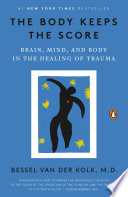
The Body Keeps the Score by Bessel van der Kolk, M.D.
 The Body Keeps the ScoreAbout the book →
While technically focused on trauma, Bessel van der Kolk’s landmark book is an essential read for anyone struggling with deep-seated, chronic stress. Van der Kolk explains how traumatic experiences and chronic overwhelm literally reshape both body and brain.
Why is this crucial for anxiety sufferers? Because what we often label as "generalized anxiety" is frequently an unprocessed stress response trapped in the somatic system. Through insights into yoga, neurofeedback, EMDR, and mindfulness, this book offers a profound roadmap for releasing physical tension and restoring a sense of bodily safety.
Wired for Joy by Laura Markham
For those looking for a gentler, highly accessible introduction to nervous system health, Laura Markham’s work helps readers understand how to shift away from the stress-induced fight-or-flight response and activate the parasympathetic nervous system. It is packed with micro-practices that can be integrated into even the busiest daily schedule.
3. Actionable Frameworks: CBT and Practical Toolkits
Sometimes you do not want deep philosophical introspection; you just need immediate, practical tools to stop a panic spiral in its tracks. Cognitive Behavioral Therapy (CBT) books are unmatched for this purpose.
Feeling Good: The New Mood Therapy by Dr. David D. Burns
No list of the best books about overcoming anxiety and stress is complete without Dr. David Burns' legendary text. Hailed by therapists worldwide, Feeling Good introduces the principles of CBT, demonstrating how our distorted thought patterns (such as all-or-nothing thinking, catastrophizing, and emotional reasoning) directly create our emotional misery.
Dr. Burns provides practical worksheets and cognitive distortions checklists that train you to cross-examine your own thoughts like a defense attorney. While it requires active participation, working through the exercises in this book can be as effective as traditional talk therapy for mild-to-moderate anxiety.
The Anxiety and Phobia Workbook by Edmund J. Bourne, PhD
If you prefer a structured workbook format, Edmund Bourne’s comprehensive guide is the gold standard. It covers everything from relaxation techniques and dietary factors to panic disorder, agoraphobia, and cognitive restructuring. It acts as a complete self-treatment course that you can move through at your own pace.
4. Philosophical and Acceptance-Based Wisdom
Ancient wisdom often anticipates modern psychology by thousands of years. When dealing with existential stress and the uncontrollable nature of life, looking backward can help us move forward.
The Power of Now by Eckhart Tolle
 The Power of NowAbout the book →
While spiritual in tone, Eckhart Tolle’s The Power of Now has helped millions of chronic overthinkers find relief. Tolle argues that the vast majority of human suffering is manufactured by the mind, which constantly obsesses over the past or dreads an imagined future.
By bringing your awareness entirely into the present moment, you realize that while challenges exist right now, you can almost always handle *this exact moment*. It is the mental projection of future catastrophes that creates crippling stress. Reading this book is less about acquiring intellectual knowledge and more about experiencing a shift in consciousness.
Actionable Tips for Getting the Most Out of These Books
Reading about anxiety can easily become another form of procrastination or intellectualized avoidance if you are not careful. To truly benefit from these titles, apply these practical strategies:
- Read with a Pen in Hand: Underline passages that resonate and write notes in the margins. Engagement solidifies learning.
- Take It One Chapter at a Time: Do not rush. Mental health books require emotional digestion. Let the concepts settle before moving on.
- Choose One Tool and Practice It Daily: If a book introduces a breathing technique or a thought record, commit to practicing it for two weeks before evaluating its effectiveness.
- Combine Reading with Professional Support: Books are powerful supplements, but they do not replace licensed therapy, especially for severe clinical anxiety or panic disorders.
Conclusion: Your Journey Toward Lasting Calm
Overcoming chronic worry and tension is not about achieving a state of permanent bliss or complete invulnerability to stress. Rather, it is about building a new relationship with your internal world—one characterized by compassion, curiosity, and psychological flexibility.
Whether you resonate most with the neuroscience-backed habit breaking of Dr. Judson Brewer, the practical cognitive restructuring of Dr. David Burns, or the somatic wisdom of Bessel van der Kolk, investing time in the best books about overcoming anxiety and stress is one of the kindest things you can do for yourself. Pick a title that speaks to your current season of life, turn off your devices, find a quiet corner, and take the first step toward reclaiming your peace.





