
Stepping into the world of finance for the very first time can feel like learning an entirely foreign language. Between terms like "P/E ratios," "bull markets," "asset allocation," and "compound interest," it is easy for a complete beginner to feel overwhelmed and retreat safely to a standard savings account. But here is the hard truth: keeping your hard-earned money in a traditional savings account in the face of inflation is a slow-motion recipe for losing purchasing power. To build real, generational wealth, you need your money to work for you. And the absolute best way to start that journey is by reading.
Before you risk a single dollar in the stock market, you need to invest in your own financial education. The best books about investing for complete beginners do more than just teach you how to pick stocks; they completely rewire how you view money, risk, and time. In this comprehensive guide, we have curated a definitive reading list designed specifically for absolute novices. These selections cut through the Wall Street jargon, strip away the complicated math, and deliver timeless principles that will guide your financial future.
Why Reading the Best Books About Investing Matters
It is tempting in the modern era to turn to YouTube, TikTok, or Reddit for financial advice. However, social media is often filled with get-rich-quick schemes, day-trading gurus selling expensive courses, and emotional reactions to daily market volatility. Books offer something social media cannot: deep, systematic, time-tested wisdom.
When you read the best books about investing for complete beginners, you are essentially buying decades of wisdom for the price of a paperback. Legendary investors spent their entire lives making mistakes, losing money, and figuring out what actually works over decades—not just during a bull market. By reading their works, you bypass the trial-and-error phase and avoid costly financial blunders.
Furthermore, investing is 80% psychology and only 20% math. Anyone can learn how to buy an index fund, but keeping your composure when the market drops 30% requires a strong psychological foundation. Great beginner investing books train your mindset, helping you stay calm, rational, and disciplined when the financial news channels are screaming about a crash.
Top 5 Books Every Beginner Investor Needs to Read
We have narrowed down thousands of financial titles to the top five foundational books that every novice should read. These selections cover the psychological, structural, and practical aspects of investing without assuming you have a degree in economics.
1. "The Psychology of Money" by Morgan Housel
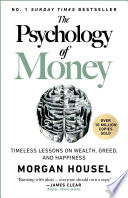 The Psychology of MoneyAbout the book →
If you only read one book on this list, make it this one. Morgan Housel’s "The Psychology of Money" is widely regarded as one of the best books about investing for complete beginners because it completely sidesteps complex financial formulas to focus entirely on human behavior.
Housel brilliantly argues that doing well with money has a little to do with how smart you are and a lot to do with how you behave. He uses short, engaging stories to illustrate how our personal history, worldview, and ego shape our financial decisions. For a beginner, this is liberating. You do not need to be a math genius or a corporate insider to build wealth; you just need emotional regulation and patience.
Key Takeaway: Compounding is the eighth wonder of the world, but it requires you to not interrupt it unnecessarily.
Actionable Advice: Focus on increasing your savings rate and living below your means before worrying about which specific stocks to buy.
2. "The Little Book of Common Sense Investing" by John C. Bogle
Written by the legendary founder of Vanguard and the pioneer of the index fund, Jack Bogle, this book is the holy grail of passive investing. If the thought of researching individual companies, reading balance sheets, and timing the market makes you want to abandon investing altogether, Bogle is here to save the day.
Bogle explains why trying to beat the market is a loser’s game for most everyday people. High management fees, trading commissions, and human emotion consistently drag down actively managed mutual funds. Instead, Bogle advocates for a wonderfully boring, highly effective strategy: buying low-cost index funds that track the entire stock market.
- Accept that you cannot consistently time or beat the market.
- Minimize investment fees and taxes, as they eat away at your returns over time.
- Buy a broad-market index fund and hold it for the long term.
3. "A Random Walk Down Wall Street" by Burton G. Malkiel
First published in 1973 and updated regularly, Burton Malkiel’s classic is a masterclass in market history and strategy. While the title sounds academic, the book is remarkably accessible. Malkiel walks the reader through various financial crazes—from the Dutch Tulip Bulb mania to the Dot-Com bubble—proving that speculation is a dangerous game.
The core philosophy of the book is that the stock market is generally efficient, meaning that current stock prices reflect all available information. Therefore, trying to pick individual winning stocks is essentially throwing darts at a board. Malkiel provides a step-by-step guide to lifecycle investing, helping readers adjust their risk tolerance as they age.
"Investing is not about beating others at their game. It is about controlling your own behavior and staying the course through all market cycles." — Financial Wisdom
4. "I Will Teach You to Be Rich" by Ramit Sethi
Don't let the cheeky title fool you—Ramit Sethi’s bestseller is a deeply practical, no-nonsense blueprint for personal finance and investing, tailored specifically for young adults and complete beginners. Unlike traditional finance books that tell you to stop buying lattes, Sethi advocates for a "Conscious Spending Plan."
He walks you through setting up automated financial systems. Once your investments are automated, you do not have to rely on willpower every single month. Sethi breaks down the exact mechanics of opening tax-advantaged accounts like 401(k)s and IRAs, demystifying asset allocation in a witty, highly engaging tone.
5. "The Simple Path to Wealth" by J.L. Collins
J.L. Collins originally wrote these financial lessons in a series of letters to his daughter, which eventually morphed into this powerhouse of a book. The philosophy is built around a concept called "FU Money"—the independence that comes from having enough savings that you never have to tolerate a toxic job or bad situation again.
Collins breaks down the stock market into its most basic components. He introduces the concept of the VTSAX (Vanguard Total Stock Market Index Fund) and explains how accumulating this single asset can secure your financial freedom. It is written with immense clarity, making it one of the absolute best books about investing for complete beginners who want a straightforward roadmap.
Practical Framework: How to Apply What You Read
Reading books is only step one. The real magic happens when you translate theoretical knowledge into practical execution. Here is a step-by-step framework to help you transition from a reading beginner to an active, confident investor:
- Step 1: Build an Emergency Fund. Before putting money into the stock market, save 3 to 6 months of living expenses in a high-yield savings account. This ensures you won't be forced to sell your investments during a market downturn to pay for unexpected emergencies.
- Step 2: Conquer High-Interest Debt. If you are carrying credit card debt with an 18% interest rate, paying it off is equivalent to getting an 18% guaranteed, tax-free return on your money. Clear this hurdle first.
- Step 3: Open the Right Accounts. Take advantage of employer-sponsored plans like a 401(k) (especially if there is an employer match—which is free money) or open an Individual Retirement Account (IRA).
- Step 4: Choose Your Strategy. Based on your reading (such as Bogle or Collins), set up automated monthly contributions into a low-cost, broad-market index fund.
- Step 5: Automate and Ignore. Log out of your brokerage account. The less you check your portfolio, the less likely you are to panic-sell during a market correction.
Common Pitfalls for Beginner Investors to Avoid
As you dive into your investing journey, keep an eye out for these classic traps that snare many novices:
Chasing Hot Tips: If your coworker or a social media influencer tells you about a "guaranteed" hot stock, run the other way. By the time you hear about it, the smart money has already capitalized on it.
Timing the Market: Countless studies show that "time in the market beats timing the market." Waiting for the "perfect moment" to buy usually results in missing out on the biggest upward surges.
Ignoring Fees: High expense ratios and hidden management fees can quietly cannibalize tens of thousands of dollars of your wealth over a thirty-year timeline. Always check the fees associated with any fund you buy.
Conclusion
Mastering your financial future does not require an MBA, a Wall Street mentor, or a crystal ball. By exploring the best books about investing for complete beginners, you equip yourself with the mental frameworks, historical context, and practical strategies needed to build lasting wealth.
Start small. Pick just one book from this list—perhaps Morgan Housel's "The Psychology of Money" for your mindset or Jack Bogle’s "The Little Book of Common Sense Investing" for your strategy—and commit to reading just ten pages a day. Your future self will thank you for the investment.





