
Economics often feels like an impenetrable fortress guarded by academics who speak in a secret language of mathematical formulas, obscure jargon, and esoteric charts. Yet, economics is not just an academic discipline confined to university lecture halls; it is the invisible current that shapes our daily lives. From the price of a gallon of milk and your monthly mortgage rate to global supply chain disruptions and geopolitical tensions, economic forces dictate our reality.
Understanding how the economy really works is no longer a luxury reserved for Wall Street traders or policy makers—it is an essential survival skill. When you understand the underlying mechanics of incentives, scarcity, inflation, and market behavior, the daily news transforms from a chaotic stream of frightening headlines into a predictable pattern of cause and effect.
Fortunately, you do not need a Ph.D. in econometrics to master these concepts. A new wave of economic writers has mastered the art of translating complex macroeconomic and microeconomic theories into captivating, accessible narratives. Below is a curated list of ten books that strip away the academic varnish and explain how the economy really works, giving you the practical tools to navigate your financial life with confidence.
1. The Classics: Foundations of Market Thinking
To understand the modern global marketplace, we must first examine the foundational texts that shaped modern economic philosophy. These books laid the groundwork for how we perceive value, trade, and human motivation.
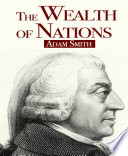
The Wealth of Nations by Adam Smith
 The Wealth of NationsAbout the book →
Often considered the bible of modern capitalism, Adam Smith’s 1776 masterpiece introduced the world to the revolutionary concept of the "invisible hand." Smith argued that individuals pursuing their own self-interest unintentionally benefit society as a whole through market competition and division of labor.
While reading an 18th-century text can be daunting, its core lessons remain startlingly relevant. When you look at how global supply chains spontaneously organize to deliver fresh avocados from Mexico to a grocery store in Maine without a centralized government planner orchestrating every step, you are witnessing Adam Smith’s invisible hand in real time.
Basic Economics by Thomas Sowell
If you want a single volume that demystifies how the economy really works without a single graph or mathematical equation, Thomas Sowell’s Basic Economics is the gold standard. Sowell, a renowned senior fellow at the Hoover Institution, approaches economics through the lens of common sense and human incentives.
Sowell excels at illustrating the unintended consequences of well-meaning government policies. For instance, he breaks down why rent control laws—designed to help low-income tenants—frequently result in housing shortages, lower construction rates, and deteriorated living conditions. It is an indispensable guide for anyone wanting to see past political rhetoric and understand the true cost of market interventions.
2. Behavioral Economics: Why Humans Don't Act Like Robots
Traditional economic theory was built on the assumption of Homo economicus—a mythical, perfectly rational human being who always maximizes utility and makes flawless financial decisions. Modern behavioral economics shatters this illusion, proving that humans are emotional, biased, and easily manipulated.
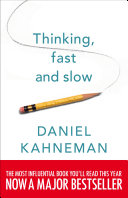
Thinking, Fast and Slow by Daniel Kahneman
 Thinking, Fast and SlowAbout the book →
Written by Nobel laureate Daniel Kahneman, this modern classic explores the two systems that drive the way we think: System 1 is fast, intuitive, and emotional; System 2 is slower, more deliberative, and more logical.
How does this relate to the economy? Market crashes, asset bubbles, and consumer spending sprees are driven entirely by System 1 thinking. Understanding cognitive biases like loss aversion and confirmation bias will fundamentally change how you view your own spending habits, investment choices, and susceptibility to marketing campaigns.
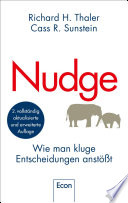
Nudge: Improving Decisions About Health, Wealth, and Happiness by Richard H. Thaler and Cass R. Sunstein
 NudgeAbout the book →
Building on behavioral psychology, Richard Thaler and Cass Sunstein introduce the concept of "libertarian paternalism"—the idea that we can design environments (choice architectures) that "nudge" people toward making better decisions for themselves without restricting their freedom of choice.
Practical application is everywhere: automatic enrollment in 401(k) retirement plans is a classic "nudge" that has boosted national savings rates by overcoming human procrastination. By understanding nudges, you can spot how corporations and governments try to influence your behavior—and how you can design your own financial life to encourage better saving and investing habits.
3. Microeconomics and Everyday Incentives
Microeconomics looks at the individual choices made by consumers and businesses. These books show how hidden incentives shape everything from crime rates to professional sports.
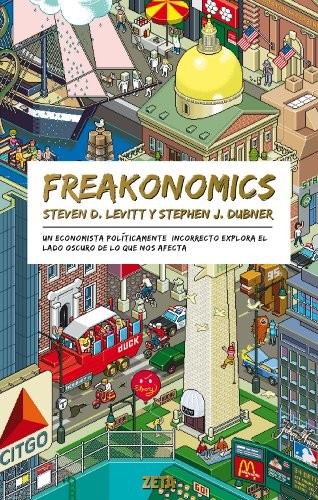
Freakonomics: A Rogue Economist Explores the Hidden Side of Everything by Steven D. Levitt and Stephen J. Dubner
 FREAKONOMICSAbout the book →
Ever wondered what school teachers and sumo wrestlers have in common? Or why drug dealers still live with their mothers? Steven Levitt applies economic analysis to unconventional scenarios, proving that incentives are the hidden gears of human behavior.
"Incentives are the cornerstones of modern life. Understanding them—or, often, ferreting them out—is the key to somehow understanding how a modern society actually works."
— Steven D. Levitt and Stephen J. Dubner, Freakonomics
The practical takeaway here is profound: if you want to understand why a person, company, or government acts a certain way, stop listening to what they say and look exclusively at what incentives they face.
The Undercover Economist by Tim Harford
Tim Harford acts as an economic detective in daily life, explaining why coffee costs so much at airports, why supermarkets arrange their aisles the way they do, and how secret information creates monopolies.
Harford breaks down the concept of "scarcity" and market power. When you understand why companies practice price discrimination (charging different prices to different consumers for the exact same good, like airline tickets), you can become a savvier consumer who refuses to fall for clever pricing traps.
4. Macroeconomics, Money, and the Global Stage
When we zoom out to the macroeconomic level, we encounter the complex dance of central banks, national debt, inflation, and globalization.
The Ascent of Money: A Financial History of the World by Niall Ferguson
To understand where the economy is going, you must understand where it has been. Niall Ferguson traces the evolution of finance, from the origins of credit and joint-stock companies in Renaissance Italy to the development of the bond market, insurance, and the 2008 subprime mortgage crisis.
Ferguson demonstrates that financial innovation is just as important to human progress as technological innovation. Without the invention of modern credit and risk management tools, the Industrial Revolution and modern global trade would have been impossible.
Principles for Navigating Big Debt Crises by Ray Dalio
Ray Dalio, founder of Bridgewater Associates (the world’s largest hedge fund), developed a template to explain how economic machines work, particularly during credit crises. In this accessible guide, Dalio breaks down the economic cycle into short-term and long-term debt cycles.
Dalio explains how credit expansion fuels economic booms and how debt deleveraging causes busts. By studying the archetypes of past financial crises—from the Great Depression to the 2008 crash—readers learn to spot the macroeconomic warning signs of inflation, deflation, and sovereign debt distress long before they hit mainstream headlines.
5. Critical Perspectives and Future Horizons
Economics is not a settled science; it is a dynamic, evolving debate. To truly understand how the economy works, you must also examine its flaws and the alternative models proposed for the future.
Capital in the Twenty-First Century by Thomas Piketty
French economist Thomas Piketty shocked the economic establishment with a simple mathematical observation: when the rate of return on capital ($r$) is consistently greater than the rate of economic growth ($g$), wealth inequality will inevitably expand ($r > g$).
Using centuries of tax and wealth data from Europe and the United States, Piketty challenges the comforting notion that free markets naturally distribute wealth fairly. Engaging with his work helps you understand the modern debates surrounding wealth taxes, stagnant middle-class wages, and the concentration of corporate power.
Doughnut Economics: Seven Ways to Think Like a Twenty-First-Century Economist by Kate Raworth
Can infinite economic growth exist on a finite planet? Kate Raworth argues that 20th-century economics is fundamentally broken because it relies entirely on GDP growth as the sole indicator of national success, ignoring ecological boundaries and social foundations.
Raworth proposes the "Doughnut" model: an inner social foundation ensuring no one falls into human deprivation (hunger, health, education), and an ecological ceiling ensuring humanity does not overshoot planetary boundaries (climate change, biodiversity loss). It is an essential read for anyone interested in sustainable development, green economics, and corporate social responsibility.
Actionable Takeaways: How to Apply Economic Thinking Today
Reading about economics is only the first step. To make these insights useful in your everyday life, try applying these four principles:
- Always Look for the Incentive: Whether evaluating a company policy, a news story, or a political promise, ask yourself: Who benefits from this outcome?
- Account for Opportunity Cost: Every choice you make—whether spending money or investing time—carries the cost of what you had to give up. Always weigh your alternatives.
- Beware of Sunk Costs: Do not continue pursuing a failing project, bad investment, or dead-end job simply because you have already invested time or money into it. Look strictly at future costs and benefits.
- Think at the Margin: Most real-world decisions are not all-or-nothing; they are made at the margin. Ask yourself whether the next hour of study, the next dollar of advertising, or the next employee hired provides a positive return.
Conclusion
Learning how the economy really works is one of the highest-leverage investments you can make in your personal education. It shields you from financial scams, helps you make smarter career and investment choices, and transforms you into an informed citizen capable of evaluating public policy.
You do not need to read all ten books in a single week. Start with one title that catches your eye—whether it is Thomas Sowell's practical clarity in Basic Economics or Daniel Kahneman's exploration of human psychology in Thinking, Fast and Slow. Turn the page, question your assumptions, and watch as the hidden machinery of the global economy finally comes into clear, understandable focus.





