
Money is arguably the most pervasive force in modern civilization. It dictates where we live, how we eat, the quality of our healthcare, and the amount of leisure time we can afford. Yet, despite its overwhelming importance in our daily lives, very few of us receive any formal education on how money actually works. We are taught algebra, history, and chemistry, but we are left to figure out wealth, debt, compounding interest, and economic psychology entirely on our own.
Fortunately, humanity has spent centuries recording financial wisdom, behavioral experiments, and wealth-building strategies in print. Across generations, certain masterworks have emerged—literary milestones that didn't just teach ledger-balancing, but completely fundamentally changed the way people think about money.
Whether you are trapped in a cycle of paycheck-to-paycheck survival, looking to optimize your investment portfolio, or simply trying to understand the emotional baggage you carry regarding cash, the right literature can serve as a profound catalyst. Here are 10 legendary books that changed the way people think about money, and how their lessons can revolutionize your financial future.
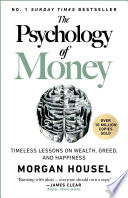
1. The Psychology of Money by Morgan Housel
 The Psychology of MoneyAbout the book →
For decades, traditional financial advice treated money as an exact science—a matter of spreadsheets, interest rates, and mathematical formulas. Morgan Housel shattered that illusion with his modern classic, The Psychology of Money. Housel brilliantly argues that doing well with money has little to do with how smart you are and a lot to do with how you behave. And behavior is notoriously difficult to teach, even for truly brilliant people.
The core premise of the book centers on the idea that personal financial success is driven by soft skills like humility, patience, and emotional regulation rather than raw financial intelligence. Housel introduces readers to concepts like "room for error," the distinction between getting wealthy and staying wealthy, and why tail events (extreme, rare occurrences) drive the majority of financial outcomes.
"Doing well with money has a little to do with how smart you are and a lot to do with how you behave. And behavior is hard to teach, even to really smart people." — Morgan Housel
Actionable Takeaway: Stop focusing solely on maximizing investment returns. Instead, build a financial cushion with a massive margin of error so that you can weather unexpected life storms without being forced to sell assets at the worst possible time.
2. Think and Grow Rich by Napoleon Hill
 Think And Grow RichAbout the book →
Published during the height of the Great Depression in 1937, Napoleon Hill’s Think and Grow Rich remains one of the best-selling self-improvement books of all time. Based on study of over 500 self-made millionaires—including Andrew Carnegie, Henry Ford, and Thomas Edison—Hill’s work was among the first to argue that wealth generation starts entirely in the mind.
While some of the book's framing leans into esoteric philosophy, its core utility is timeless: psychological priming, unwavering persistence, and the power of a definitive purpose. Hill argued that before you can accumulate riches in your bank account, you must first accumulate them in your mental state through a burning desire and a clear, actionable plan.
Actionable Takeaway: Write down the exact amount of money you intend to accumulate, the timeframe in which you intend to acquire it, and what you intend to give in return for that money. Read this statement twice daily to train your subconscious mind toward problem-solving.
3. Your Money or Your Life by Vicki Robin and Joe Dominguez
Long before the modern Financial Independence, Retire Early (FIRE) movement captured the internet, Vicki Robin and Joe Dominguez published Your Money or Your Life in 1992. This book fundamentally redefined how people view their jobs, their consumption, and their daily existence by introducing a single, radical metric: Life Energy.
The authors argue that money is not a status symbol, a scorecard, or an abstract number—it is traded life energy. Every time you buy something, you are not paying for it with dollars; you are paying for it with the hours of your life you had to spend working to earn those dollars. When viewed through this lens, mindless consumerism loses its shiny appeal.
The book outlines a transformative 9-step program to achieve financial independence, helping readers evaluate their spending based on fulfillment rather than habit.
Actionable Takeaway: Calculate your "real hourly wage" by factoring in commute time, work clothes, lunches out, and work-related stress. The next time you want to make a purchase, calculate how many hours of actual life energy that item costs you.
4. Rich Dad Poor Dad by Robert T. Kiyosaki
 Rich Dad, Poor DadAbout the book →
Love it or critique it, Robert Kiyosaki’s Rich Dad Poor Dad is arguably the most culturally impactful personal finance book of the late 20th and early 21st centuries. Kiyosaki contrasts the advice of his biological father (highly educated, hardworking, but perpetually struggling financially) with the mindset of his best friend's father (an eighth-grade dropout who became one of the wealthiest men in Hawaii).
The book's greatest contribution to financial literacy is its crystal-clear definition of assets versus liabilities:
- Assets: Put money in your pocket (e.g., rental properties, dividend-paying stocks, intellectual property).
- Liabilities: Take money out of your pocket (e.g., your primary residence, car loans, credit card debt).
Kiyosaki relentlessly hammers home the idea that the middle class works for money, while the rich have money work for them.
Actionable Takeaway: Audit your monthly expenses. Categorize everything you own into true assets and true liabilities, and consciously commit to reallocating your surplus capital toward income-generating assets.
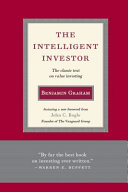
5. The Intelligent Investor by Benjamin Graham
 The Intelligent InvestorAbout the book →
Warren Buffett famously called Benjamin Graham’s The Intelligent Investor "by far the best book about investing ever written." First published in 1949, this tome laid the foundation for modern value investing and taught generations of investors how to protect themselves against speculative market manias.
Graham introduced foundational concepts such as the "margin of safety," the distinction between an investor and a speculator, and the allegorical character of "Mr. Market," who daily offers to buy or sell your shares at different prices based on his manic-depressive mood swings. Graham teaches that an investor’s primary enemy is rarely the market itself—it is usually sitting right in their own bathroom mirror.
Actionable Takeaway: Ignore daily market fluctuations and financial media noise. Focus on the intrinsic value of what you own, and always demand a margin of safety before parting with your capital.
6. The Millionaire Next Door by Thomas J. Stanley and William D. Danko
Before The Millionaire Next Door hit bookshelves in 1996, cultural consensus assumed that millionaires lived in sprawling mansions, drove exotic sports cars, and wore designer clothes. Stanley and Danko shattered this myth through exhaustive empirical research, revealing that true wealth is almost always quiet, understated, and built on extreme frugality.
The authors discovered that the typical American millionaire lives in a modest neighborhood, drives a reliable, pre-owned car, marries once, and aggressively saves and invests a massive percentage of their income. They coined the terms UAW (Under Accumulator of Wealth) and PAW (Prodigious Accumulator of Wealth) to demonstrate that high income does not equal high net worth.
Actionable Takeaway: Decouple your lifestyle from your income. If you get a raise or a promotion, aggressively increase your savings rate rather than upgrading your house, car, or wardrobe.
7. I Will Teach You to Be Rich by Ramit Sethi
Ramit Sethi’s irreverent, no-nonsense bestseller injected a much-needed dose of practicality and joy back into personal finance. Eschewing the exhausting deprivation models of older financial gurus (who famously told people to cut out lattes and avocado toast), Sethi focuses on macro-automation and guilt-free spending.
Sethi advocates for setting up an automated financial infrastructure where bills, savings, and investments are paid first, allowing you to spend the remainder of your money completely guilt-free on the things you truly love. His philosophy is simple: cut costs ruthlessly on the things you don't care about, so you can spend extravagantly on the things you do.
Actionable Takeaway: Automate your financial life. Set up direct deposits that automatically route funds into your retirement accounts, savings goals, and bill payments the exact day you get paid.
8. The Little Book of Common Sense Investing by John C. Bogle
Jack Bogle, the legendary founder of The Vanguard Group and inventor of the index fund, permanently changed the investing landscape. In The Little Book of Common Sense Investing, Bogle strips away the smoke and mirrors of the Wall Street fund-management industry to deliver a stark, mathematically sound truth: active management is a loser's game.
Bogle demonstrates that the vast majority of high-fee mutual fund managers fail to beat the broader stock market over long periods, especially once fees, transaction costs, and taxes are factored in. Instead of trying to find the proverbial needle in the haystack, Bogle advises investors to simply buy the haystack: low-cost, broad-market index funds.
Actionable Takeaway: Minimize investment management fees by shifting your portfolio toward low-cost, diversified index funds that mirror the performance of the entire stock market.
9. Die with Zero by Bill Perkins
Most financial books focus exclusively on accumulation—how to get rich, how to save more, and how to die with the biggest possible bank balance. Bill Perkins flips this conventional narrative completely on its head in Die with Zero, arguing that optimizing solely for net worth at the end of life is a tragic misallocation of human existence.
Perkins argues that money is merely a tool designed to buy life experiences and fulfillment. If you die with millions of dollars left over, it means you worked for money that you ultimately failed to enjoy. He introduces strategies for optimizing your net worth across different life stages, ensuring you extract maximum fulfillment from your capital while you are still healthy enough to enjoy it.
Actionable Takeaway: Balance your future security with present-day joy. Schedule key life experiences and travel plans based on your age, health, and physical capabilities, rather than delaying all pleasure until retirement.
10. The Total Money Makeover by Dave Ramsey
For individuals drowning in consumer debt, living in fear of collection agencies, and experiencing severe financial anxiety, Dave Ramsey’s The Total Money Makeover serves as an aggressive, structured emergency rescue plan.
Ramsey’s philosophy is built around the "Baby Steps"—a rigid, step-by-step framework designed to eliminate consumer debt entirely, build a fully funded emergency reserve, and systematically build wealth without relying on credit cards or leverage. While economists sometimes debate the mathematical optimality of his debt-snowball method, its psychological effectiveness is indisputable, having rescued millions of families from financial ruin.
Actionable Takeaway: Commit to stopping the bleeding. Stop using credit cards immediately, build a starter emergency fund of $1,000, and attack your remaining debts from smallest to largest balance.
Conclusion: Rewriting Your Financial Story
Books have the unique power to rewire our deepest assumptions. The 10 books outlined above do not merely offer tips on how to balance a checkbook; they challenge our relationship with consumer culture, our fears of scarcity, our understanding of time, and our definition of success.
You don't need to read all of them at once. Pick the one title from this list that directly addresses your current financial pain point—whether it is debt, emotional spending, investing anxiety, or a lack of life balance—and dive in. By changing the way you think about money, you will ultimately change your life.





