
College is a transformative period. Between late-night study sessions, navigating social dynamics, and trying to figure out what you want to do with the rest of your life, higher education offers a crash course in adulthood. But while your professors will assign plenty of textbooks, the most important lessons often lie outside the standard syllabus.
Whether you are an incoming freshman trying to survive your first semester or a graduating senior staring down the barrel of the "real world," reading beyond your coursework is one of the highest-leverage habits you can build. The right literature can change how you think, how you manage your time, and how you approach your future career. To help you curate your personal reading list, we have compiled a definitive guide to the 10 books every college student should read before hanging up their graduation cap.
Why Reading Beyond the Syllabus Matters
Academic reading is specialized, rigorous, and often narrow in scope. You read to pass exams, write papers, and analyze specific theories. Personal reading, on the other hand, is about horizontal growth—building a mental toolkit that spans psychology, finance, philosophy, and practical productivity.
When you seek out books for college students on your own terms, you are taking control of your education. The concepts you absorb will bleed into your essays, give you talking points in professional networking events, and ground you when life gets overwhelming. Let’s dive into the core reading list designed to upgrade your mindset during these crucial years.
Part 1: Mastering Productivity and Time Management
One of the biggest shocks for incoming college students is the sheer amount of unstructured free time, juxtaposed with the heavy demands of independent studying. Without a structured high school schedule keeping you accountable, burnout and procrastination are constant threats.
1. "Atomic Habits" by James Clear
 Atomic HabitsAbout the book →
You cannot talk about personal growth without mentioning James Clear's masterpiece. Atomic Habits is arguably the most practical guide ever written on behavior change. Instead of focusing on massive, intimidating goals, Clear teaches you how to optimize the tiny, incremental systems that dictate your daily routine.
Actionable Advice for Students: Use the "Two-Minute Rule" introduced in the book. When you are procrastinating on a massive research paper, tell yourself you will just spend two minutes opening the document and writing a single sentence. Often, overcoming the initial friction is the hardest part.
2. "Deep Work" by Cal Newport
 Deep WorkAbout the book →
In an era dominated by TikTok notifications, group chat pings, and endless multitasking, the ability to focus deeply is a superpower. Cal Newport argues that "deep work"—professional activities performed in a state of distraction-free concentration—is becoming increasingly rare and increasingly valuable.
If you can master the art of studying for two hours with your phone in another room, you will easily outperform peers who spend six hours "studying" while intermittently scrolling social media.
"If you don't produce, you won't thrive—no matter how skilled or talented you are." — Cal Newport, Deep Work
Part 2: Financial Literacy and Wealth Building
For many young adults, college is the first time they have direct control over money—student loans, credit cards, and part-time job income. Unfortunately, personal finance is rarely taught in high schools or universities, making financial literacy books an absolute necessity.
3. "The Psychology of Money" by Morgan Housel
 The Psychology of MoneyAbout the book →
Money management is less about spreadsheets and compound interest formulas and more about how you behave. Morgan Housel’s brilliant book explores the strange ways people think about wealth and offers timeless lessons on humility, risk, and the psychological traps that lead to financial ruin.
Why College Students Need It: Learning early on that "wealth is what you do not see" will save you from lifestyle inflation when you land your first post-grad job.
4. "I Will Teach You to Be Rich" by Ramit Sethi
Despite the provocative title, Ramit Sethi’s book is not a get-rich-quick scheme. It is a no-nonsense, highly practical six-week program designed for young adults. It covers everything from automating your savings and optimizing credit cards to negotiating your starting salary after graduation.
Part 3: Psychology, Mindset, and Personal Growth
Your mental health and self-perception will be tested during your college years. Imposter syndrome is rampant, and career anxiety can set in long before graduation day.
5. "Mindset: The New Psychology of Success" by Carol S. Dweck
Stanford psychologist Carol Dweck revolutionized how we think about ability and intelligence. She demonstrates that success is not determined by innate, fixed talent, but rather by whether you operate from a "fixed mindset" or a "growth mindset."
When you fail an organic chemistry exam or struggle with a coding assignment, a fixed mindset tells you, "I'm just not smart enough." A growth mindset whispers, "I haven't mastered this *yet*." This subtle shift changes everything.
6. "Man’s Search for Meaning" by Viktor E. Frankl
 Man's Search for MeaningAbout the book →
Part memoir, part psychological treatise, Viktor Frankl’s account of surviving Nazi concentration camps is a profound exploration of human resilience. Frankl argues that even in the face of unimaginable suffering, human beings retain the freedom to choose their attitude and find meaning in their circumstances.
While college stressors pale in comparison to Frankl’s experiences, the philosophical framework he provides is unmatched for developing grit and perspective during high-pressure semesters.
Part 4: Career Navigation and Professional Success
College is ultimately a bridge to your professional life. But the traditional career ladder is broken, and linear paths are a thing of the past.
7. "So Good They Can't Ignore You" by Cal Newport
Forget the cliché advice to "follow your passion." Cal Newport argues that passion is a byproduct of mastery, not a prerequisite for it. By cultivating rare and valuable skills (what he calls "career capital"), you can create a fulfilling career of your choosing.
This book will change how you view internships, entry-level jobs, and skill acquisition during your undergraduate years.
8. "Designing Your Life" by Bill Burnett and Dave Evans
Written by two Stanford design professors, this book applies design thinking to the wicked problem of "What do I want to do with my life?" Instead of waiting for a lightning bolt of inspiration, you treat your life as a prototype. You build web portfolios, run small experiments, and iterate on your career path.
Part 5: Broadening Horizons and Critical Thinking
Finally, university education is designed to make you a critical thinker—someone who can evaluate complex information, understand diverse perspectives, and question assumptions.
9. "Thinking, Fast and Slow" by Daniel Kahneman
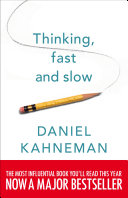 Thinking, Fast and SlowAbout the book →
Nobel laureate Daniel Kahneman takes readers on a tour of the human mind, explaining the two systems that drive how we think: System 1 is fast, instinctive, and emotional; System 2 is slower, more deliberative, and more logical. Understanding your cognitive biases will make you a better debater, a sharper strategist, and a wiser decision-maker.
10. "Factfulness" by Hans Rosling
In a world saturated with sensationalized headlines and polarizing news, Factfulness provides a much-needed dose of data-driven optimism. Hans Rosling demonstrates, using undeniable statistics, that the world is actually improving in many measurable ways. It is an essential read for anyone who wants to cut through the noise and understand global trends clearly.
How to Actually Read More in College
Knowing which books every college student should read is only half the battle. Finding the time to read them when you already have a stack of assigned reading can feel impossible. Here are three strategies to help you build a sustainable reading habit:
- Commit to 10 Pages a Day: If you read just 10 pages of a non-fiction book every morning over breakfast, you will finish roughly 12 to 15 books a year.
- Leverage Audiobooks: Listen to books at 1.25x or 1.5x speed while walking to class, working out at the campus gym, or doing laundry.
- Start a Book Club with Friends: Turn reading into a social event. Grab two classmates, pick one book a month, and discuss it over coffee or pizza.
Conclusion
Your university diploma will open doors, but your self-directed education will determine how far you walk through them. By stepping outside the standard academic curriculum and investing time in the 10 books outlined above, you will build a foundation of financial literacy, emotional resilience, productivity, and career strategy that no classroom can replicate.
Pick one book from this list today, order a copy, and take the first step toward transforming your college experience into a masterclass in personal growth.


![Awakening, The [EasyRead Large Edition] by Kate Chopin - American literature book cover](/_next/image?url=%2Fbooks%2Fcovers%2Fcmrlw76oa02zf5hkf5uj9zggd.jpg&w=1920&q=75)





