
Let’s be honest: the self-help and productivity section of any bookstore is a minefield. For every genuinely transformative guide, there are a dozen paper-thin volumes repackaging the exact same advice: wake up at 4:30 AM, drink lemon water, journal your gratitude, and hustle until you burn out. If you are tired of advice that sounds great on a motivational poster but falls apart the moment you face a real-world inbox, you are in the right place.
True personal efficiency isn't about squeezing twenty-five hours of work into a twenty-four-hour day. It's about energy management, cognitive psychology, structural friction, and deep alignment with what actually matters. To help you cut through the noise, we have curated a definitive list of 10 books about productivity that rely on behavioral science, cognitive research, and real-world testing rather than toxic hustle culture.
Why Most Productivity Advice Fails (And What to Look For Instead)
Before diving into the reading list, it is vital to understand why standard productivity advice so often fails. Most people treat productivity as a math problem: time minus distractions equals output. In reality, productivity is an emotional and psychological challenge.
We procrastinate not because we are lazy, but because we are stressed, overwhelmed, or unclear about our next steps. Books about productivity that actually deliver results address the root causes of our work paralysis:
- Decision fatigue and cognitive overload
- Emotional avoidance disguised as busyness
- The neurological loops of habit formation
- The structural flaws in our modern workspaces and communication tools
The ten titles below tackle these issues head-on, providing actionable frameworks you can implement today.
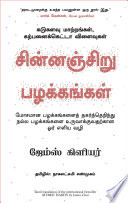
1. Atomic Habits by James Clear
 Atomic HabitsAbout the book →
It is impossible to discuss modern performance without mentioning James Clear’s masterwork. While many titles focus purely on outcomes and goal-setting, Atomic Habits flips the script by focusing entirely on identity and systems.
Clear argues that you do not rise to the level of your goals; you fall to the level of your systems. The book introduces the Four Laws of Behavior Change: make it obvious, make it attractive, make it easy, and make it satisfying. By focusing on tiny, one-percent improvements compounded over time, Clear provides a blueprint that makes consistency feel effortless rather than exhausting.
Actionable Takeaway: Habit Stacking
Pair a habit you want to build with a habit you already do every single day. For example: "After I pour my morning coffee (current habit), I will meditate for one minute (new habit)."
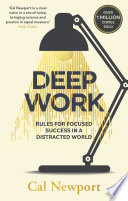
2. Deep Work by Cal Newport
 Deep WorkAbout the book →
In a world dominated by Slack notifications, endless meetings, and algorithmic social media feeds, the ability to focus without distraction has become increasingly rare—and increasingly valuable. In Deep Work, computer science professor Cal Newport makes a fierce, data-driven case for the power of undistracted concentration.
Newport distinguishes between "deep work" (professional activities performed in a state of distraction-free concentration that push your cognitive capabilities to their limit) and "shallow work" (non-cognitively demanding, logistical tasks performed while distracted). This book provides the philosophical and practical framework needed to reclaim your attention span.
"If you don't produce, you won't thrive—no matter how skilled or talented you are." — Cal Newport
3. Essentialism: The Disciplined Pursuit of Less by Greg McKeown
The core premise of Essentialism is deceptively simple: if you don't prioritize your life, someone else will. Greg McKeown argues that most of us are overextended because we treat every request, project, and opportunity as equally important.
Essentialism is not about getting more things done; it is about getting the right things done. It is about making the wisest possible investment of your time and energy. McKeown teaches readers how to systematically eliminate the non-essential, set rock-solid boundaries, and carve out space to think clearly.
Actionable Takeaway: The 90% Rule
When evaluating an option, think of the single most important criterion for that decision. Rate the option on a scale from 0 to 100. If you rate it anything below 90, automatically change the rating to zero and reject it.
4. Getting Things Done (GTD) by David Allen
No list of books about productivity is complete without David Allen’s foundational text. First published in 2001, Getting Things Done remains the gold standard for externalizing your mental workload.
Allen’s core thesis is that your mind is for having ideas, not holding them. When your brain is constantly trying to remember what you need to buy at the grocery store, which email you forgot to reply to, and where you put your passport, you experience cognitive fatigue. GTD teaches you how to capture every open loop in an external, trusted system so you can focus entirely on execution.
- Capture: Collect anything and everything that demands your attention.
- Clarify: Decide what each item means and whether it requires action.
- Organize: Put actions where they belong (calendars, project lists, waiting-for lists).
- Reflect: Review your lists regularly to maintain trust in the system.
- Engage: Simply do the work with a clear mind.
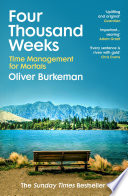
5. Four Thousand Weeks: Time Management for Mortals by Oliver Burkeman
 Four Thousand WeeksAbout the book →
If you have ever felt a gnawing sense of anxiety that no matter how much you cross off your to-do list, more work immediately takes its place, Four Thousand Weeks is the antidote you need.
Oliver Burkeman takes a radically philosophical approach to time management. Assuming you live to be eighty years old, you have roughly 4,000 weeks on this earth. Burkeman dismantles the modern obsession with efficiency, arguing that trying to master time is a fool's errand. Instead, he teaches readers how to accept their limitations, embrace strategic abandonment, and focus on what truly matters during their brief time here.
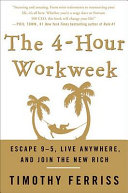
6. The 4-Hour Workweek by Tim Ferriss
 The 4-Hour WorkweekAbout the book →
Love it or loathe it, Tim Ferriss’s cult classic fundamentally changed how generations think about work, leverage, and lifestyle design. While some readers get hung up on the flashy title, the underlying principles of the book are pure gold for modern knowledge workers.
Ferriss introduces the DEAL framework—Definition, Elimination, Automation, and Liberation. He challenges the traditional deferred-life plan (work hard for forty years, retire, and hope your health holds up) and replaces it with mini-retirements distributed throughout your life. It remains one of the best books about productivity for learning how to ruthlessly eliminate bureaucracy and outsource the mundane.
7. Make Time: How to Focus on What Matters Every Day by Jake Knapp and John Zeratsky
Written by two former Google design partners who invented the famous "Design Sprint" methodology, Make Time is refreshingly tactical and anti-dogmatic. They don't care about inbox zero, and they certainly don't want you waking up at dawn unless you genuinely want to.
Instead, Knapp and Zeratsky focus on creating daily intention. Every morning, you choose one "Highlight"—a single priority you want to make time for that day. Then, you use a massive toolbox of tactics to defeat distraction (which they call "Infinity Pools") and manage your energy levels so you have the gas in the tank to finish strong.
8. The Effective Executive by Peter Drucker
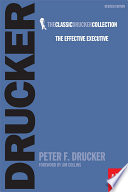 The Effective ExecutiveAbout the book →
Long before Silicon Valley adopted agile methodologies and growth hacks, Peter Drucker was writing the definitive texts on organizational and personal effectiveness. Published in 1967, The Effective Executive proves that timeless principles of execution transcend changing technologies.
Drucker argues that intelligence, imagination, and knowledge are frequently wasted in organizations without effectiveness. Effectiveness, he notes, is a habit—a complex of practices that can and must be learned. He focuses heavily on time management, knowing where your time actually goes, contributing to results rather than work, and building on strengths.
9. Stolen Focus: Why You Can't Pay Attention—and How Think Back by Johann Hari
In Stolen Focus, journalist Johann Hari investigates a deeply unsettling modern truth: our collective attention span is collapsing, and it is not our fault. Hari argues that our inability to focus is not simply a personal failure of willpower, but the result of systematic, systemic forces.
From the attention economy designed to monetize our outrage and distraction, to chronic sleep deprivation, pollution, and the breakdown of community, Hari explores the root causes of our scattered minds. Reading this book changes your perspective on productivity from individual self-flagellation to environmental design.
Actionable Takeaway: Digital Detox with Guardrails
Instead of trying to banish screens entirely, create physical friction. Leave your phone in another room during deep work blocks, and remove all infinite-scroll apps from your primary mobile device.
10. Mindset: The New Psychology of Success by Carol S. Dweck
At the intersection of productivity and personal growth lies Stanford psychologist Carol Dweck’s research on mindset. How you view your own intelligence and capabilities dictates whether you will thrive under pressure or crumble at the first sign of friction.
Dweck contrasts the "fixed mindset" (the belief that abilities are carved in stone) with the "growth mindset" (the belief that abilities can be cultivated through effort and learning). When you adopt a growth mindset, obstacles, failures, and difficult tasks are no longer threats to your self-esteem; they are data points and opportunities for skill acquisition. This mental shift is the ultimate foundation for sustainable, long-term output.
How to Choose the Right Book for Your Current Struggle
With so many incredible books about productivity available, where should you start? Do not try to read and apply all ten at once. Diagnosis is the first step toward effective treatment:
- If you struggle with consistency and building daily routines: Start with Atomic Habits.
- If you are constantly distracted by notifications and superficial work: Dive into Deep Work.
- If you feel overwhelmed by too many projects and competing priorities: Read Essentialism.
- If your brain is full and you need an airtight organizational system: Implement Getting Things Done.
- If you feel existential dread about never having enough time: Pick up Four Thousand Weeks.
Remember, the goal of reading books about productivity is not to collect bookmarks or feel a temporary dopamine rush of motivation. The goal is to design a life that allows you to do meaningful work without sacrificing your health, peace of mind, or relationships. Pick one book, commit to implementing a single idea from its pages this week, and watch how your daily output transforms.





