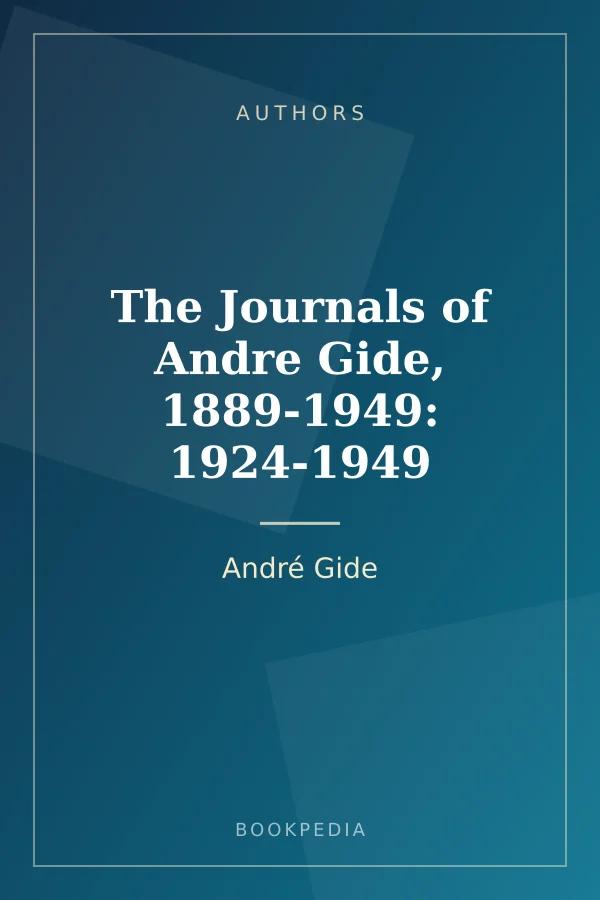
The Journals of Andre Gide, 1889-1949: 1924-1949
📘 About This Book
Couvrant le dernier quart de siècle de la vie du célèbre écrivain français, ce volume définitif capture une période de profonde transformation intellectuelle et personnelle. Chroniquant les années 1924 à 1949, ces entrées offrent un regard profondément introspectif sur l'esprit de l'une des figures littéraires les plus influentes du XXe siècle. Le texte relate ses nombreux voyages, son engagement dans les grands débats politiques et philosophiques de l'entre-deux-guerres et de l'après-guerre, ainsi que son attachement indéfectible à l'intégrité artistique et personnelle. À travers des réflexions franches sur la littérature, la morale, la religion et la nature humaine, ce journal offre un portrait intime d'un intellect aux prises avec les courants changeants de l'histoire européenne. Essentiel pour comprendre la fin de la carrière d'un prix Nobel, ce recueil s'impose comme un chef-d'œuvre de l'écriture autobiographique moderne, éclairant la vie intérieure d'un artiste qui n'a cessé de contester les dogmes conventionnels et de redéfinir les frontières de l'expression personnelle.
📖 Résumé
The Journals of Andre Gide, 1889-1949: 1924-1949 constitue une fenêtre définitive et captivante sur le dernier quart de siècle de la vie et de la carrière extraordinaires du célèbre écrivain français. Publié en 1956, ce volume capture une période de profonde transformation intellectuelle et personnelle pour l'une des figures littéraires les plus influentes du XXe siècle. Chroniquant les années 1924 à 1949, les notes du journal de Gide offrent un regard profondément introspectif sur l'évolution de ses pensées, ses luttes artistiques et ses bilans philosophiques. Au fil du texte, il relate ses vastes voyages à travers diverses régions, fournissant des observations vivantes du monde extérieur tout en maintenant un accent rigoureux sur le paysage interne de sa propre conscience. Les lecteurs sont invités à assister à l'engagement actif de Gide dans les grands débats politiques, sociaux et philosophiques qui ont marqué les époques troublées de l'entre-deux-guerres et de l'après-guerre en Europe. Ses réflexions ne fuient pas la contiguïté de la controverse ; au contraire, elles témoignent d'un engagement inébranlable envers l'intégrité artistique et personnelle, même lorsque ces valeurs se heurtaient aux dogmes contemporains ou aux attentes du public. Tout au long de ces pages, Gide livre des pensées franches sur la littérature, la morale, la religion et la nature humaine. Il remet en question les orthodoxies établies et se débat continuellement avec les marées changeantes de l'histoire européenne, faisant de ce journal bien plus qu'un simple registre d'événements quotidiens. Il devient un témoignage vital d'un intellect complexe tentant de donner un sens à un monde en mutation rapide sans compromettre sa féroce indépendance d'esprit. Pour quiconque cherche à comprendre la dernière partie de la carrière d'un prix Nobel, ce livre est une lecture essentielle. Il révèle l'homme derrière les chefs-d'œuvre, mettant à nu ses doutes, ses triomphes et sa quête acharnée de la vérité par le biais de la parole écrite. Ce volume comble le fossé entre le personnage public et la réalité privée, offrant à la postérité un aperçu rare et sans filtre d'un esprit littéraire monumental naviguant dans le crépuscule de sa vie.
🎯 Leçons clés
💬 Citations notables
"Man cannot discover new oceans unless he has the courage to lose sight of the shore."
"Believe those who are seeking the truth. Doubt those who find it."
"Art is a collaboration between God and the artist, and the less the artist does the better."
"The color of truth is grey."
"It is better to be hated for what you are than to be loved for what you are not."
"Coutumes, you are a shield; but you are also a prison."
⚖️ Pour et contre
✅ Avantages
Offre un regard profondément introspectif sur l'esprit d'un prix Nobel
Capture les changements historiques, politiques et philosophiques majeurs du XXe siècle
Démontre un engagement indéfectible envers l'intégrité personnelle et artistique
Propose des réflexions franches et perspicaces sur la littérature, la morale et la nature humaine
⚠️ Inconvénients
Peut sembler trop dense ou introspectif pour les lecteurs occasionnels cherchant un récit au rythme rapide
Suppose une familiarité préalable avec les œuvres littéraires de Gide et le contexte historique de son époque
❓ Questions fréquentes
Quelle période de temps ce volume couvre-t-il ? +
Ce volume couvre les années 1924 à 1949, soit le dernier quart de siècle de la vie d'André Gide.
Quand ce recueil de journaux a-t-il été publié ? +
Le livre a été publié en 1956.
Quels sont les principaux thèmes explorés dans le texte ? +
Le texte explore la littérature, la morale, la religion, la nature humaine et l'engagement de Gide dans la politique européenne de l'entre-deux-guerres et de l'après-guerre.
Qui est l'auteur de ces journaux ? +
Les journaux ont été écrits par le célèbre écrivain français et prix Nobel André Gide.
Pourquoi ce volume est-il considéré comme essentiel pour les lecteurs ? +
Il offre un portrait intime d'un intellect complexe et est indispensable pour comprendre la fin de la carrière d'une grande figure littéraire.