
Introduction: The Eternal Allure of Jane Austen's Masterpiece
More than two centuries after its initial publication in 1813, Jane Austen's 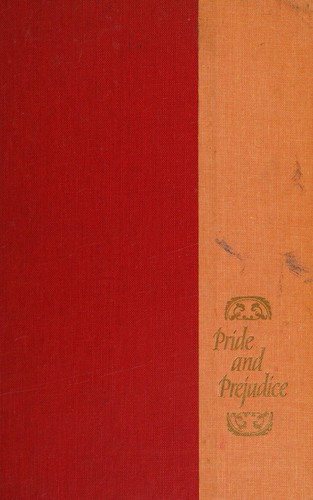 Pride and Prejudice remains a towering pillar of English literature. While countless books have come and gone, Austen’s witty social satire and timeless romance continue to captivate millions of readers worldwide. But what is it about the story of Elizabeth Bennet and Mr. Darcy that refuses to fade into literary obscurity? Why do new generations of readers continuously return to the muddy lanes of Hertfordshire and the grand halls of Pemberley?
In this Pride and Prejudice deep dive review, we are going to move beyond the surface-level romance. We will explore the brilliant social commentary, dissect the psychological depth of the characters, and examine how Austen weaponized irony to critique the rigid class structures of Regency England. Whether you are a lifelong fan rereading the novel for the tenth time or a newcomer curious about its cultural footprint, this analysis will offer fresh insights into why this book endures.
The Plot Revisited: More Than Just a Regency Rom-Com
At its core, the plot of Pride and Prejudice is deceptively simple. Set in rural England, the story follows the Bennet family, specifically Mrs. Bennet, whose singular mission in life is to marry off her five daughters. Enter Mr. Bingley, a wealthy young bachelor who rents the nearby estate of Netherfield Park, and his even wealthier, more aloof friend, Mr. Fitzwilliam Darcy.
What follows is a carefully orchestrated dance of social maneuvering, misinterpretations, and personal growth. However, reducing the novel to a simple romantic comedy does a massive disservice to Austen’s genius. Underneath the sparkling dialogue and country dances lies a sharp critique of:
- The precarious financial position of women in 19th-century England.
- The dangers of unchecked parental indulgence and neglect.
- The suffocating constraints of social class and reputation.
- The psychological journey required for genuine self-awareness.
Through the framework of courtship, Austen investigates how human beings construct armor out of ego and defense mechanisms, and how truly difficult it is to strip those layers away to see another person clearly.
Character Psychology: Elizabeth Bennet and Mr. Darcy
The beating heart of any great novel is its characters, and Austen crafted two of the most enduring figures in Western literature with Elizabeth Bennet and Fitzwilliam Darcy. A thorough Pride and Prejudice deep dive review must examine how these two individuals serve as foils for one another.
Elizabeth Bennet: Wit, Flaws, and Agency
Elizabeth is a breath of fresh air in the landscape of 19th-century heroines. She is intelligent, quick-witted, fiercely loyal, and possesses a sharp tongue that she is not afraid to use. Crucially, Elizabeth is also profoundly flawed. Her primary failing is encapsulated in the novel's title: her prejudice.
When she encounters Mr. Darcy at the Meryton ball, his initial slight to her vanity wounds her pride. This creates a cognitive bias that blinds her to his true character and leaves her wide open to the charming manipulations of George Wickham. Elizabeth’s journey is not just about finding love; it is about the humbling realization that her judgment—which she trusts implicitly—can be deeply and disastrously wrong.
Mr. Darcy: From Arrogant Snob to Devoted Partner
Mr. Darcy starts the novel as the quintessential brooding antagonist. He is wealthy, handsome, and utterly disdainful of provincial society. His pride is born of immense privilege, social status, and a protective enclosure of his inner circle.
Darcy’s evolution is one of the most satisfying character arcs in fiction. His love for Elizabeth forces him to confront his own unbearable arrogance. When she famously rejects his first, disastrous marriage proposal—in which he insults her family while declaring his love—it acts as a catalyst for his transformation. He doesn't just mope; he listens, reflects, and actively works to become a better man, famously intervening to save the Bennet family from total social ruin by paying off Wickham and arranging Lydia and Wickham's marriage.
"In vain have I struggled. It will not do. My feelings will not be repressed. You must allow me to tell you how ardently I admire and love you." — Mr. Darcy, Pride and Prejudice
The Supporting Cast: A Masterclass in Satire
Austen’s brilliance extends far beyond her central couple. The supporting cast of Pride and Prejudice serves as a brilliant microcosm of Regency society, highlighting various social anxieties and absurdities.
- Mr. and Mrs. Bennet: A cautionary tale in marital mismatch. Mr. Bennet’s lazy detachment and cynical amusement at his wife’s expense have left their younger daughters completely unprotected in a brutal economic climate.
- Mr. Collins: The ultimate embodiment of sycophancy, pomposity, and a lack of self-awareness. His proposal to Elizabeth is a masterclass in tone-deaf negotiation, treating marriage as a business transaction dictated by Lady Catherine de Bourgh.
- Lydia Bennet: Reckless, selfish, and starved of discipline, Lydia nearly destroys the entire family's reputation through her elopement, highlighting the devastating real-world consequences of moral laxity for women of the era.
- Lady Catherine de Bourgh: The personification of entrenched aristocratic entitlement, believing her status grants her absolute authority over everyone else's lives and happiness.
Themes Explored: Money, Class, and Marriage
No Pride and Prejudice deep dive review would be complete without analyzing the economic realities that drive the narrative. In Austen’s world, love is a luxury intimately tied to ledger books and property laws.
Because of strict entailment laws, the Bennet estate cannot be inherited by Elizabeth or her sisters; it must go to the odious male heir, Mr. Collins. This creates an existential crisis for the family. If the Bennet sisters do not marry well, they face destitution, social irrelevance, or dependency on distant relatives. Charlotte Lucas’s pragmatic decision to marry Mr. Collins—despite neither loving nor respecting him—provides a stark, realistic contrast to Elizabeth’s romantic ideals.
Austen uses these contrasting marriages to ask a profound question: What makes a good marriage? Is it economic security, mutual respect, intellectual companionship, or passionate love? Through Elizabeth and Darcy, Austen argues that an ideal marriage requires all of these elements, anchored by humility and the willingness to grow together.
Legacy and Modern Cultural Impact
How has a 19th-century novel about country dances and entailments spawned countless adaptations, retellings, sequels, and fan fiction projects? The answer lies in the universal nature of Austen’s themes.
Whether transformed into a modern-day romantic comedy (like  Bridget Jones's Diary), a zombie-fighting mashup (Pride and Prejudice and Zombies), or a Bollywood musical (Bride and Prejudice), the structural bones of Austen's narrative remain bulletproof. The tension between first impressions and deep truth, the struggle for female autonomy, and the transformative power of love are themes that will never go out of style.
Conclusion: Why You Should Read It Again
In wrapping up this Pride and Prejudice deep dive review, it becomes clear that Jane Austen wrote a book far ahead of her time. It is a razor-sharp social critique disguised as a delightful romance novel—a book that challenges us to look past our own biases, question our initial judgments, and demand partnerships built on mutual respect and intellectual equality.
If it has been years since you last opened its pages, or if you have only ever seen one of the many screen adaptations, take the time to return to Austen’s original text. Pay attention to the biting irony of the narration, the subtle psychological shifts in Elizabeth and Darcy, and the timeless wisdom woven into every single chapter. You will find that Austen's world feels startlingly like our own.


