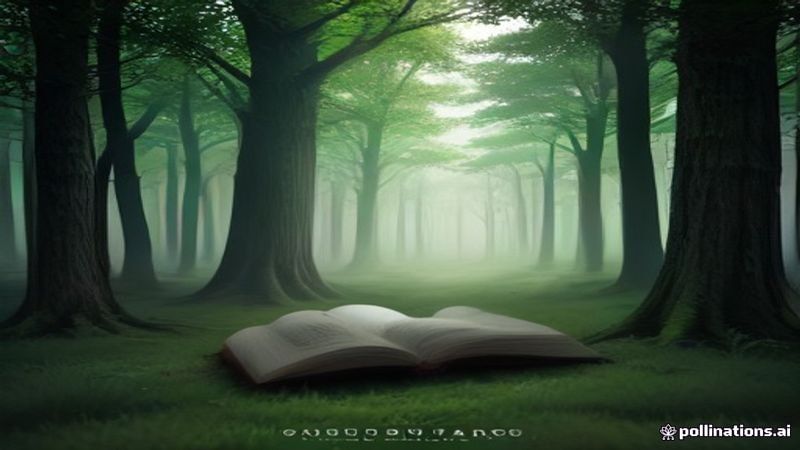
There is an ancient, quiet wisdom that fills the world’s forests—a silent resilience that has outlasted empires, ice ages, and shifting continents. For centuries, humans have looked at trees merely as timber, as obstacles to be cleared, or at best, as pleasant backdrops for a Sunday afternoon hike. But over the last few decades, a quiet revolution has taken place in science and literature. We are finally beginning to understand that forests are not merely collections of individual plants, but complex, interconnected super-organisms.
If you have ever stood beneath the cathedral canopy of an old-growth forest and felt a profound sense of peace, you already intuitively understand what scientists and nature writers are now proving: trees matter. They regulate our climate, filter our water, host entire ecosystems, and ground our human psyches in something older and deeper than civilization.
To truly understand this green infrastructure, we must turn to the page. Reading the best books about trees and forests allows us to travel across continents, peer underground into the fungal networks of the rhizosphere, and time-travel through centuries of arboreal history. Whether you are an avid gardener, an environmental activist, or simply a lover of the outdoors, here is your definitive guide to the literature that celebrates, explains, and fights for our planet’s woods.
1. The Scientific Revelation: How Trees Communicate
For a long time, botany was viewed through a purely mechanical lens. Trees were seen as biological solar panels—pumping water upward, soaking up sunlight, and growing rings of wood without any internal awareness or social life. Fortunately, modern science has shattered that cold, mechanistic view, opening the door for some of the most fascinating nature writing of our time.
At the forefront of this literary shift is Peter Wohlleben’s international bestseller, The Hidden Life of Trees: What They Feel, How They Communicate. Wohlleben, a German forester, uses decades of observation to translate complex biological processes into accessible, poetic prose. He reveals that trees in a forest are essentially a community. They share nutrients through underground fungal networks—often dubbed the "Wood Wide Web"—warn each other of approaching insect attacks, and care for their sick and elderly neighbors.
Another brilliant entry in this scientific subgenre is David George Haskell’s The Songs Trees Sing: The Songs of Trees (often known simply as The Songs of Trees). Haskell takes a wonderfully intimate approach, visiting a handful of individual trees around the globe—from an Amazonian ceiba tree to an ornamental pear tree in New York City—and listening to the biological and cultural symphony of their lives. His writing reminds us that no tree is an island; every trunk is a nexus of intersecting lives, histories, and human impacts.
Key Takeaways from Science-Based Tree Literature:
- Forests operate as complex social networks, sharing resources rather than merely competing for them.
- Fungal mycorrhizal networks act as the neural pathways of the forest floor.
- Urban trees face unique biological stresses compared to their wild, old-growth counterparts.
2. Deep Roots: History, Culture, and Mythology
Trees are deeply embedded in the human story. Long before the invention of paper, our ancestors found shelter, tools, and spiritual meaning in the woods. Myths from nearly every culture feature sacred groves, cosmic world-trees, and dryads dwelling within the bark.
Robert Macfarlane’s Underland: A Deep Time Journey explores the subterranean realms beneath our feet, dedicating significant attention to the roots of trees and the dark, hidden histories of the earth. Macfarlane is a master of place-writing, blending geology, archaeology, and literature into a seamless narrative that forces readers to contemplate time on a geological scale.
Similarly, Thomas Pakenham’s Meetings with Remarkable Trees is a visual and narrative triumph. Pakenham traveled the world to document trees of staggering age, size, and historical significance—from the ancient yews of British churchyards to the baobabs of Africa. Each chapter reads like a biography of a living monument, complete with triumphs over drought, lightning, and human encroachment.
"Trees are poems that the earth writes upon the sky. We fell them down and turn them into paper, that we may record our emptiness." — Kahlil Gibran
3. Fiction Rooted in the Forest
Non-fiction gives us the facts, but fiction gives us the emotional resonance. Several remarkable novels have captured the spirit of trees and forests, transforming botanical concepts into gripping storytelling.
Richard Powers’ Pulitzer Prize-winning novel The Overstory is arguably the most ambitious piece of arboreal fiction ever written. The book follows nine Americans whose unique life experiences bring them into conflict and communion with trees. Powers structures the novel like a tree itself—divided into sections named Roots, Trunk, Crown, and Seeds. It is an intellectual and emotional masterpiece that forces the reader to rethink humanity's place in the biological hierarchy.
For a more mystical and historical approach, Annie Proulx’s Barkskins sweeps across three hundred years of North American history, tracking two indentured servants who arrive in New France in the late 17th century. Proulx details the systematic, devastating felling of the endless North American primeval forests, turning timber and deforestation into a sprawling, tragic epic.
4. Practical Wisdom: Why Forests Matter to Our Future
Understanding the beauty and science of trees is vital, but we must also confront the stark reality of our current ecological crisis. Deforestation, climate change, and habitat fragmentation threaten the very lungs of our planet. Fortunately, a new wave of environmental literature offers actionable insights and hopeful strategies for conservation.
Suzanne Simard’s Finding the Mother Tree: Discovering the Wisdom of the Forest is both a gripping memoir and a vital scientific text. Simard, the pioneering scientist whose research inspired the "Wood Wide Web" concept, shares her personal journey as a woman in a male-dominated forestry industry. More importantly, she explains why protecting old-growth forests is essential for carbon sequestration and biodiversity.
If you want to move from reading to action, here are practical ways you can support forest conservation in your daily life:
- Support Sustainable Forestry: Look for the FSC (Forest Stewardship Council) certification when purchasing paper and wood products.
- Plant Native Species: If you have a yard, replace turf grass with native trees and shrubs that support local pollinators and wildlife.
- Protect Urban Canopies: Advocate for local tree-protection ordinances in your city council meetings. Urban trees reduce heat-island effects and clean our air.
- Support Land Trusts: Donate to or volunteer with local conservation organizations working to purchase and protect threatened woodlands.
5. Inspiring the Next Generation of Tree Stewards
Fostering a love for nature must begin early. Children who play in forests grow up to be adults who protect them. Introducing kids to literature about trees is one of the greatest gifts we can offer.
Classic tales like Shel Silverstein’s The Giving Tree spark deep conversations about generosity and human impact, while modern picture books like Jeanette Winter’s The Man Who Planted Trees (adapted from the classic short story by Jean Giono) show how a single dedicated person can transform a barren landscape into a thriving, green paradise through patience and perseverance.
When children learn to identify local tree species, measure the circumference of a trunk, or listen to the wind rustling through pine needles, they develop an emotional anchor that lasts a lifetime. Reading these books together provides a wonderful bridge between indoor storytime and outdoor exploration.
Conclusion: Turning the Page to a Greener Tomorrow
The best books about trees and forests do more than entertain us—they radically alter our perspective. They remind us that we are not separate from nature, but entirely dependent upon it. Every breath we take is a gift from the photosynthetic engine of a plant.
As you build your reading list, pick up a science book to marvel at the subterranean networks of the woods, a history book to honor the ancient titans of the earth, or a novel to feel the emotional pulse of the canopy. Then, step outside. Touch the rough bark of a local tree, look up at the leaves dancing in the sunlight, and remember that you are standing in the middle of a vast, breathing, interconnected world worth fighting for.