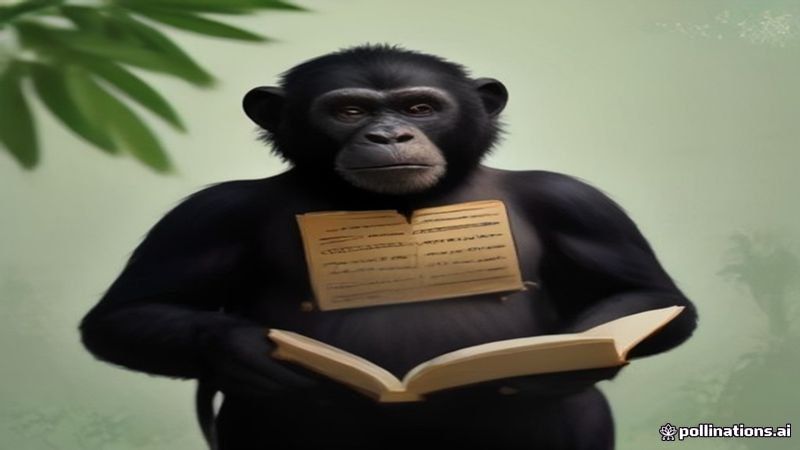
Unlocking the Mirror of Humanity: Why We Read Primatology
For centuries, humans have looked up at the stars and deep into the eyes of other animals, searching for an answer to the ultimate question: *Who are we?* While philosophy and archaeology offer fragments of the puzzle, perhaps no scientific discipline holds as clear a mirror to human nature as primatology. The study of non-human primates—our closest living evolutionary relatives—bridges the gap between biology and behavior, offering profound insights into our own social structures, conflicts, empathy, and capacity for culture.
When we read the best books about primatology, we aren't just learning about chimpanzees swinging through the canopy or macaques bathing in hot springs; we are reading an autobiography of our own species. We see our political machinations reflected in the strategic alliances of chimpanzees, our capacity for peace and conflict resolution mirrored in the matriarchal societies of bonobos, and our grief and joy echoed in the expressive faces of gorillas and orangutans.
Whether you are a seasoned anthropology student, a passionate conservationist, or simply a curious reader fascinated by the natural world, diving into primatology literature will forever change how you view humanity's place on Earth. In this comprehensive guide, we will explore the definitive books that define the field, categorizing them by their unique focus areas to help you build the ultimate reading list.
1. The Pioneers: Groundbreaking Field Studies That Changed the World
Modern primatology owes its existence to a brave cadre of mostly female researchers—affectionately dubbed "Leakey's Angels" by paleoanthropologist Louis Leakey—who ventured deep into the wilderness to live among wild primates for years at a time. Their immersive, long-term methodologies revolutionized science and captured the public imagination.
In the Shadow of Man by Jane Goodall
No list of books about primatology is complete without Jane Goodall’s masterpiece, In the Shadow of Man. Published in 1971, this groundbreaking book chronicles Goodall's early years living among the chimpanzees of Gombe Stream National Park in Tanzania. Goodall did something radical for her time: she gave her subjects names instead of numbers, recognized them as individuals with distinct personalities, and documented behaviors previously thought unique to humans, such as tool-making and warfare.
Key Takeaway: Goodall’s work dismantled the rigid boundary that science once drew between humans and animals, proving that emotion, intellect, and culture are shared across species lines.
Gorillas in the Mist by Dian Fossey
Dian Fossey’s harrowing and deeply personal account of her thirteen years studying mountain gorillas in the remote rainforests of the Virunga volcanoes is a tour de force of wildlife conservation and behavioral science. Gorillas in the Mist paints a vivid picture of a magnificent, gentle giant fighting for survival against the backdrop of human encroachment and poaching.
Key Takeaway: Fossey’s research revealed the complex family dynamics and fierce protectiveness of mountain gorillas, transforming public perception of these "ferocious beasts" into gentle, highly social beings worthy of our utmost protection.
Reflections of Eden: My Years with the Orangutans of Borneo by Birutė Galdikas
Completing the legendary trio of primate researchers initiated by Louis Leakey, Birutė Galdikas spent decades documenting the solitary and elusive orangutans of Borneo. Reflections of Eden provides a breathtaking look into the canopy life of our red-haired cousins, highlighting the immense challenges they face due to tropical deforestation and the palm oil industry.
2. Behavioral Insights: What Primates Teach Us About Society and Conflict
Once primatology established *that* primates exhibit complex behaviors, subsequent researchers began asking *why*. These books explore the evolutionary roots of politics, sex, violence, and cooperation.
Chimpanzee Politics: Power and Sex Among Apes by Frans de Waal
Dutch primatologist Frans de Waal shook the scientific community when he published Chimpanzee Politics in 1982. By comparing the social machinations of a captive colony of chimpanzees at the Arnhem Zoo to human political behavior, de Waal demonstrated that power struggles, alliances, reconciliation, and tactical deception are not uniquely human inventions.
"Chimpanzees are a political species. They form coalitions, plot against their rivals, and use diplomacy to maintain power. Reading about their societies is like reading Machiavelli, just with more hair and fewer clothes." — Frans de Waal (Paraphrased)
De Waal’s work makes us confront an uncomfortable truth: our political instincts are ancient, hardwired, and deeply shared with our closest evolutionary cousins.
Bonobo: The Forgotten Ape by Frans de Waal and Frans Lanting
If chimpanzees represent the darker, more competitive side of our evolutionary heritage, bonobos represent our potential for peace, empathy, and conflict resolution through social bonding. Often referred to as the "make love, not war" ape, bonobos solve social tension through egalitarian relationships and frequent sexual interactions. De Waal and Lanting’s book is a stunning visual and intellectual exploration of a species that offers a hopeful counter-narrative to human aggression.
3. Evolutionary Anthropology: Connecting Ancient Bones to Modern Behavior
Primatology does not exist in a vacuum; it is the vital living laboratory for paleoanthropology. To understand how our ancestors walked out of the forests and onto the savannahs, we must understand the creatures alive today that share our genetic blueprint.
The Third Chimpanzee: The Evolution and Future of the Human Animal by Jared Diamond
In this accessible and provocative book, Jared Diamond explores why humans—who share roughly 98.4% of their DNA with chimpanzees—managed to conquer the planet while our closest relatives remain endangered in shrinking pockets of forest. Diamond covers everything from language and art to drug use and environmental destruction, framing human history through the lens of evolutionary biology.
Mother Nature: A History of Mothers, Infants, and Natural Selection by Sarah Blaffer Hrdy
Evolutionary anthropologist Sarah Blaffer Hrdy tackles one of the most fundamental aspects of primate life: mothering. In Mother Nature, Hrdy explores how primate mothers balance the immense energetic costs of rearing infants with the pressures of survival. By looking at baboons, macaques, and apes, Hrdy challenges romanticized notions of maternal instinct, showing that parenting strategies are flexible, pragmatic, and deeply shaped by evolutionary trade-offs.
4. The Human Spectrum: Culture, Mind, and Morality
As science progressed, researchers began to probe deeper into the primate mind, asking questions about consciousness, culture, and whether animals possess a sense of morality.
The Ape and the Sushi Master: Cultural Reflections by a Primatologist by Frans de Waal
Do animals have culture? For a long time, anthropologists guarded culture as an exclusively human trait. In The Ape and the Sushi Master, Frans de Waal dismantles this notion by documenting how primate traditions—such as specific grooming techniques, nut-cracking methods, and foraging styles—are passed down across generations through social learning, which is the very definition of culture.
Are We Smart Enough to Know How Smart Animals Are? by Frans de Waal
De Waal returns to challenge human arrogance in this eye-opening exploration of animal cognition. He argues that humans often fail to measure animal intelligence accurately because we test them against human benchmarks rather than asking what specific animals evolved to do. A chimpanzee might fail a mathematics test, but it can effortlessly recall the location of hundreds of fruiting trees across a vast, dense jungle—a feat no human could replicate without a map.
How to Choose the Right Primatology Book for You
With so many incredible titles available, selecting your next read depends entirely on what captures your curiosity. Here is a quick guide to help you pick:
- If you love adventure and gripping biography: Start with In the Shadow of Man by Jane Goodall or Gorillas in the Mist by Dian Fossey.
- If you are fascinated by psychology, politics, and sociology: Pick up Chimpanzee Politics by Frans de Waal.
- If you want a big-picture view of human evolution and history: Dive into The Third Chimpanzee by Jared Diamond.
- If you are interested in gender studies and evolutionary parenting: Read Mother Nature by Sarah Blaffer Hrdy.
Actionable Advice: How to Support Primate Conservation Today
Reading about primates awakens a profound appreciation for these incredible animals, but it also reveals a sobering reality: nearly all non-human primates face the threat of extinction due to habitat loss, the bushmeat trade, and the illegal pet trade. Here are practical ways you can make a difference:
- Audit Your Palm Oil Consumption: Unsustainable palm oil production is a primary driver of deforestation in Borneo and Sumatra, destroying the natural habitat of orangutans. Look for products certified by the Roundtable on Sustainable Palm Oil (RSPO) or avoid palm oil entirely when possible.
- Never Support the Primate Pet Trade: Primates do not make good pets. They are complex, social, and often dangerous wild animals. Refuse to watch social media videos featuring captive, dressed-up pet monkeys, as these often stem from cruel illegal capture practices.
- Support Reputable Conservation Organizations: Donate to or volunteer with organizations actively working on the ground, such as the Jane Goodall Institute, the Dian Fossey Gorilla Fund, or Borneo Orangutan Survival.
- Reduce Your Carbon Footprint: Climate change alters forest ecosystems globally. Simple sustainable lifestyle choices help preserve the fragile habitats that primates depend upon.
Conclusion: Looking in the Mirror
The best books about primatology do more than just impart scientific facts; they humble us. They remind us that we are not supernatural visitors dropped onto a stage called Earth, but rather a deeply embedded branch on a vast, interconnected tree of life. When we read about the grief of a mother chimpanzee losing her infant, the strategic alliances of male baboons, or the peaceful diplomacy of bonobos, we are peering into the evolutionary basement of our own minds.
By educating ourselves through the life's work of pioneering researchers, we take the first critical step toward not only understanding our closest relatives, but ensuring they have a secure place in our shared future.