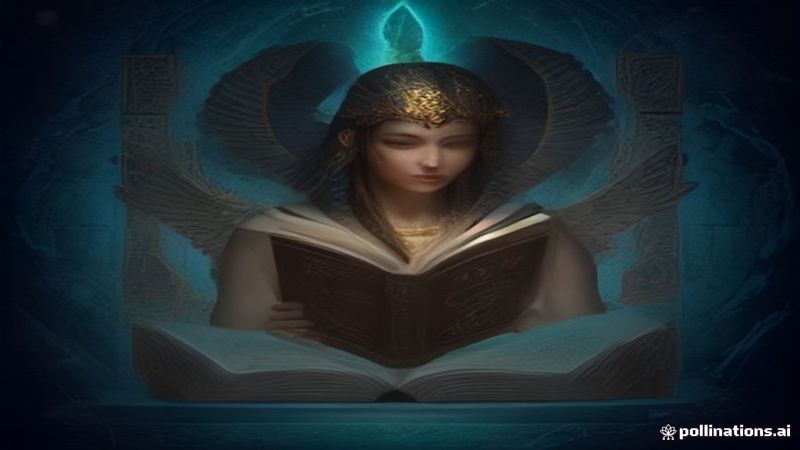
Few ancient civilizations capture the human imagination quite like the builders of the pyramids along the Nile. When most people think of ancient Egypt, they picture towering monuments, glittering gold burial masks, and enigmatic sphinxes. Yet, beneath the surface of glittering artifacts and dramatic tales of deities like Osiris, Isis, and Anubis lies a sophisticated theological and philosophical framework. To truly understand this culture, we must look beyond the literal tales and study books about Egyptian mythology and its hidden meanings.
The myths of ancient Egypt were never meant to be read as mere fairy tales. They functioned as sophisticated psychological maps, astronomical calendars, and profound treatises on the nature of the soul. If you want to move past Hollywood caricatures and dive deep into the esoteric undercurrents of the Nile Valley, your reading list needs to go beyond standard school textbooks. In this article, we explore ten exceptional literary works that decode the spiritual, political, and metaphysical layers of ancient Egyptian lore.
Why Ancient Egyptian Mythology Requires Deeper Reading
To the modern reader, ancient polytheism can sometimes seem eccentric or contradictory. Why did the Egyptians worship gods with animal heads? Why were creation accounts so diverse, with some traditions pointing to the primordial waters of Nun, others to the sun god Ra rising from a lotus, and yet others to Ptah speaking the cosmos into existence?
The secret lies in understanding that Egyptian priests and scribes used multi-layered allegory. A single animal symbol could represent multiple cosmic forces, seasonal shifts, and psychological states. To decode these mysteries, scholars, esoteric researchers, and historians have spent centuries translating temple walls, papyri, and tomb texts. The right reading materials can bridge the gap between ancient stone and modern understanding, revealing how these myths addressed eternal human questions about mortality, order (Ma'at), and the afterlife.
1. The Complete Gods and Goddesses of Ancient Egypt by Richard H. Wilkinson
No exploration of Egyptian mythology is complete without a comprehensive reference guide, and Richard H. Wilkinson’s masterwork is the gold standard. While it serves as an encyclopedia, it goes far beyond dry lists of deities.
Wilkinson provides deep insights into the iconography, sacred animal associations, and theological evolution of hundreds of Egyptian divinities. He explains *why* certain gods wore specific crowns or held particular scepters. By understanding the visual grammar of Egyptian art, readers can begin to unlock the hidden meanings embedded in temple reliefs.
- Key Takeaway: Learn how visual symbolism communicates theological hierarchy.
- Best For: Visual learners and mythology enthusiasts building a foundational library.
2. Egyptian Mythology: A Guide to the Gods, Goddesses, and Traditions of Ancient Egypt by Geraldine Pinch
Geraldine Pinch offers an exceptionally scholarly yet highly readable overview of Egyptian mythic traditions. What sets Pinch's work apart is her focus on the social and political context of the myths.
She demonstrates how myths were used not only to explain the cosmos but to legitimize pharaonic rule and maintain cosmic balance (Ma'at). Pinch walks readers through the major creation cycles and the perilous journey of the sun boat through the underworld (Duat) during the twelve hours of the night. This text brilliantly contextualizes how ancient people used storytelling to cope with chaos and mortality.
- Key Takeaway: Mythology was an active tool used to maintain political and cosmic equilibrium.
- Best For: Readers seeking historical context alongside mythic narratives.
3. The Egyptian Book of the Dead: The Book of Going Forth by Day translated by Dr. Raymond Faulkner
Often mischaracterized as a morbid text, the *Book of the Dead* is actually one of the most hopeful spiritual manuals ever written. This collection of spells, hymns, and instructions was designed to guide a soul through the perilous terrain of the afterlife.
Dr. Raymond Faulkner’s translation is widely regarded as one of the most faithful and precise available. When read with an eye for esotericism, the spells cease to be magical formulas and transform into psychological maps of ego death, moral accountability, and spiritual renewal. The famous "Weighing of the Heart" ceremony—where the human heart is balanced against the feather of Ma'at—remains one of the most powerful metaphors for living an ethical life.
"The soul is weighed not by its worldly triumphs, but by the lightness of its truth, measured against the universal order of Ma'at."
4. Serpent in the Sky: The High Wisdom of Ancient Egypt by John Anthony West
If you want to completely revolutionize how you view Egyptian culture, John Anthony West’s Serpent in the Sky is mandatory reading. Based largely on the pioneering work of symbolist philosopher R.A. Schwaller de Lubicz, this book argues that ancient Egypt was the legacy of an advanced civilization whose science, art, and religion were inseparably fused.
West challenges mainstream archaeological timelines and delves deeply into the esoteric meaning behind temple architecture. He explains how monuments like the Temple of Luxor were built as physical embodiments of human anatomy and cosmic proportion. This is a thrilling read for anyone fascinated by alternative history and sacred geometry.
- Key Takeaway: Egyptian temples are sacred architectural libraries encoding profound physiological and cosmic truths.
- Best For: Seekers of esoteric philosophy and sacred geometry enthusiasts.
5. Egyptian Mysteries: An Account of an Ancient Religion by Lucie Lamy
Lucie Lamy, stepdaughter and close collaborator of R.A. Schwaller de Lubicz, presents a wonderfully concise and visually illustrative guide to the inner teachings of ancient Egypt in Egyptian Mysteries.
Lamy explores the numeric and geometric symbolism underlying Egyptian mythology. She demonstrates how numbers were not merely quantities to the Egyptians, but living qualitative principles. Through clear diagrams and insightful text, Lamy reveals how the stories of the gods mapped directly onto the human skeletal and nervous systems, linking macrocosm to microcosm.
6. The Ancient Egyptian Pyramid Texts edited by James P. Allen
Carved into the subterranean walls of Old Kingdom pyramids, the Pyramid Texts are the oldest surviving religious texts in human history. James P. Allen’s translation brings these archaic utterances into the light.
These texts were reserved exclusively for royalty, intended to propel the deceased pharaoh into the circumpolar stars as an imperishable spirit. Reading them feels like peering into the raw, unadulterated dawn of human theology. The imagery is wild, celestial, and deeply transformative, showcasing a time when myth and astronomy were indistinguishable.
7. Initiation by Elizabeth Haich
While technically a spiritual autobiography and novel rather than a pure academic history, Elizabeth Haich’s Initiation is widely celebrated by esoteric students of Egyptian mystery traditions.
The book recounts the author’s vivid past-life memories of being trained as a high initiate in the temples of ancient Egypt under the guidance of the high priest Ptahhotep. It paints a vivid, deeply moving picture of the rigorous mental, emotional, and physical trials candidates underwent to master their own minds, conquer the fear of death, and awaken latent spiritual faculties. It breathes vibrant life into the dry bones of mythology.
8. The Gods of the Egyptians: Or, Studies in Egyptian Mythology by E.A. Wallis Budge
E.A. Wallis Budge was a titan of 19th- and early 20th-century Egyptology. Though some of his specific chronological theories have been updated by modern archaeology, his monumental two-volume study remains an essential deep-dive resource.
Budge painstakingly catalogues hymns, magical texts, and theological variants. Reading Budge gives you an unfiltered look at how Victorian scholars wrestled with the massive, complex pantheon of the Nile. It is an invaluable reference for serious researchers who want to see the primary source material unpacked.
9. Awakening Osiris: A New Translation of the Egyptian Book of the Dead by Normandi Ellis
For a poetic and deeply contemplative approach to Egyptian mythology, Normandi Ellis’s Awakening Osiris is a masterpiece. Ellis translates the spells of the underworld not as archaic magic, but as contemporary psychological poetry.
She frames the journey through the Duat as an essential psychological descent that every modern human must make to heal trauma, shed illusions, and discover inner authenticity. This book turns ancient funerary texts into a profound manual for modern spiritual awakening.
- Key Takeaway: The underworld journey is a metaphor for confronting inner shadows and achieving psychological rebirth.
- Best For: Readers interested in shadow work, transpersonal psychology, and poetic spirituality.
10. Egyptian Magic by E.A. Wallis Budge
Rounding out our list is another classic by Budge, focusing specifically on the practical application of mythic energy: Egyptian Magic.
In ancient Egypt, religion and magic (known as *Heka*) were not separate. *Heka* was the primordial power that allowed the gods to create the universe. Budge explores how amulets, statues, divine names, and ritual gestures were used by ordinary people and priests alike to harness this creative force. It provides a fascinating look at the everyday magical worldview of the Nile inhabitants.
How to Apply the Wisdom of Egyptian Mythology Today
Reading about ancient myths is intellectually stimulating, but integrating their hidden meanings can change your daily life. Here are a few actionable ways to apply these ancient lessons:
- Practice Daily Ma'at: Strive for balance, integrity, and mindfulness in your daily transactions. Ma'at reminds us that personal harmony sustains the collective world.
- Embrace Transformative Endings: Use the myth of Osiris—who was dismembered before being resurrected—as a metaphor for personal reinvention. Sometimes, life forces us to break down old identities to build wiser ones.
- Confront Your Shadows: Treat the monsters and trials of the Duat not as external terrors, but as your own fears, anxieties, and unhealed traumas waiting to be integrated.
Conclusion
Exploring books about Egyptian mythology and its hidden meanings opens a doorway into a profoundly sophisticated ancient worldview. Whether you approach these texts through the lens of history, sacred geometry, or psychological shadow work, the sages of the Nile Valley offer timeless wisdom. By looking beyond the golden artifacts and reading the sacred texts with an open mind, you discover that the journey of the ancient Egyptian soul is, ultimately, our own journey.