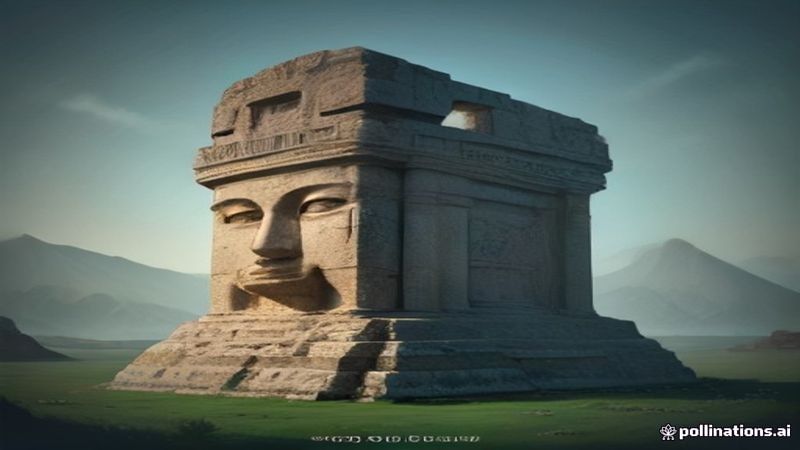
Introduction: The Eternal Enigma of Lost Human Pasts
Human history is not a straight, neatly paved road leading inexorably from primitive caves to high-tech skyscrapers. Instead, it is a labyrinth of forgotten paths, sudden dead ends, and mysterious crossroads. Across the globe, physical remnants of magnificent cultures—massive stone megaliths, intricate scripts that defy translation, and urban layouts designed with astronomical precision—stand as mute witnesses to chapters of human history that modern science still cannot fully explain.
When we look at the sheer ingenuity of our ancestors, a humbling realization sets in: we know far less about our collective past than we care to admit. Mainstream archaeology provides a framework, but anomalies continually fracture the narrative. This enduring curiosity has birthed an entire genre of literature dedicated to exploring these deep historical puzzles. Whether you are an amateur historian, an armchair archaeologist, or simply someone captivated by the unknown, diving into books about ancient civilizations can radically alter your perspective on human potential.
In this comprehensive guide, we examine 10 exceptional books that tackle the most perplexing ancient cultures and anomalous artifacts known to humanity. These titles do not merely list historical dates; they challenge orthodox timelines, pose uncomfortable questions, and invite readers to peer into the abysses of time.
1. Fingerprints of the Gods by Graham Hancock
Few authors have polarized the academic community quite like Graham Hancock. In his seminal work, Fingerprints of the Gods, Hancock takes readers on a global expedition to investigate the possibility that an advanced, ice-age civilization was wiped out by a global cataclysm roughly 12,000 years ago, leaving behind survivors who passed on their architectural and astronomical knowledge to emerging primitive cultures.
Hancock examines the precise alignment of monuments in Egypt, Mesoamerica, and South America, arguing that these structures encode sophisticated precessional astronomy. While mainstream historians often dismiss Hancock's theories as pseudo-archaeology, the book remains a masterclass in challenging established paradigms. It forces readers to look at ancient sites not as isolated curiosities, but as parts of a coordinated global blueprint.
Why This Book Matters for Curious Minds
Hancock teaches us the vital skill of questioning consensus. Even if one does not subscribe to every hypothesis he presents, Fingerprints of the Gods successfully highlights the uncanny mathematical and astronomical similarities shared by cultures separated by vast oceans.
2. 1491: New Revelations of the Americas Before Columbus by Charles C. Mann
For generations, standard history curricula taught that the Americas before 1492 were largely pristine, untouched wilderness populated by sparse, nomadic tribes who lived lightly on the land. Charles C. Mann’s meticulously researched masterpiece, 1491, shatters this comforting myth.
Drawing on cutting-edge archaeological discoveries, genetic research, and historical accounts, Mann reveals that the Americas were heavily populated, highly engineered landscapes. Civilizations like the Maya, Inca, and the inhabitants of the Amazon basin practiced large-scale agriculture, genetically modified crops (such as maize), and built sprawling urban centers that rivaled—and sometimes surpassed—European cities of the same era. The Amazon rainforest itself, far from being pure nature, is largely an anthropogenic artifact shaped by ancient indigenous land management.
Mann’s work is essential reading because it restores agency and complexity to millions of Indigenous peoples whose sophisticated societies were decimated by European diseases rather than an inherent cultural inferiority.
3. Lost City of the Z: A Tale of Deadly Obsession in the Amazon by David Grann
The Amazon rainforest has long served as a green vault, hiding secrets from prying eyes. In The Lost City of Z, journalist David Grann chronicles the obsessive quest of British explorer Percy Fawcett, who vanished in 1925 while searching for a mythical, highly complex ancient city he called "Z" deep within the Brazilian jungle.
At the time, Fawcett’s belief that a massive civilization once thrived in the hostile Amazon basin was mocked by the scientific establishment. Yet, decades later, modern aerial scanning technology (LiDAR) has begun to vindicate Fawcett. Researchers have discovered vast networks of interconnected garden cities, defensive ditches, and complex road systems hidden beneath the dense jungle canopy. Grann’s gripping narrative bridges the gap between Victorian exploration and modern archaeological breakthroughs.
4. The Mystery of the Incas: Myth, History, and the Real Realm of the Sun by William Sullivan
The Inca Empire remains one of the most astonishing centralized states in human history. Stretching across the rugged spine of the Andes mountains without the benefit of written language, the wheel, or iron tools, they managed to construct an empire connected by thousands of miles of stone roads and suspension bridges.
In The Mystery of the Incas, William Sullivan argues that we have fundamentally misunderstood Inca mythology and religion. Rather than mere sun-worshippers, Sullivan posits that the Inca maintained an extraordinarily sophisticated astronomical calendar based on the dark patches of the Milky Way—what they called "celestial animals." This book demonstrates how an ancient civilization could achieve breathtaking feats of engineering driven entirely by a worldview completely alien to the modern Western mind.
5. Göbekli Tepe: Genesis of the Gods by Andrew Collins
Located in southeastern Turkey, Göbekli Tepe is arguably the most disruptive archaeological site discovered in the past century. Dating back roughly 11,500 to 12,000 years—predating Stonehenge by thousands of years and predating agriculture itself—this monumental complex features massive T-shaped limestone pillars carved with intricate animal reliefs.
Andrew Collins explores the profound implications of Göbekli Tepe in Genesis of the Gods. Traditional archaeology dictates that hunter-gatherers banded together only *after* inventing agriculture to build complex societies. Göbekli Tepe turns this timeline on its head: it suggests that monumental architecture and religious impulse actually drove early humans to settle down and invent agriculture in the first place. Collins weaves together archaeology, mythology, and astronomy to explore who built this sanctuary and why it was deliberately buried.
"We are not makers of history. We are made by history." — Martin Luther King Jr.
When applied to ancient civilizations, this truth reminds us that our modern technological hubris is built on a bedrock of forgotten human brilliance, resilience, and tragedy.
6. The Lost Civilization Enigma: A New Look at the End of the Ice Age by Philip Gardiner
Moving further into the realm of alternative history and esoteric knowledge, Philip Gardiner’s The Lost Civilization Enigma investigates the recurring global myths of a golden age followed by a devastating deluge. Gardiner explores the idea that ancient secret societies and mystery schools preserved fragments of science and philosophy from a lost primordial culture.
While mainstream academics advise caution when reading esoteric literature, books like Gardiner’s play a crucial role in keeping alternative hypotheses alive. They encourage us to look beyond sterile academic papers and examine the symbolic language of myth, folklore, and sacred geometry.
7. Atlantis: The Antediluvian World by Ignatius Donnelly
No discussion of mysterious ancient civilizations is complete without mentioning the legendary lost continent of Atlantis. First described by the ancient Greek philosopher Plato, Atlantis has inspired thousands of books, films, and wild theories. However, the modern obsession with Atlantis largely began with Ignatius Donnelly’s 1882 classic, Atlantis: The Antediluvian World.
Donnelly attempted to prove that Plato’s account was literal history rather than philosophical allegory. He argued that Atlantis was a real continental landmass in the Atlantic Ocean that served as the common ancestral source for metallurgy, agriculture, and language across both the Old and New Worlds. Although modern plate tectonics has disproven the existence of a sunken continent in the middle of the Atlantic, Donnelly’s book laid the groundwork for modern comparative mythology and diffusionist studies.
8. The Sirius Mystery by Robert K. G. Temple
Published in 1976, Robert Temple’s The Sirius Mystery presented one of the most bizarre anthropological puzzles of the 20th century. Temple investigated the Dogon people of Mali, West Africa, who possessed astonishing, highly accurate astronomical knowledge about the star Sirius B—a white dwarf star completely invisible to the naked eye and only detectable with advanced modern telescopes.
The Dogon claimed this knowledge was passed down to them by amphibious beings from the Sirius star system called the Nommos. Temple’s book explores ancient astronaut theories, Mediterranean cultural diffusion, and the profound depth of indigenous oral traditions. Whether one views the Dogon’s knowledge as a remnant of an extremely ancient, lost science or the result of forgotten contact with early European travelers, the book remains a fascinating exploration of anomalous knowledge.
9. Realm of the Incas by Victor W. von Hagen
For a deep dive into the practical administration of an unfathomable Andean empire, Victor W. von Hagen’s Realm of the Incas is a timeless classic. Von Hagen brings to life the extraordinary administrative efficiency of Tawantinsuyu—the "Land of the Four Quarters."
How do you govern millions of people across vertical mountain ecosystems without a written script? The Incas answered this through the *quipu*—a complex system of knotted colored strings that recorded numerical and, as recent studies suggest, narrative data. Von Hagen details how this society managed vast storehouses of food, deployed rapid runners across mountainous terrain, and integrated diverse ethnic groups into a cohesive imperial state.
10. The Mayan Prophecies: Unlocking the Secrets of a Lost Civilization by Adrian Gilbert and Maurice Cotterell
The Maya civilization continues to captivate the modern imagination, particularly due to their remarkably complex interlocking calendar systems. In The Mayan Prophecies, Adrian Gilbert and Maurice Cotterell delve into the astronomical and cyclical view of time held by the Classic Maya.
Rather than focusing purely on sensationalized end-of-the-world predictions, the authors explore how the Maya tracked long cosmic cycles tied to solar activity and galactic alignments. This book illustrates how ancient peoples possessed observational patience spanning centuries—something completely foreign to our fast-paced, modern digital culture.
How to Read and Evaluate Books About Lost Civilizations
As you explore these and other books about ancient civilizations, developing a balanced critical framework is essential. Here are a few actionable tips for navigating this fascinating genre:
- Distinguish Between Evidence and Speculation: Notice where an author transitions from hard archaeological data to interpretive storytelling. Both have value, but they must be separated.
- Consult Multiple Disciplines: Look for authors who draw on geology, climatology, linguistics, and genetics alongside traditional archaeology. History is cross-disciplinary.
- Embrace Intellectual Humility: Accept that we may never know the definitive answers to every historical mystery. The joy lies as much in the search as in the conclusion.
- Support Modern Fieldwork: Read contemporary excavation reports and scientific journals (such as *Antiquity* or *Journal of Archaeological Science*) to see how ground-penetrating radar and DNA analysis are rewriting history in real-time.
Conclusion: The Journey Continues
The study of ancient civilizations is not merely an exercise in looking backward; it is a reflection on the human condition itself. The monuments, scripts, and myths left behind by our ancestors remind us that human intelligence, creativity, and spiritual depth are ancient traits that transcend any single technological era.
By reading works that challenge orthodox narratives and explore the unexplained, we open our minds to the vast possibilities of human history. Whether you pick up Charles C. Mann's exploration of pre-Columbian America or brave the controversial theories of Graham Hancock, these 10 books about ancient civilizations will expand your horizons, spark your imagination, and forever change how you view the ground beneath your feet.